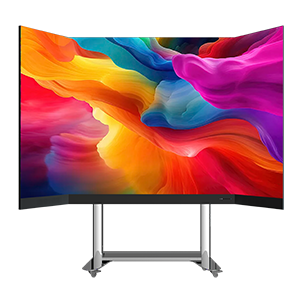
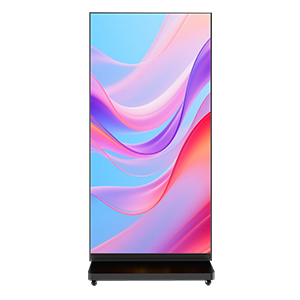
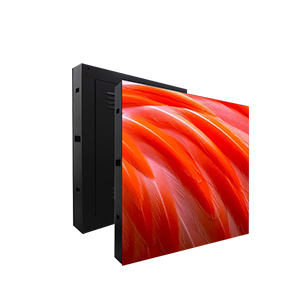
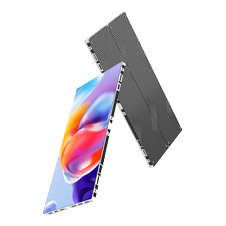
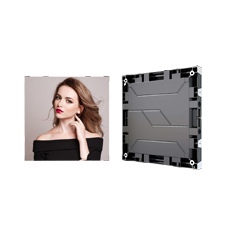
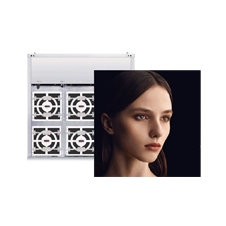
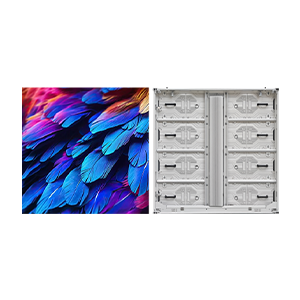
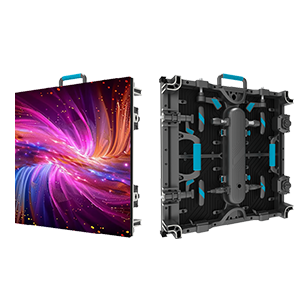
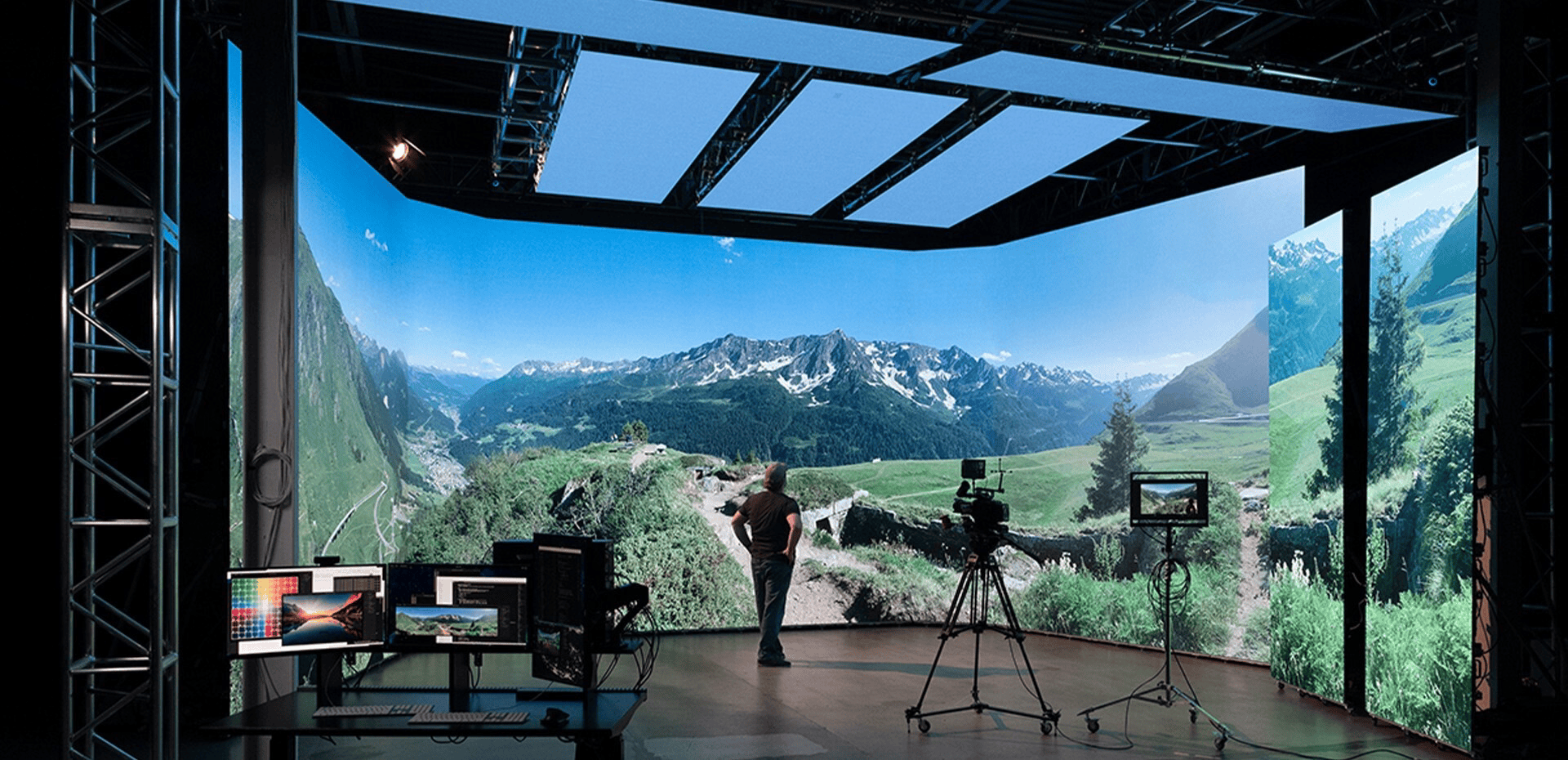
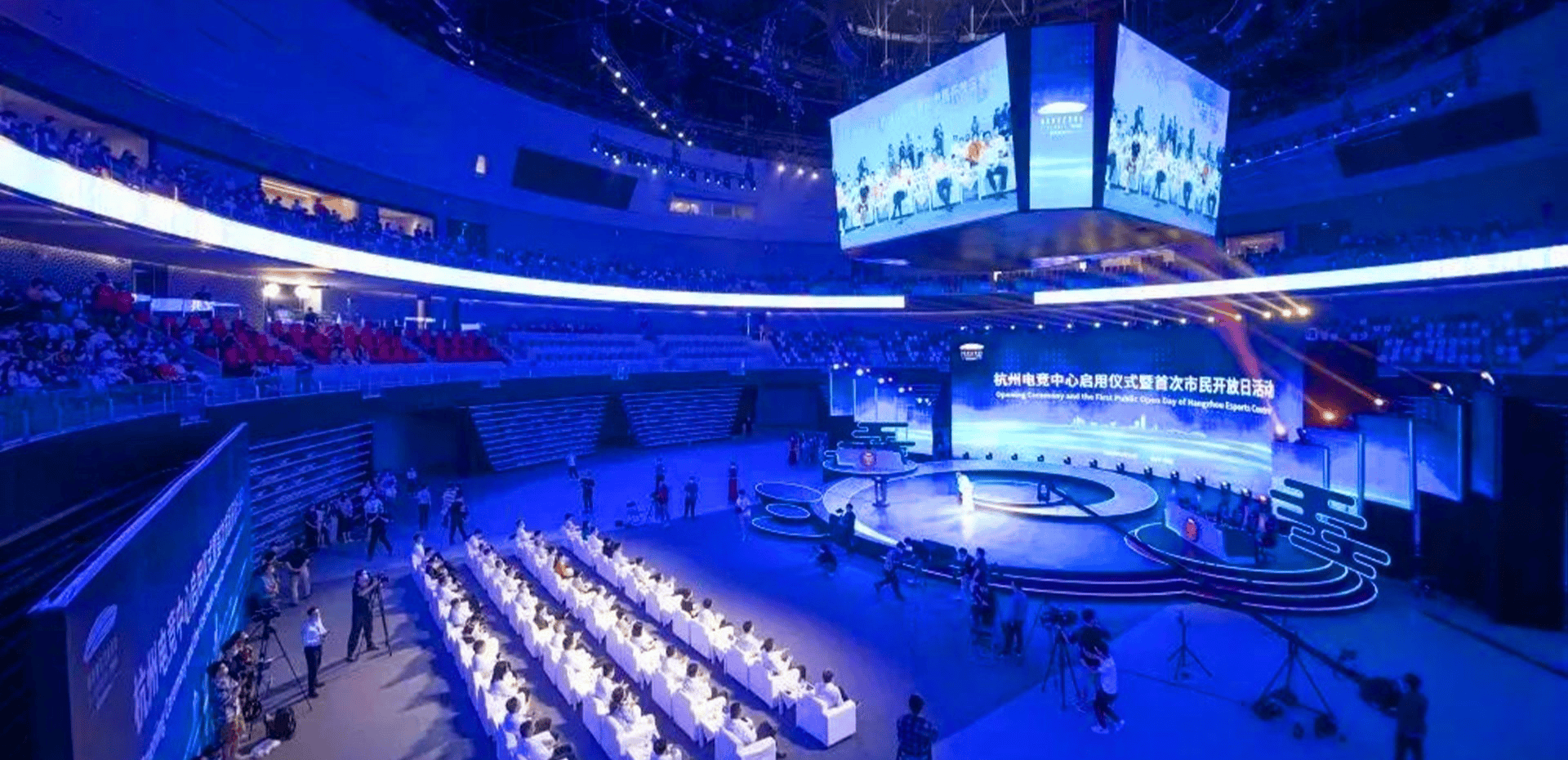
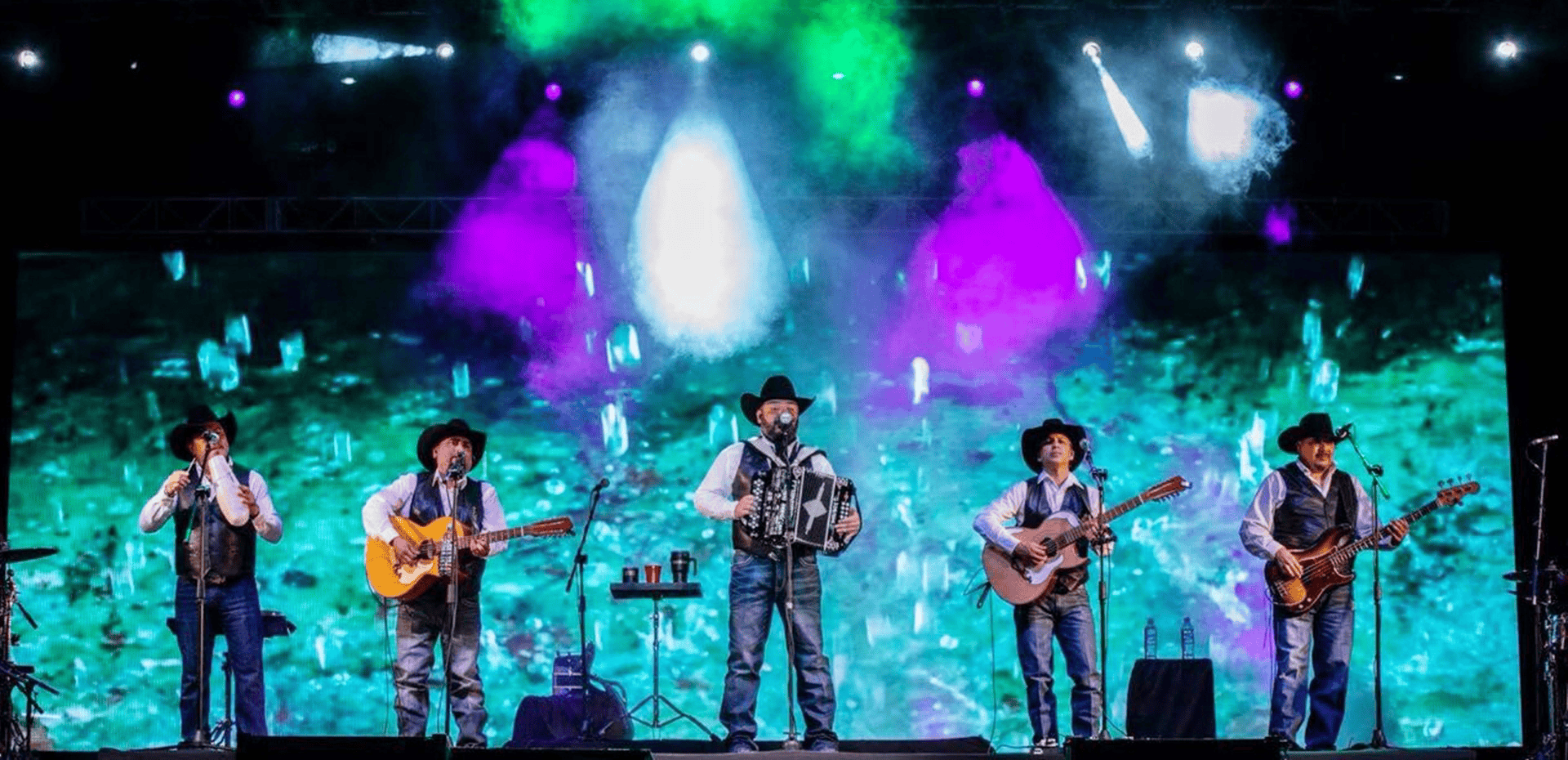
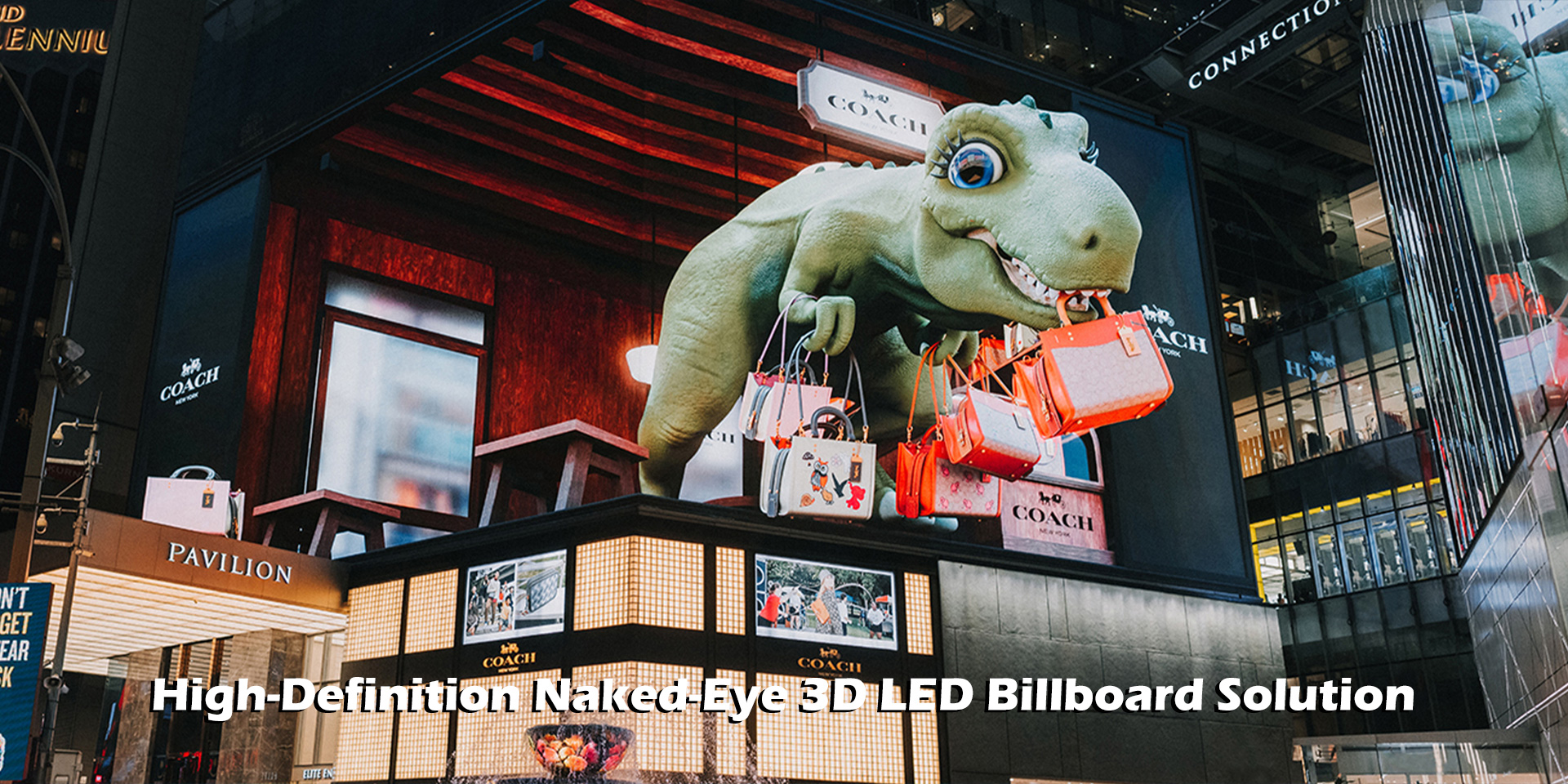
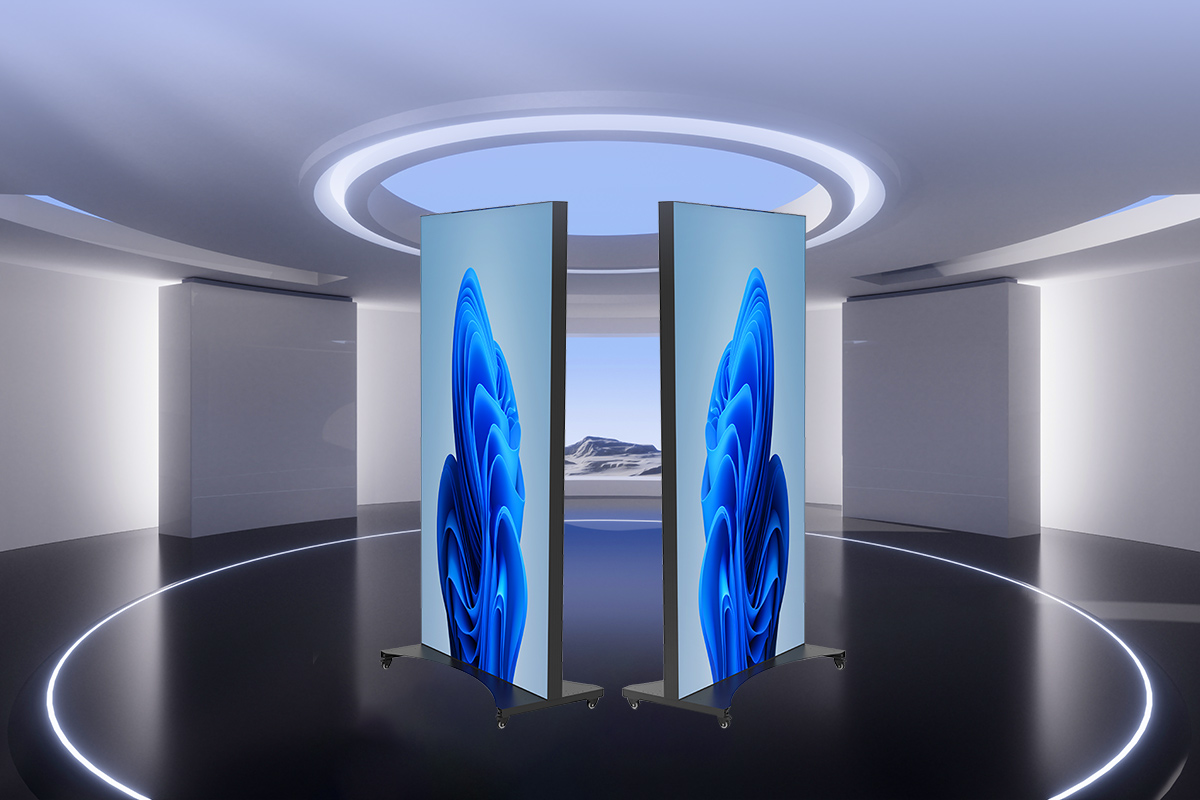
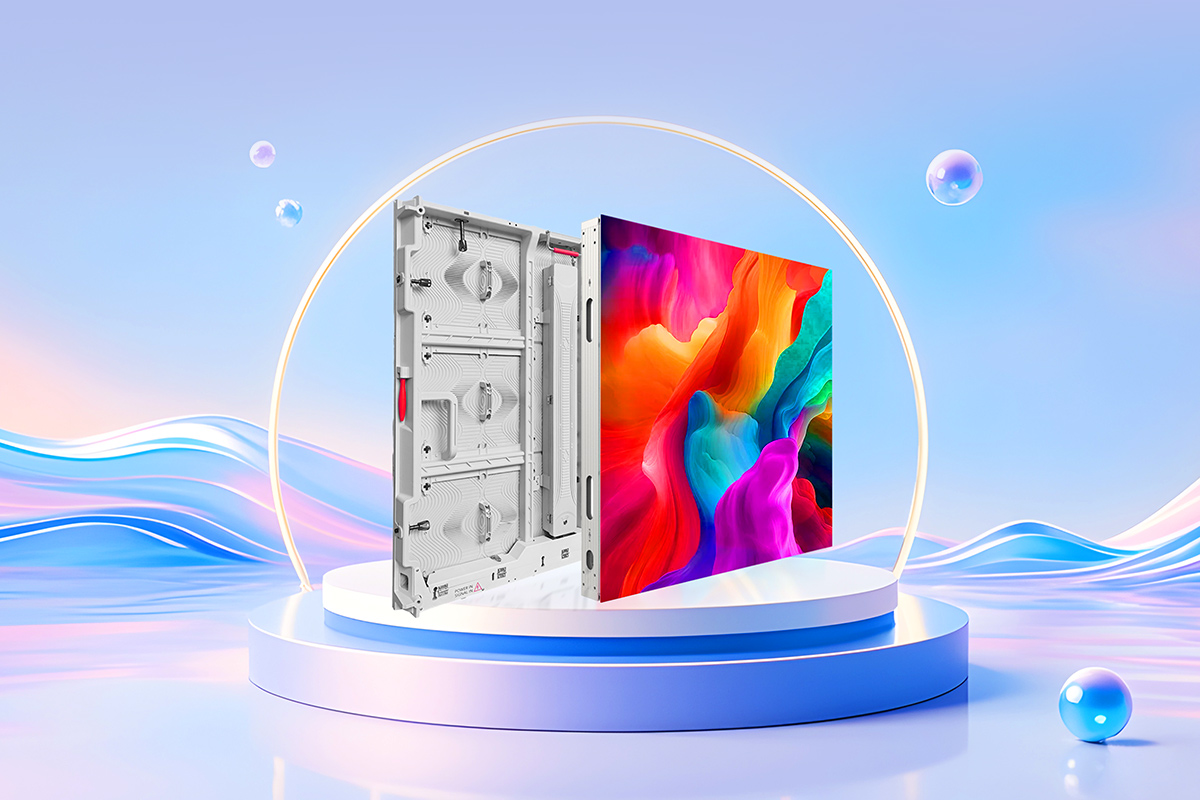
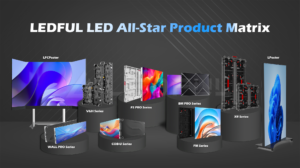
LEDFUL provides one-stop LED display solutions for indoor and outdoor applications, delivering high-quality, reliable, and customizable screens for every scenario.
DOOH
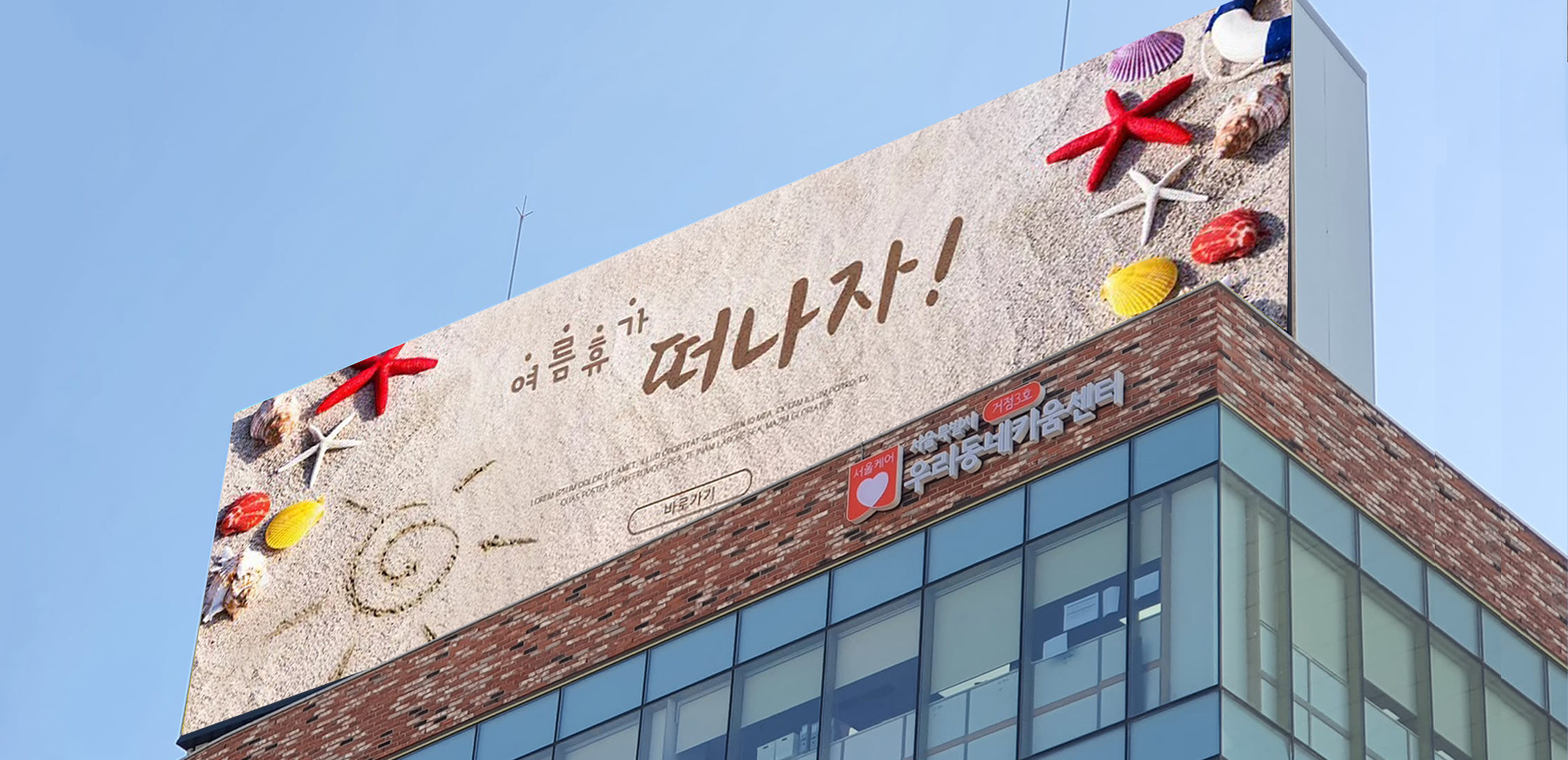
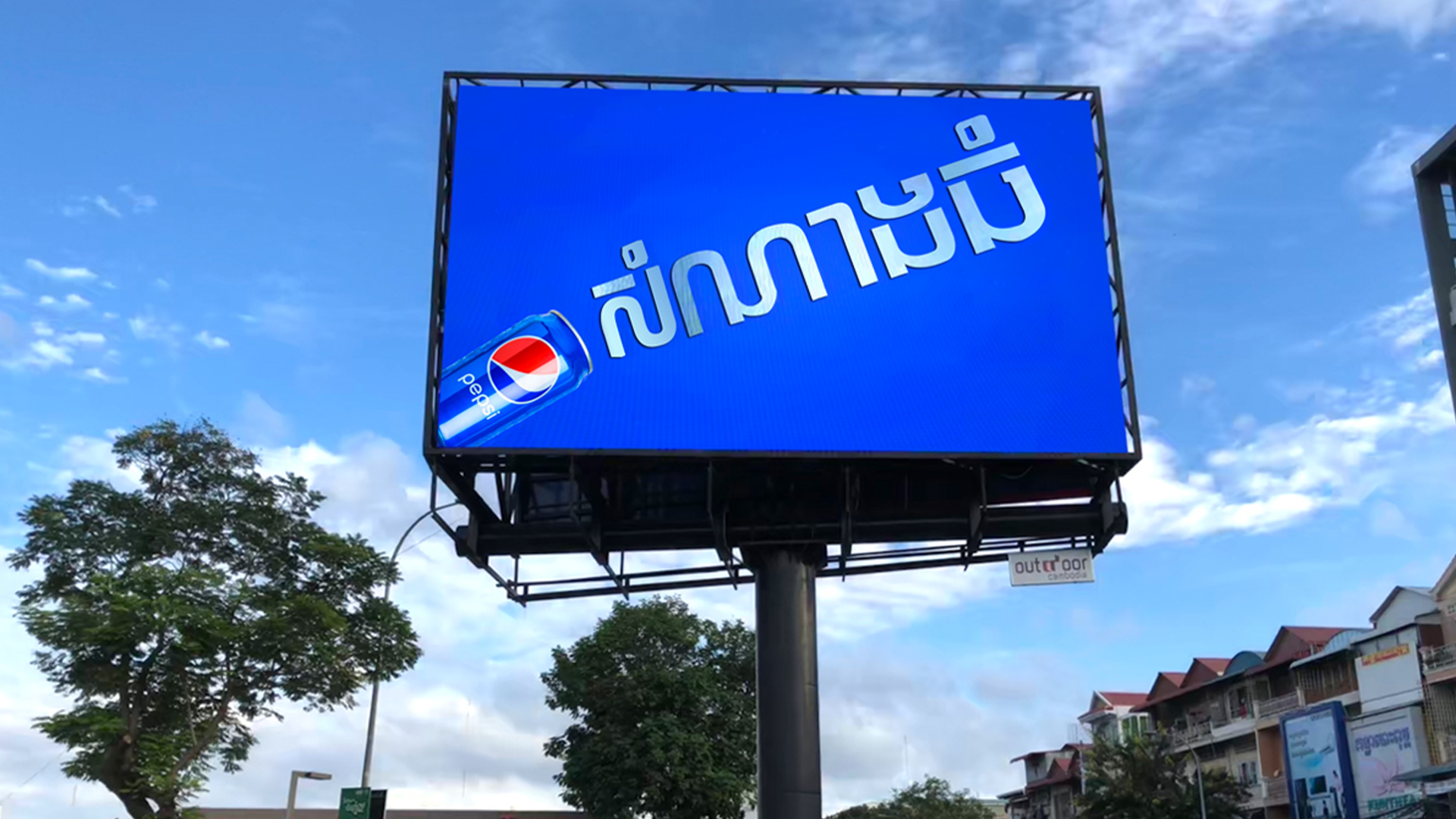
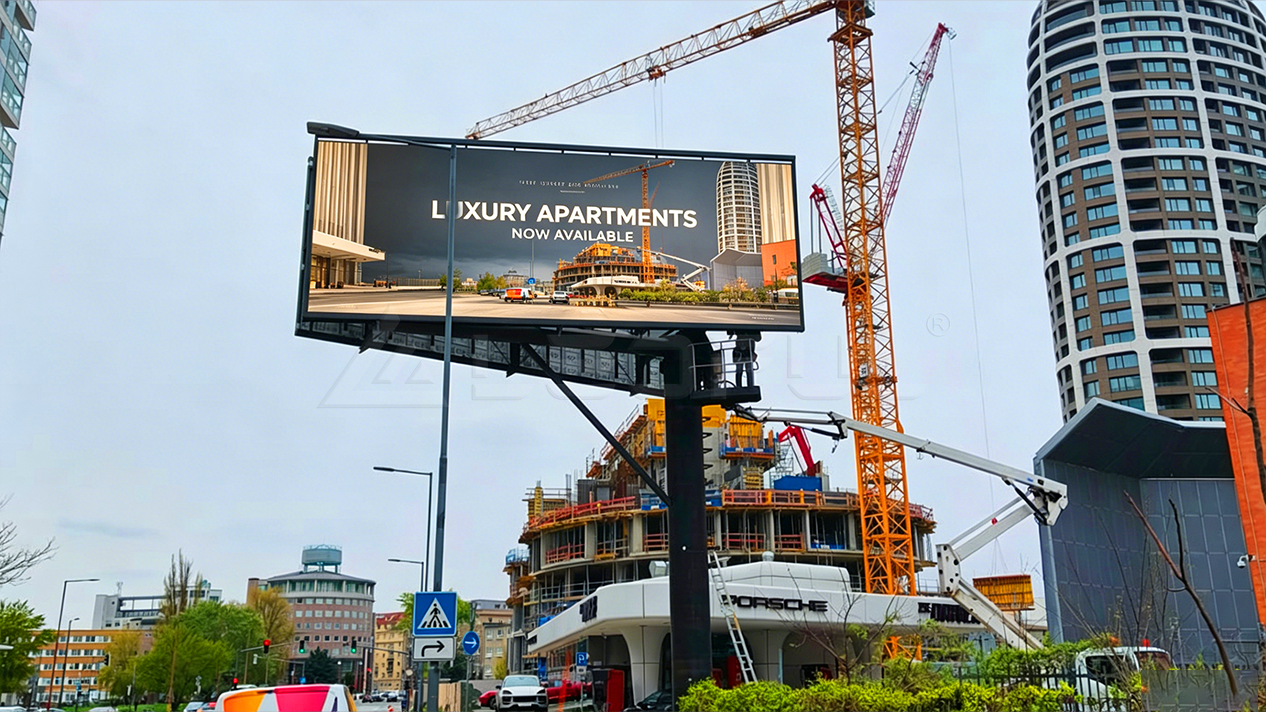
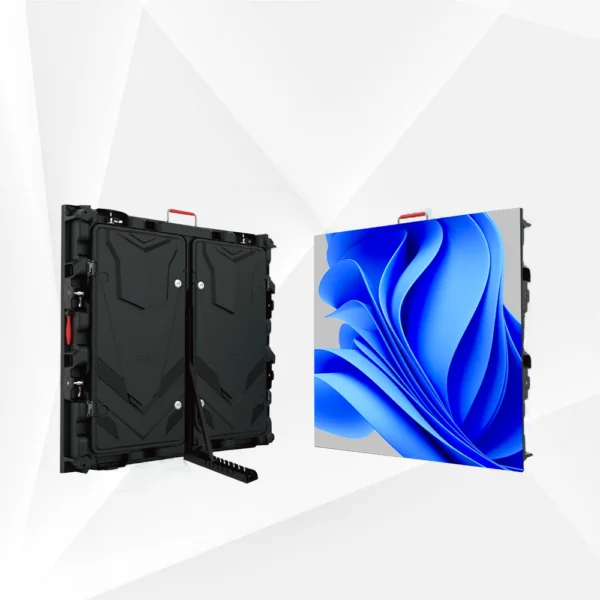
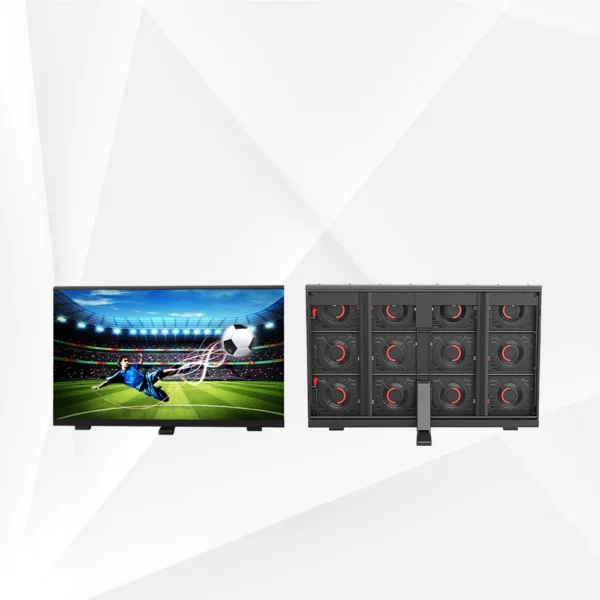
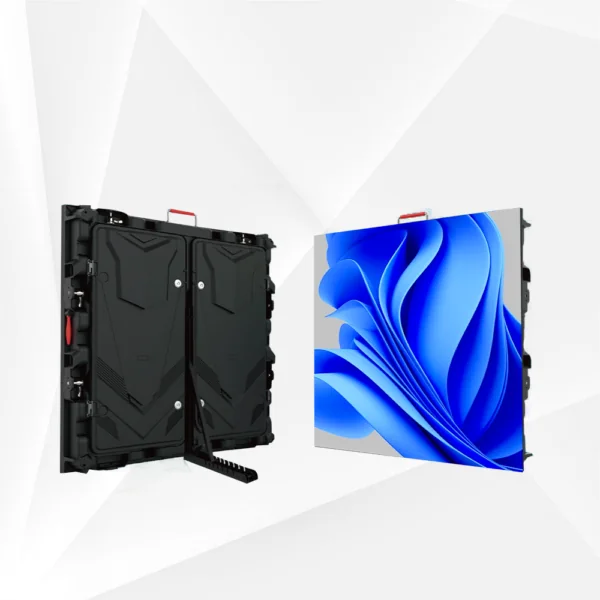
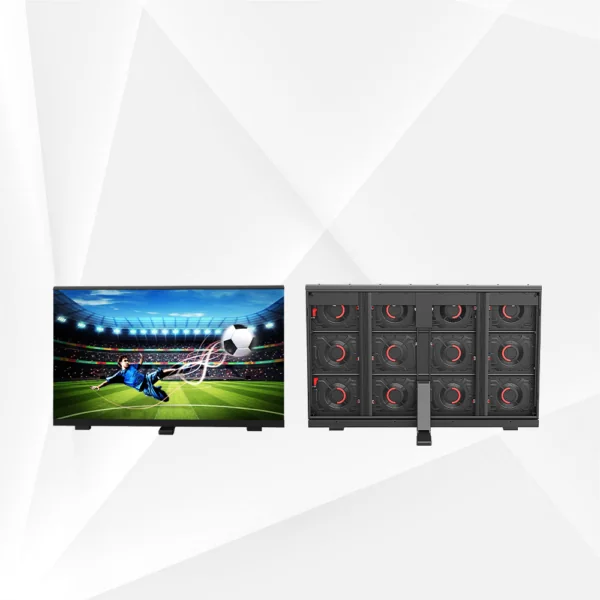
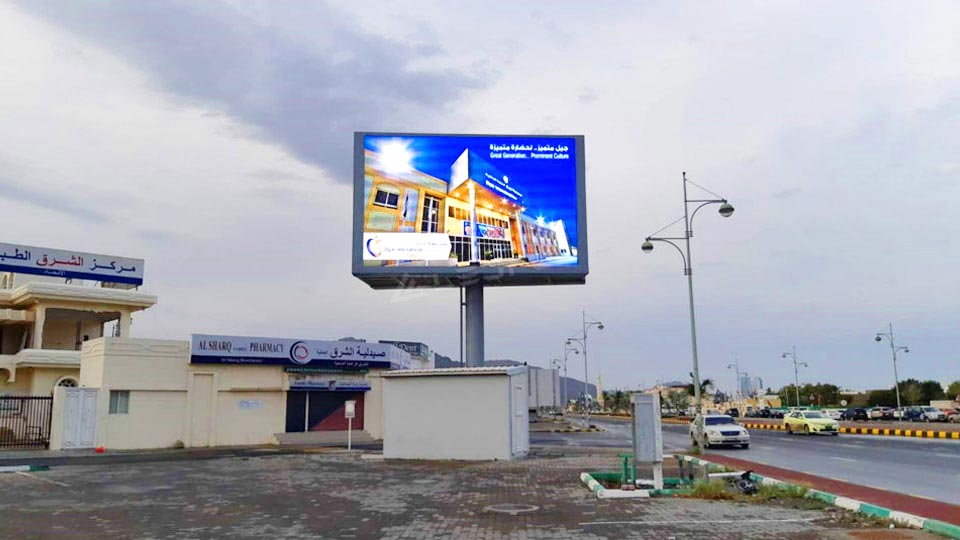
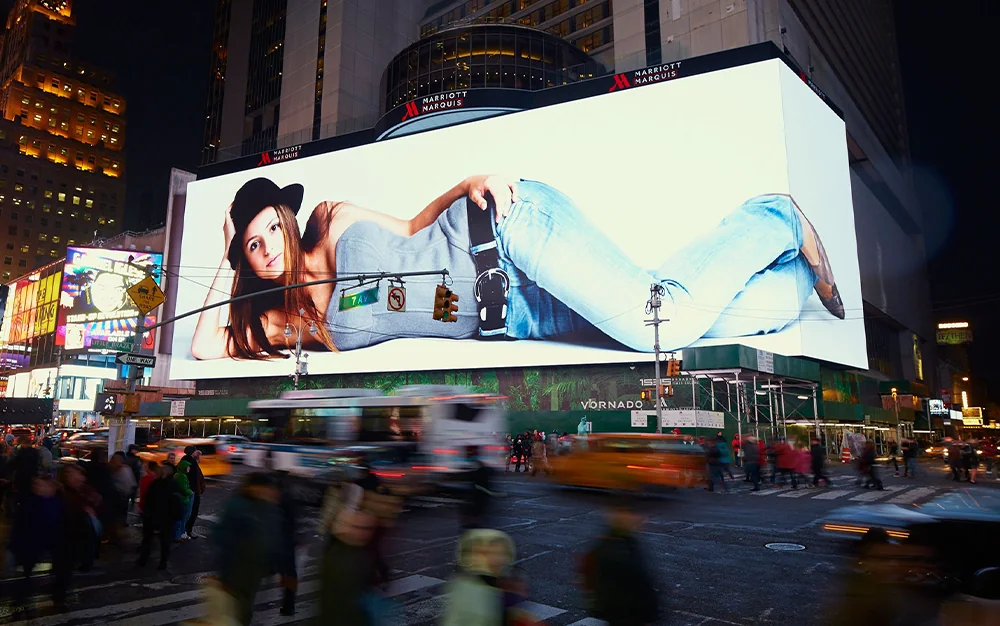
LEDFUL outdoor LED displays capture attention, enhance advertising impact, and make every campaign stand out.
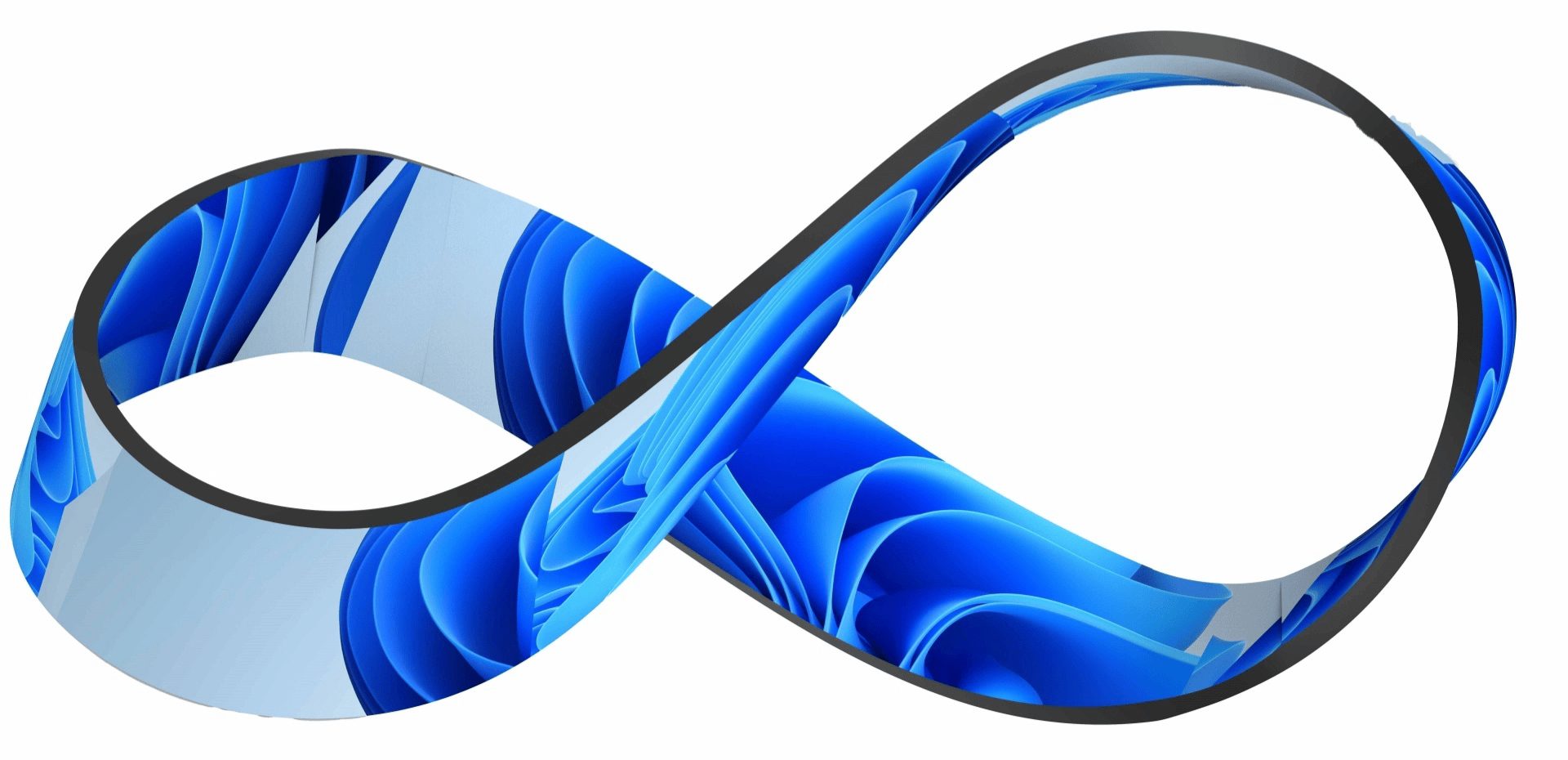
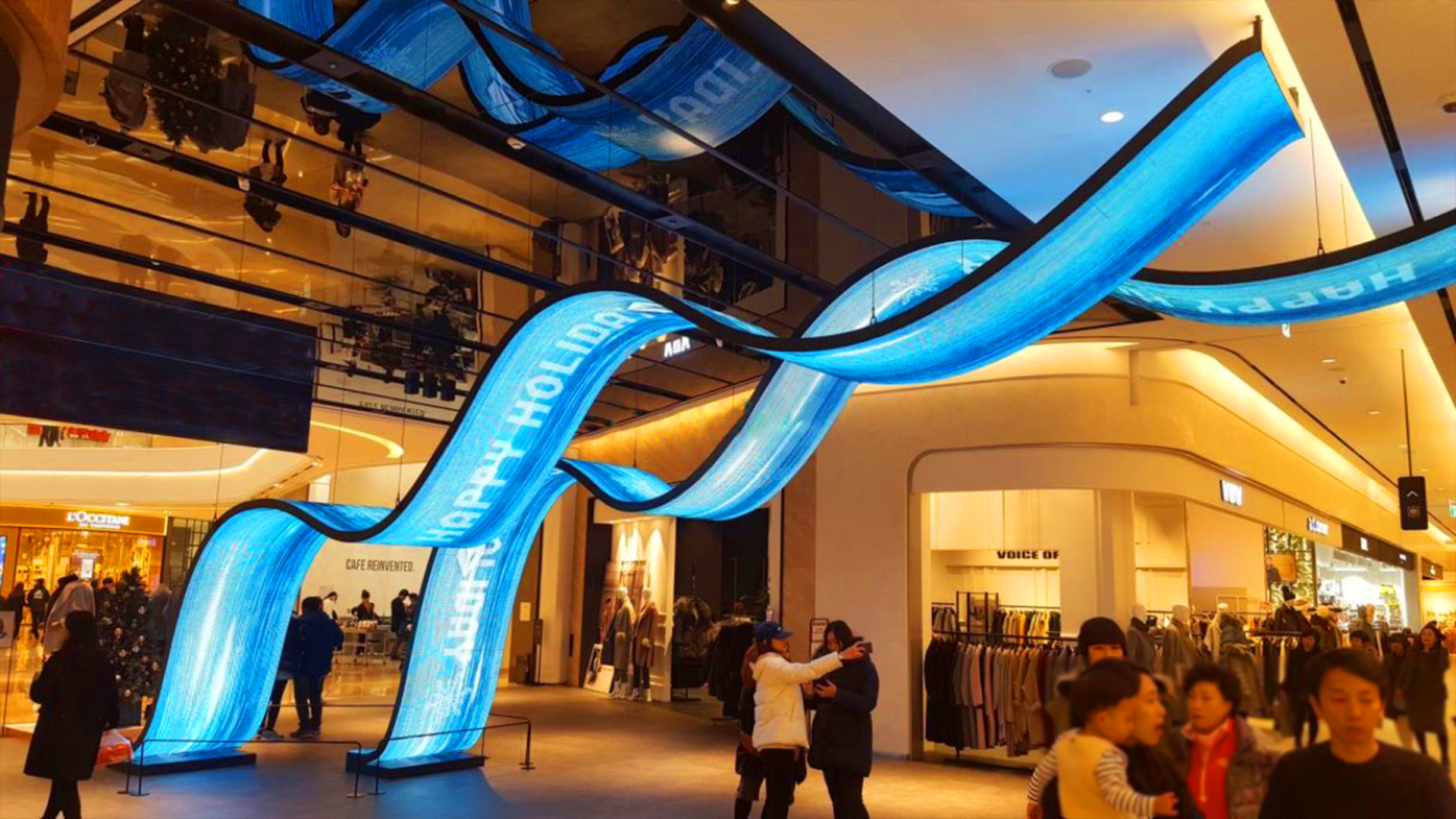
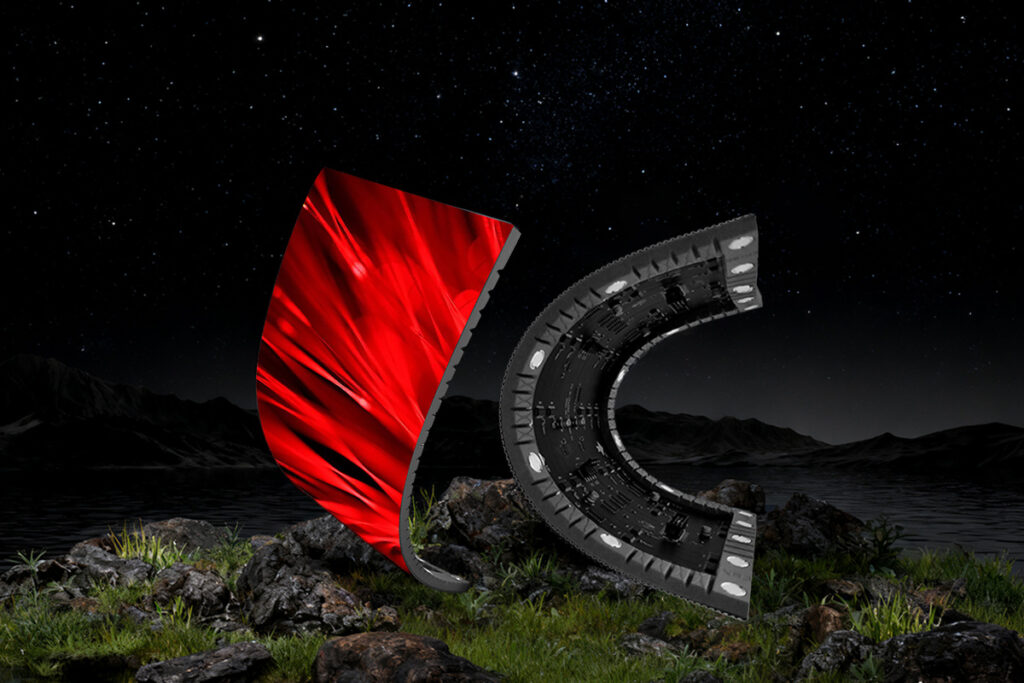
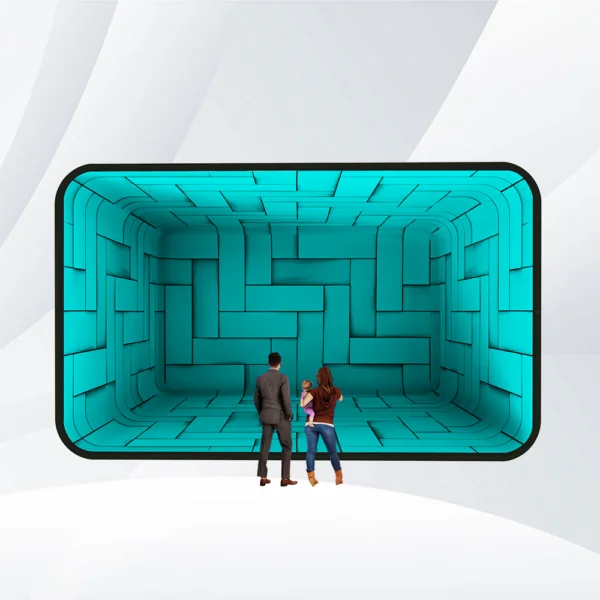
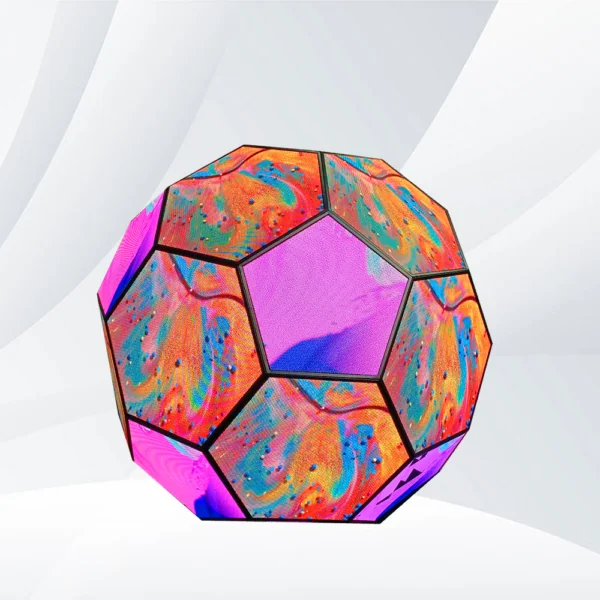
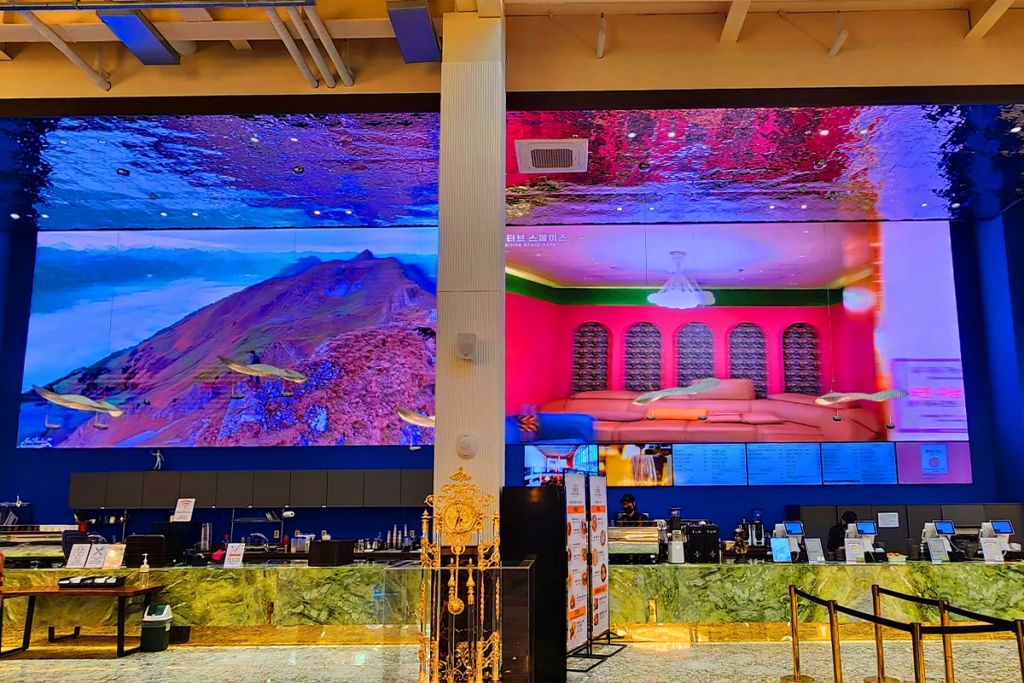
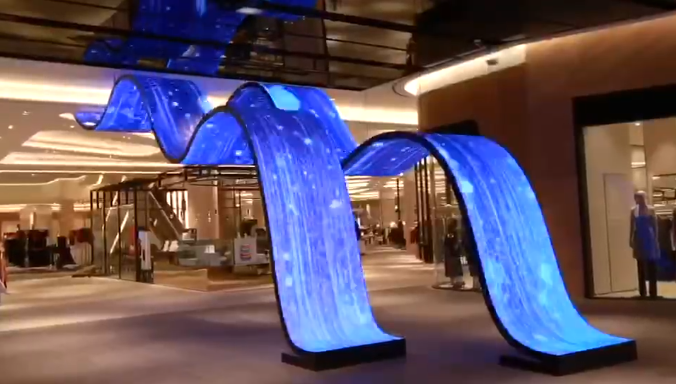
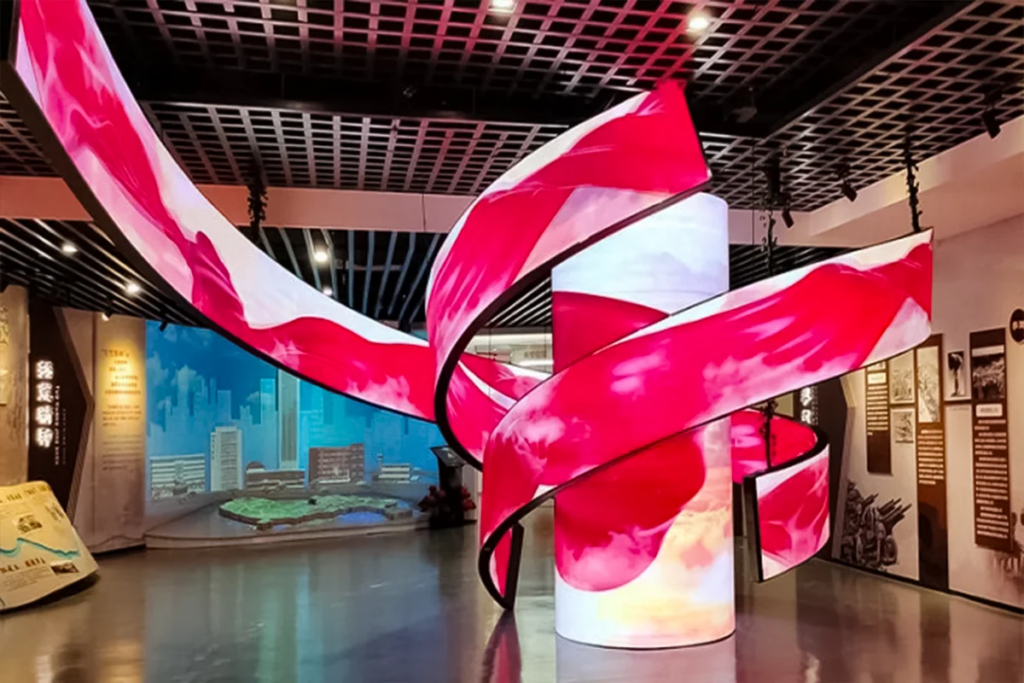
LEDFUL FLEX and creative LED solutions turn imaginative concepts into stunning indoor and outdoor visual experiences, helping bring your vision to life.
LEDFUL combines trusted experience, high-quality production, and professional technical support to deliver reliable, vibrant, and customizable LED screens for every application.
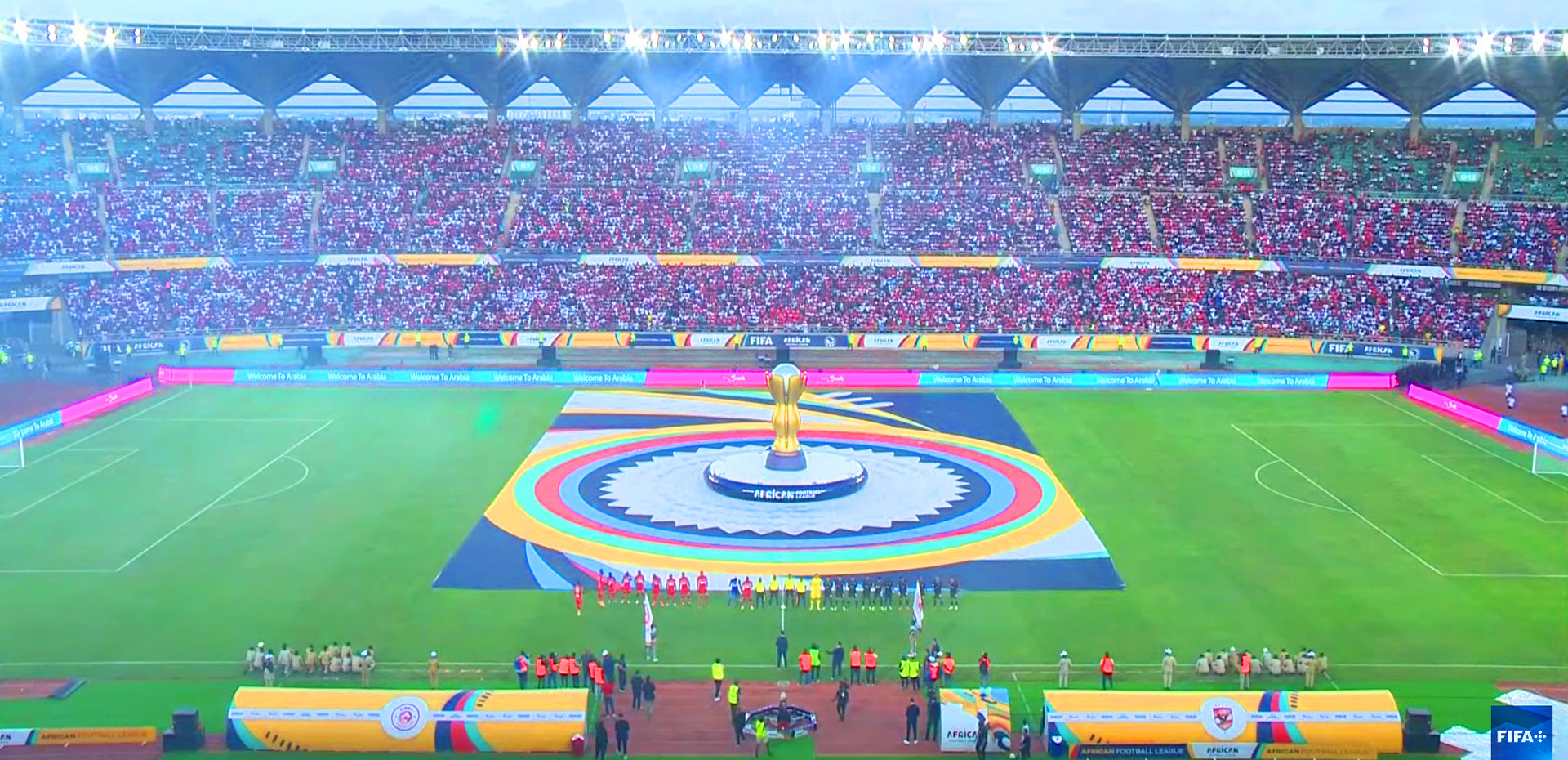
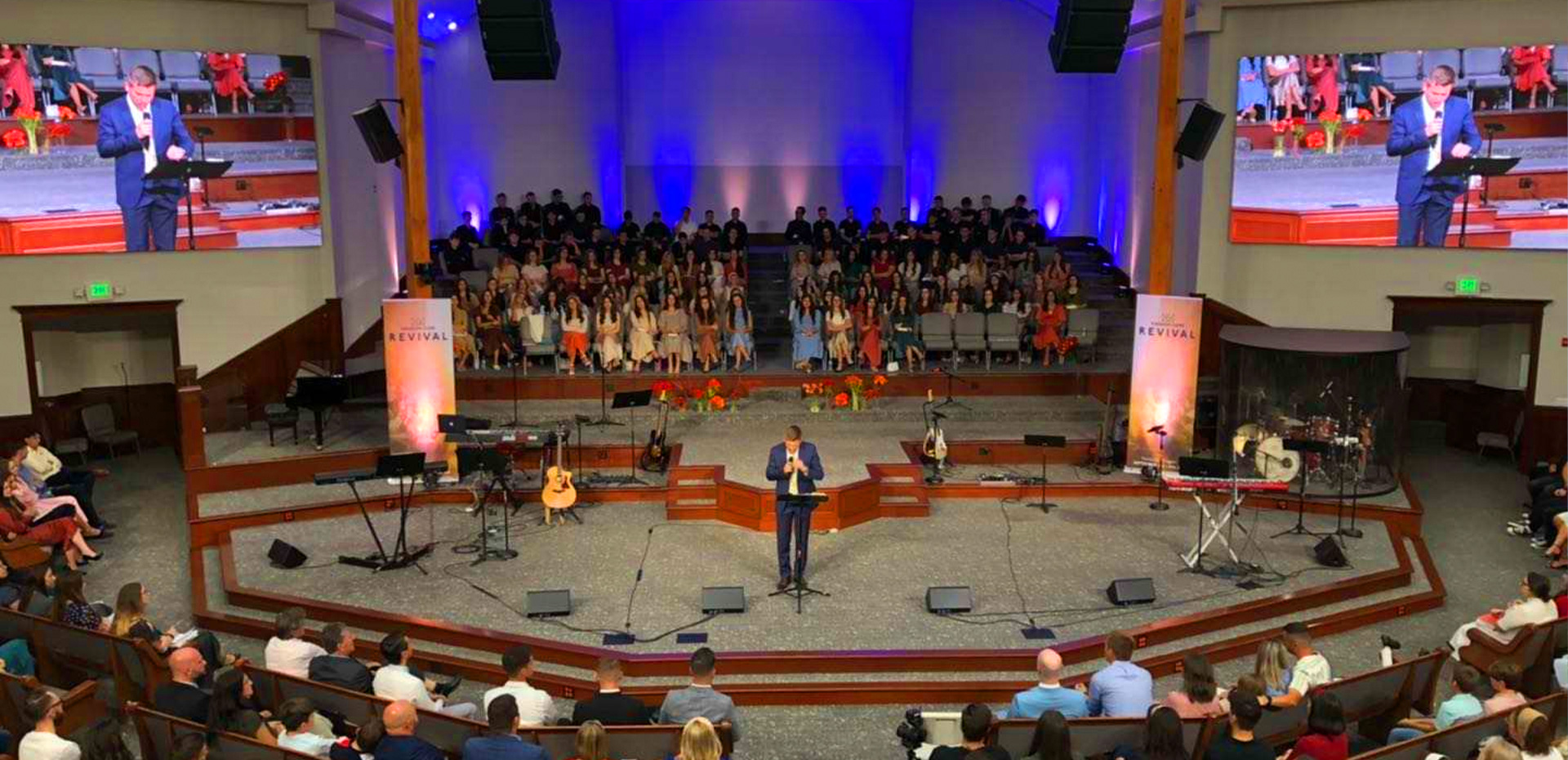
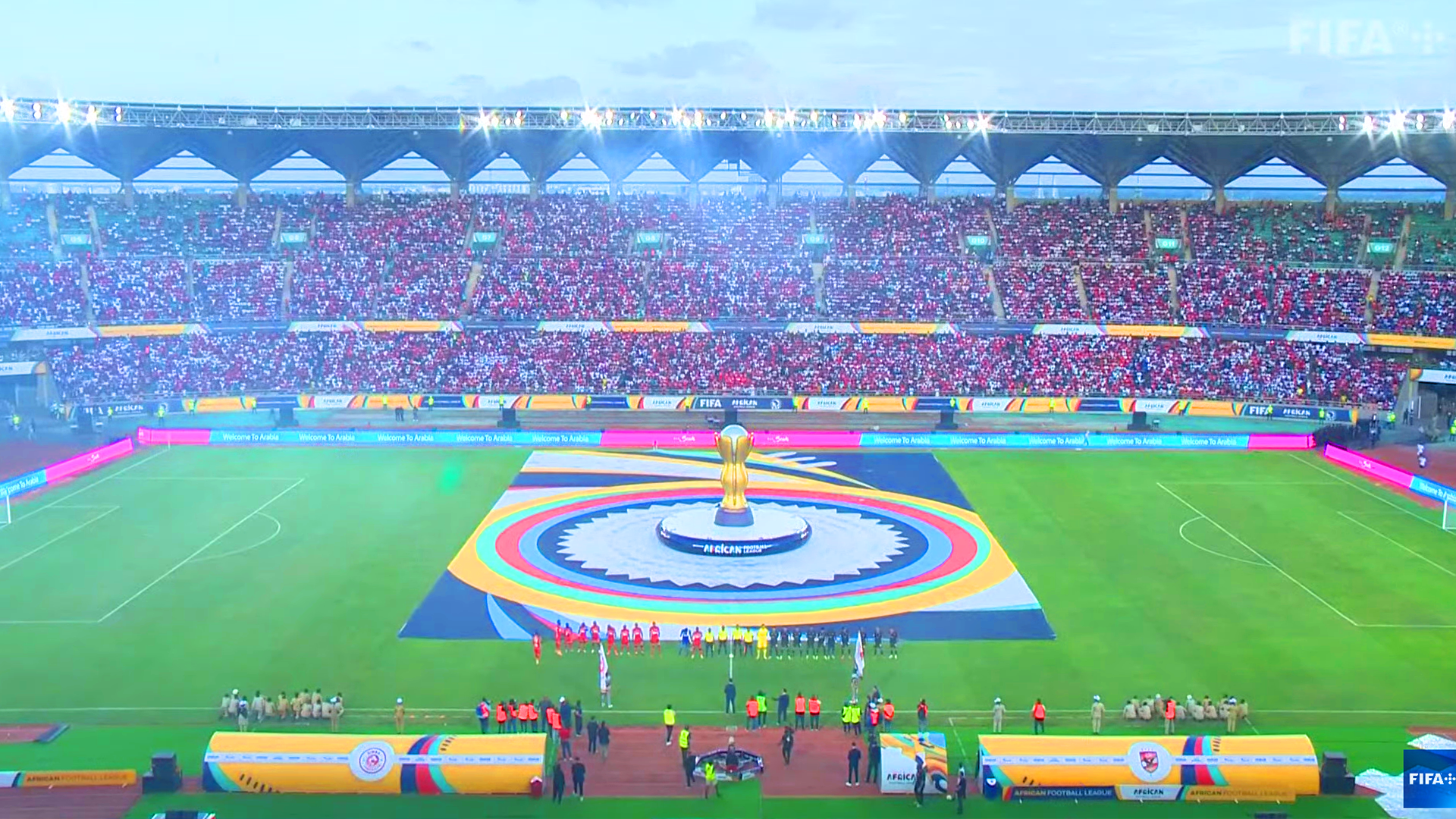
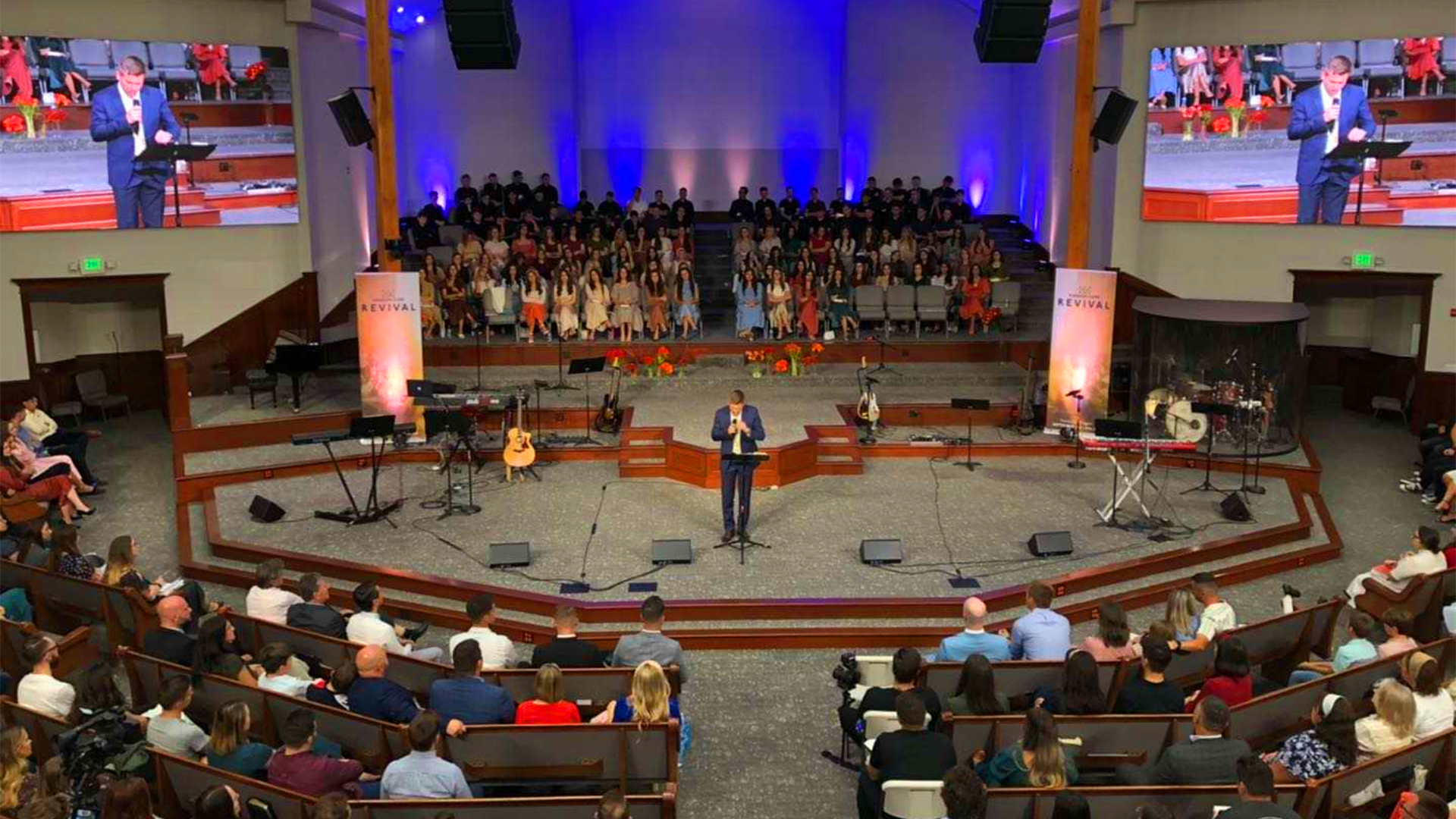
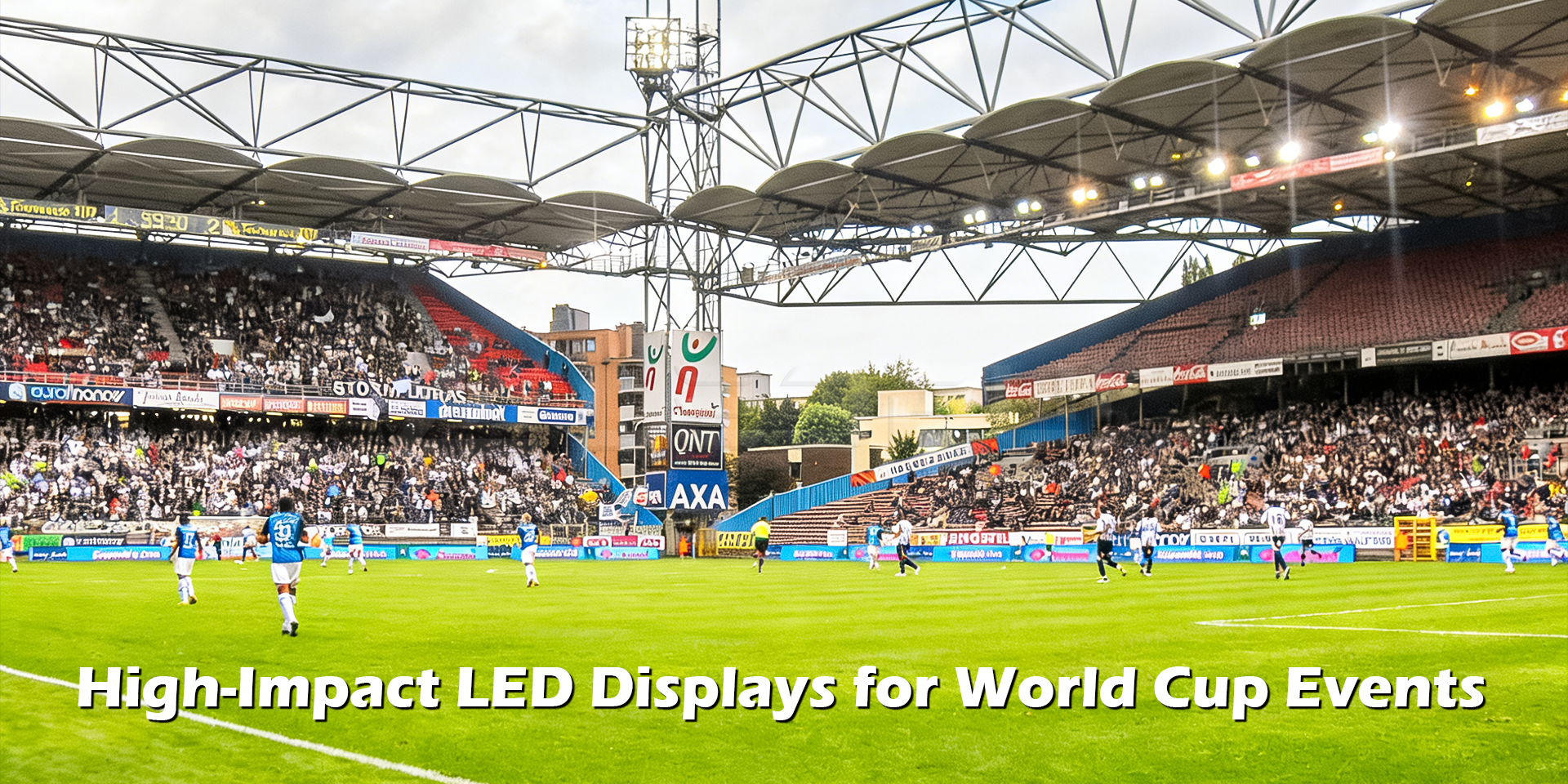
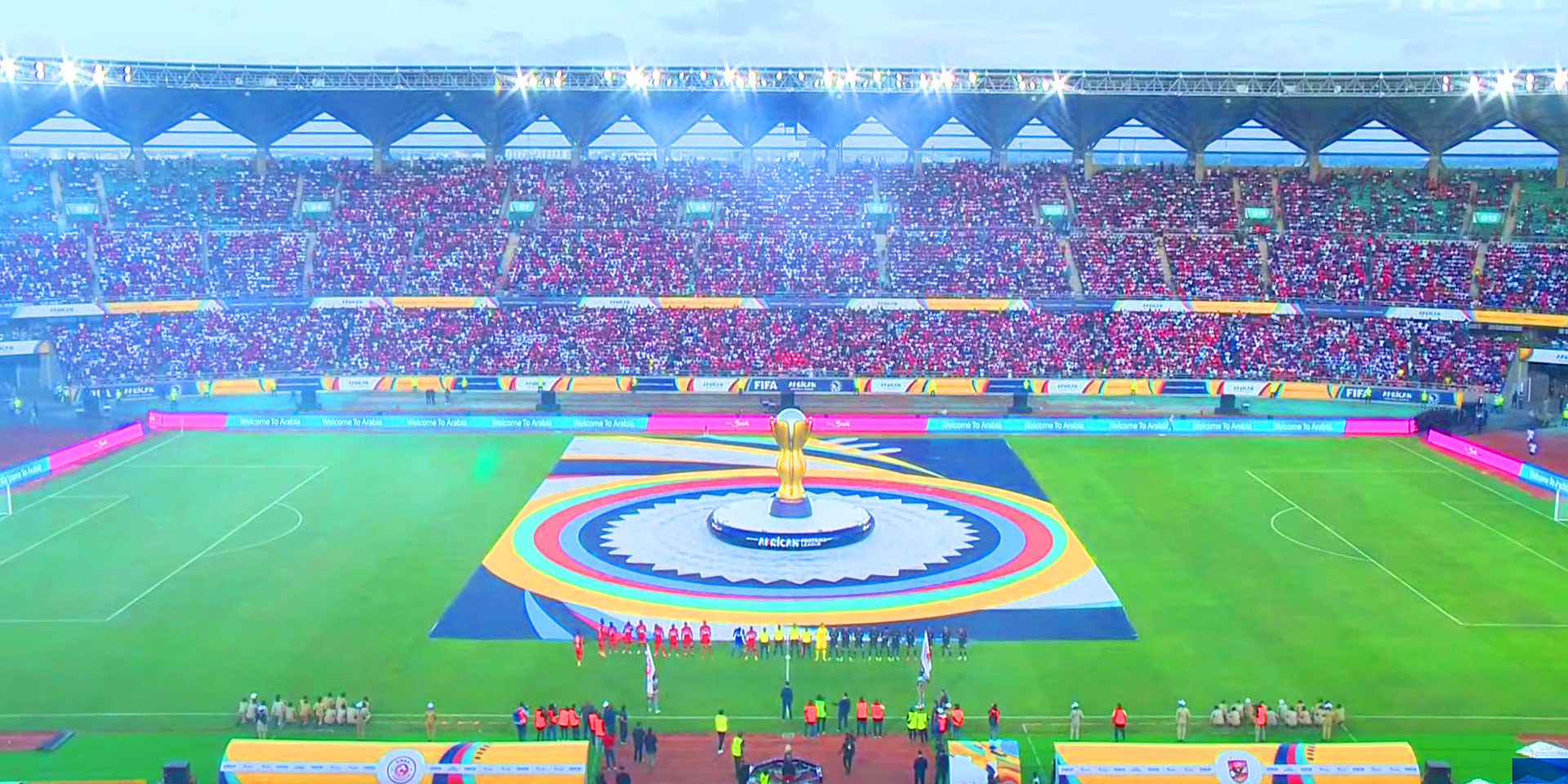
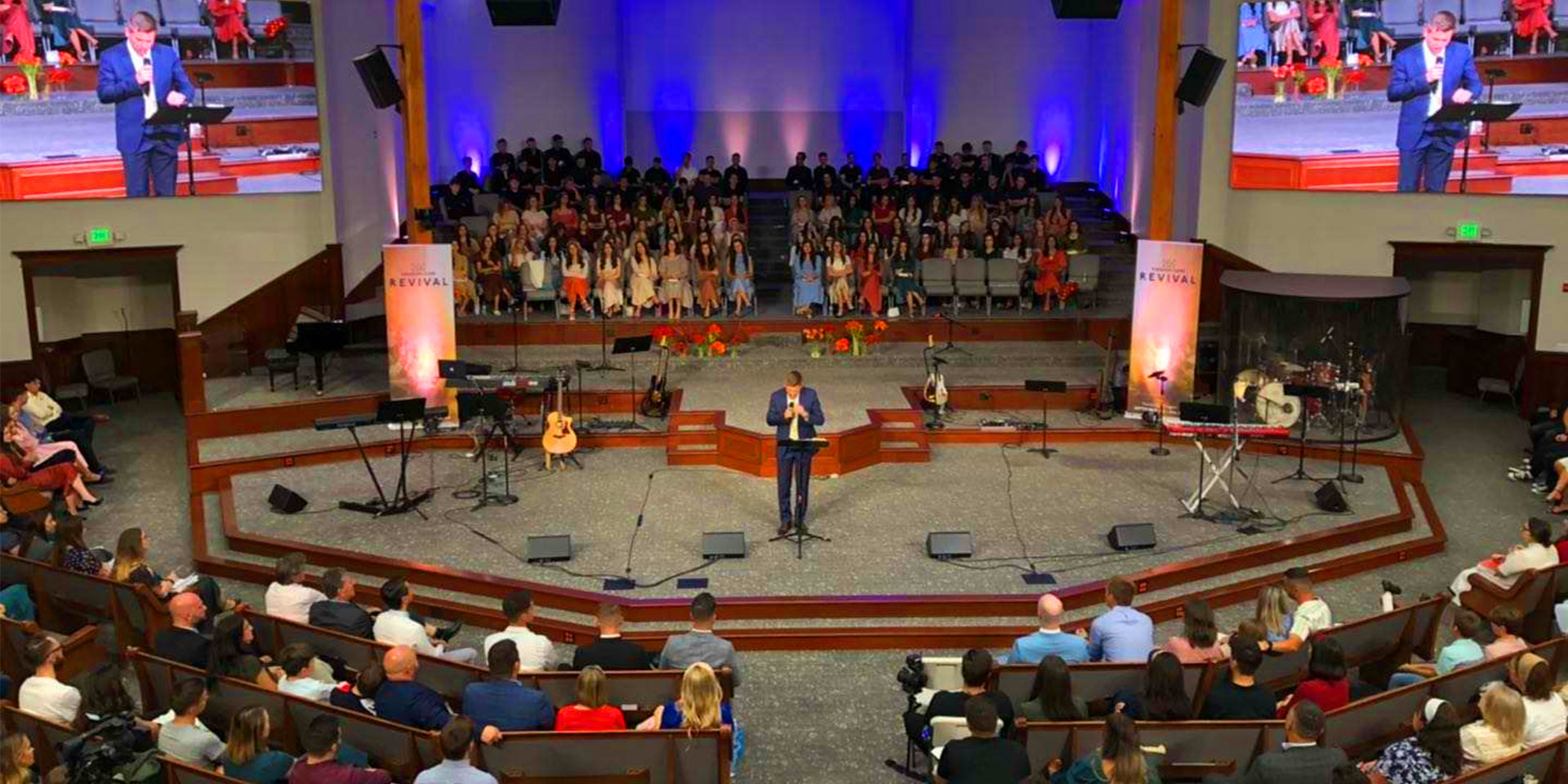
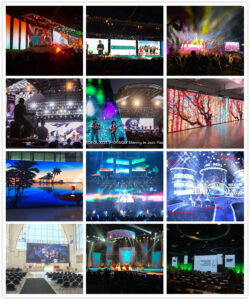
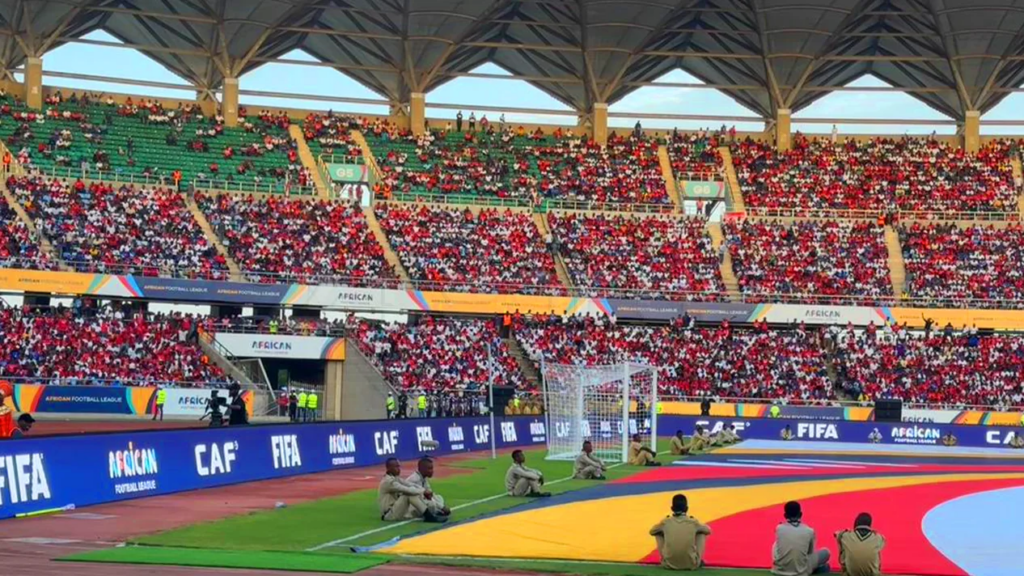
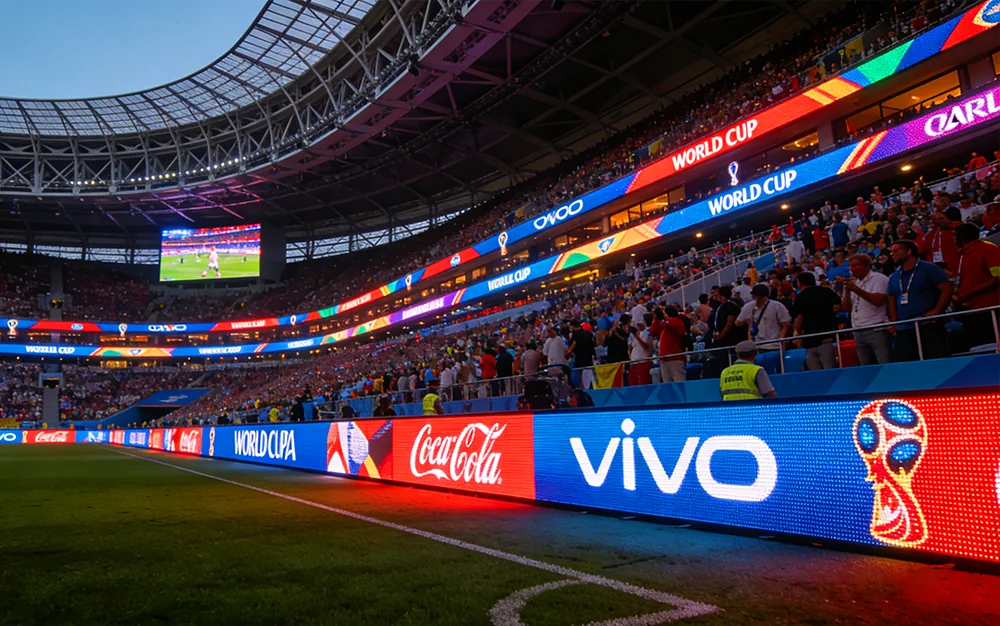
As a leading LED screen supplier, LEDFUL has completed over 11,000 projects worldwide, including major events like the World Cup, Olympics, WTT, and Euro LOL Final, as well as landmark projects for Fortune 500 companies, record-breaking venues, and large-scale churches in the USA.
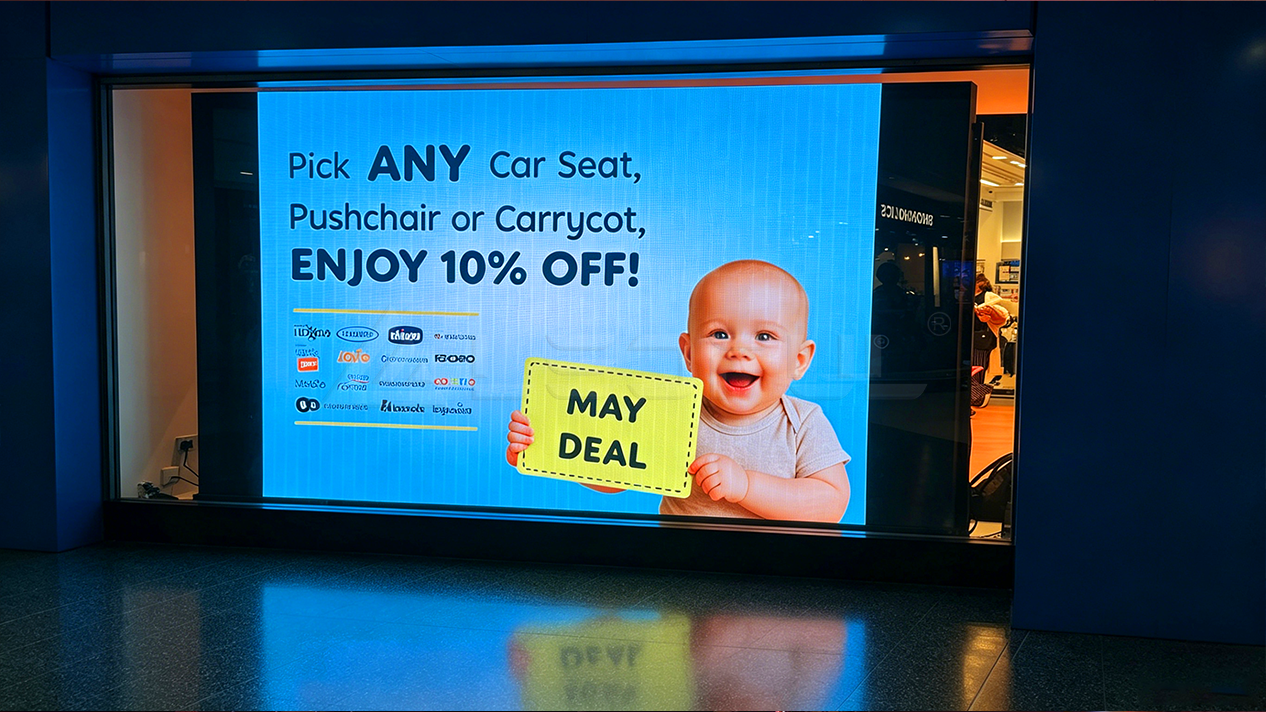
As the capital of Slovakia and a key transportation hub and commercial center in Central Europe, Bratislava has an increasing demand for high-quality outdoor LED advertising displays,
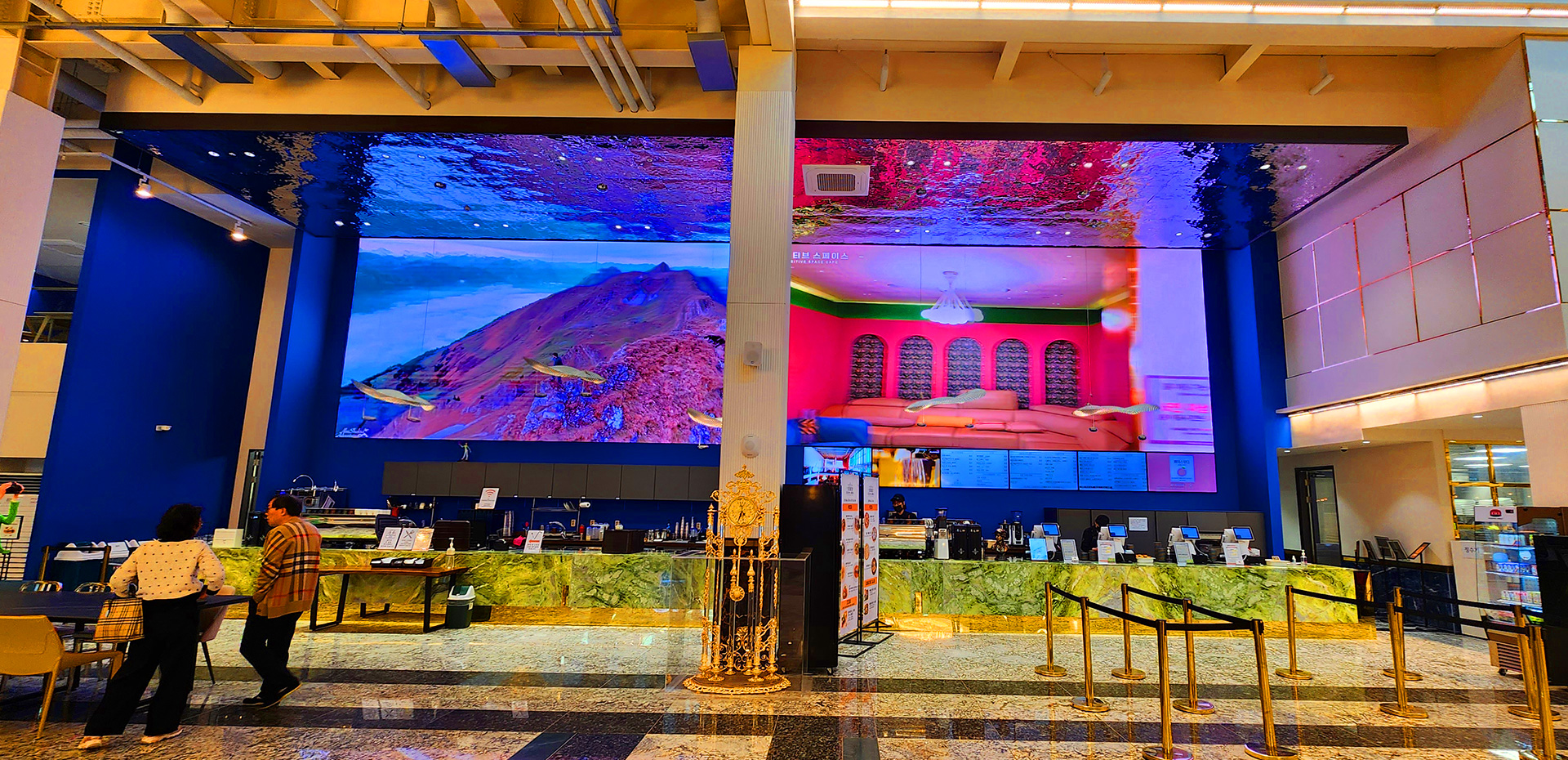
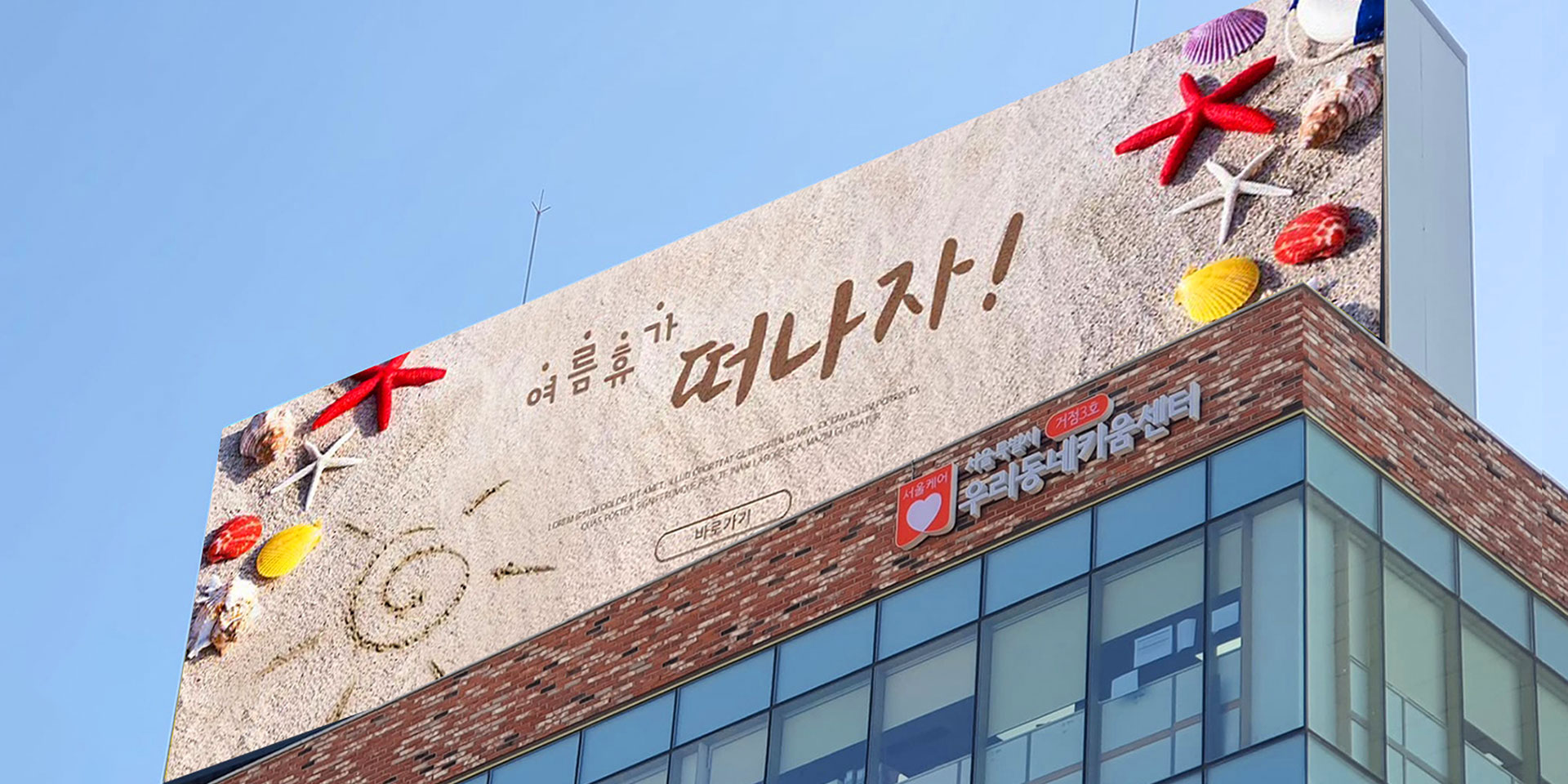
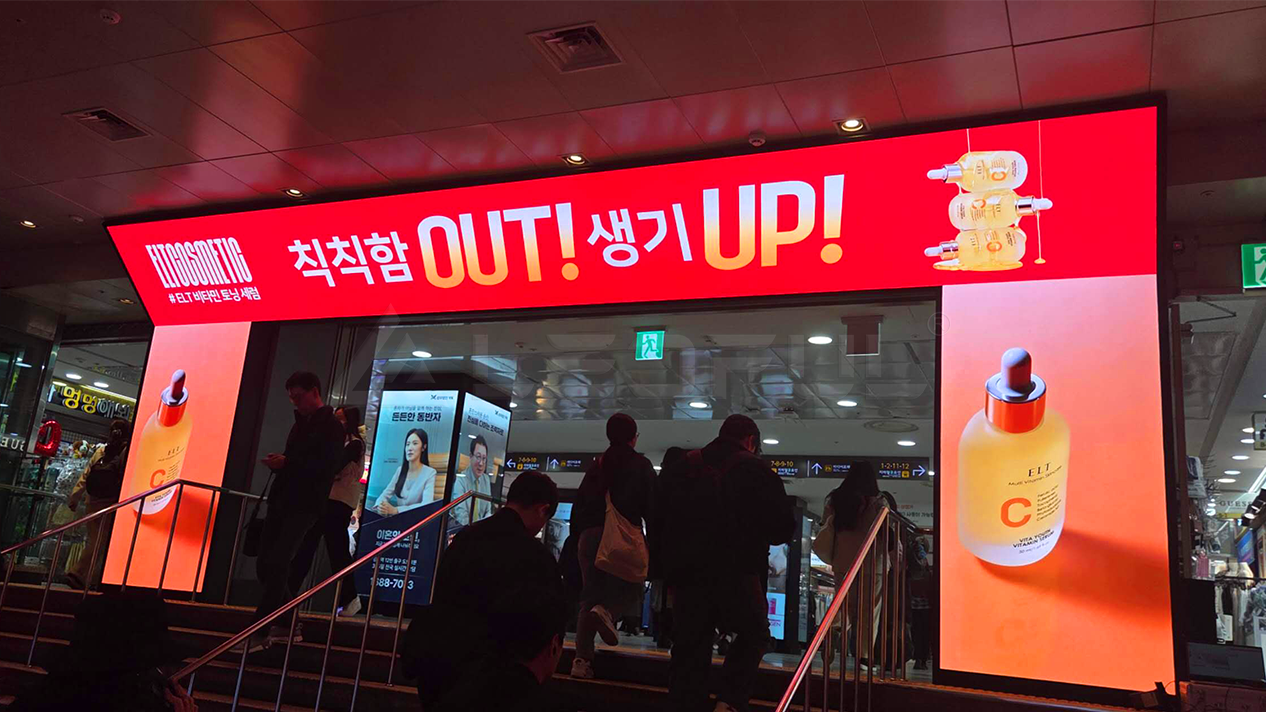
Seoul’s Gangnam Subway Station, a core transportation hub with over 190,000 daily passengers, is a top location for brand exposure and public information display.
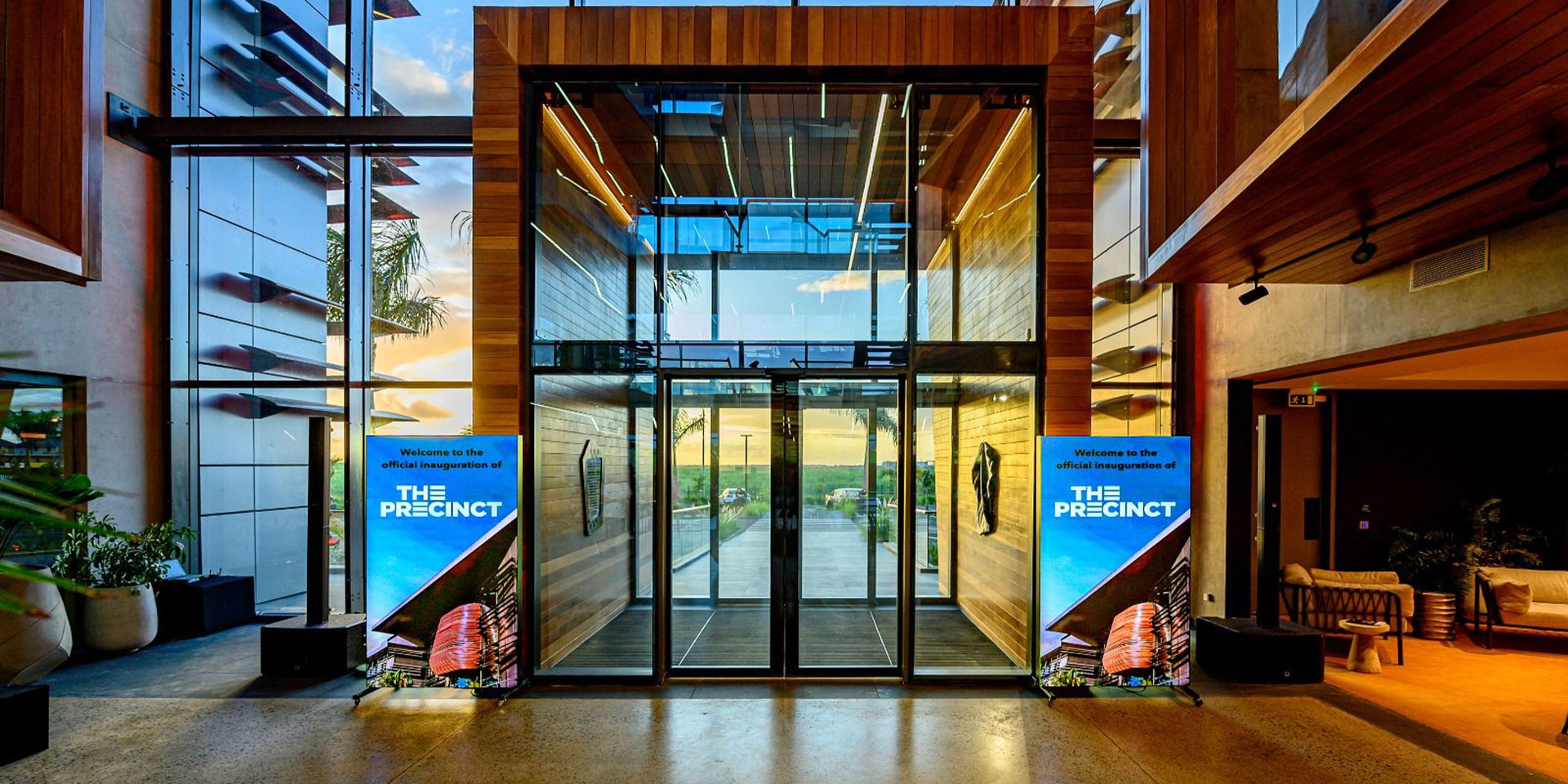
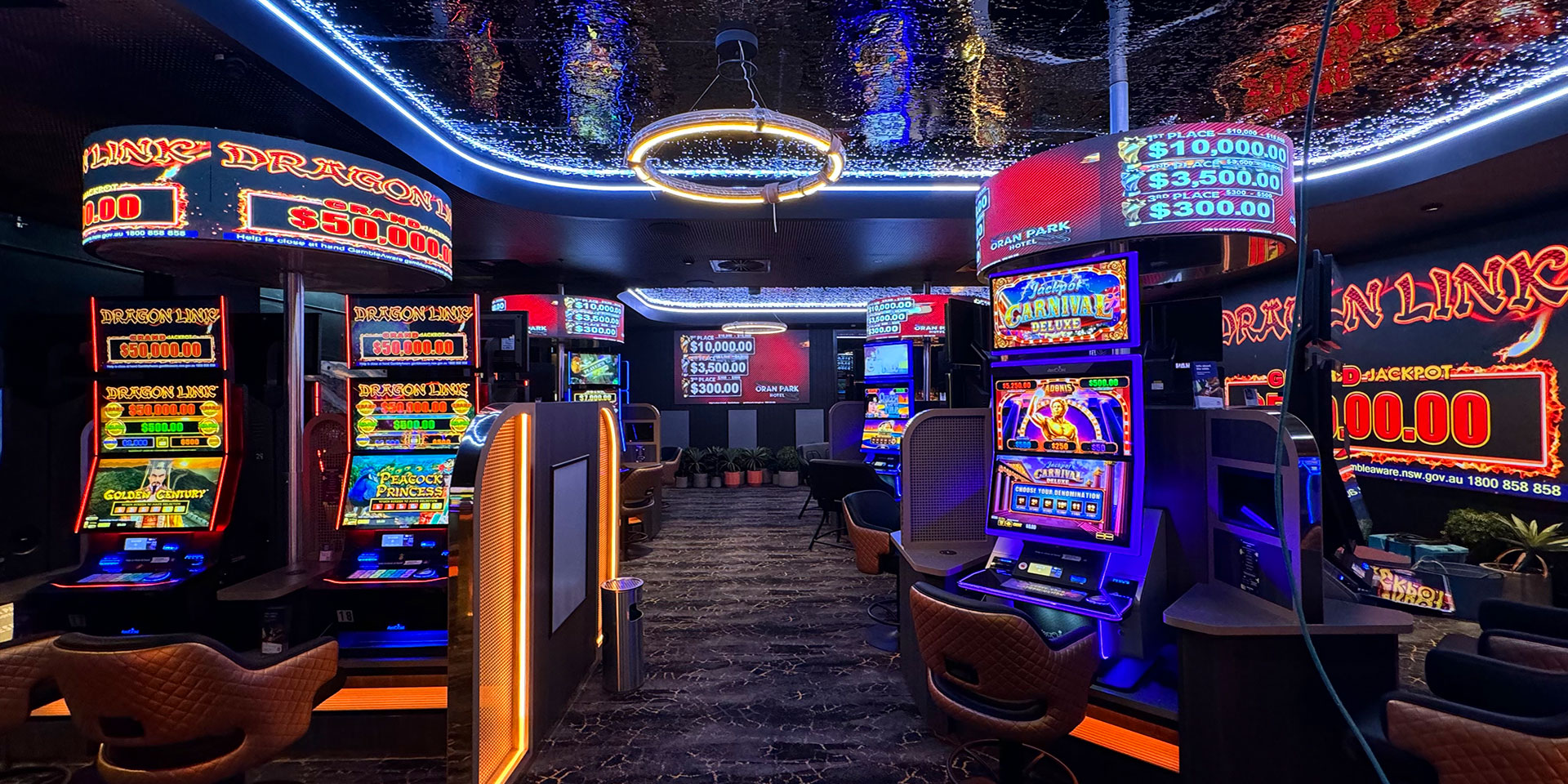
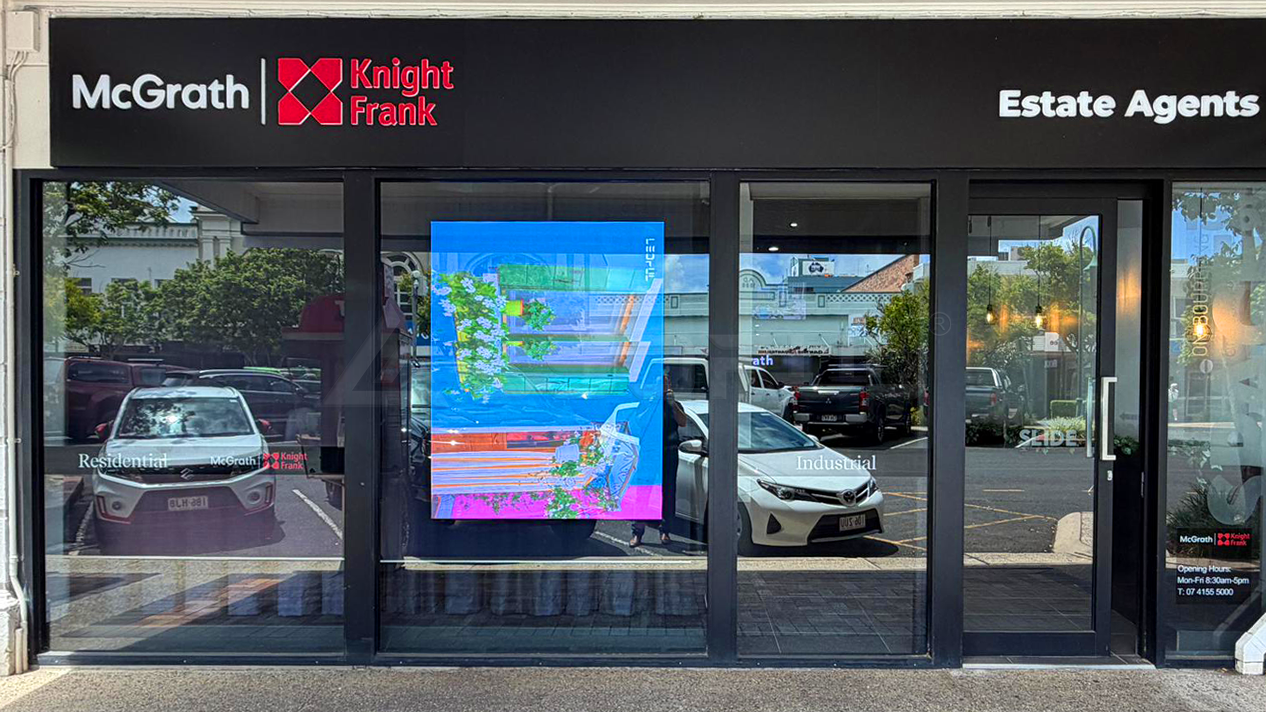
Against the backdrop of increasingly fierce competition in the Australian real estate industry, a leading real estate agency in Australia has successfully
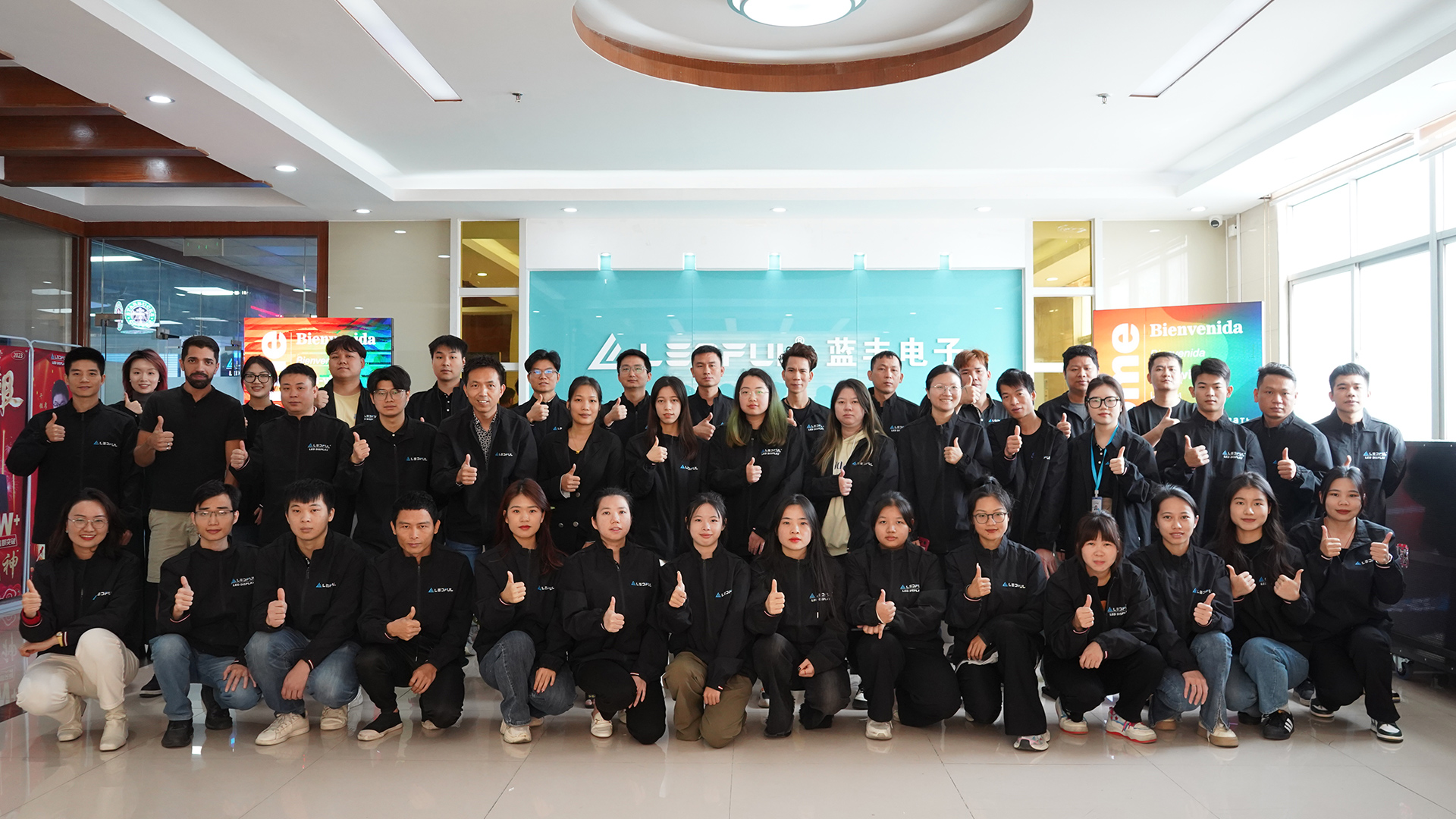
LEDFUL is a trusted LED display manufacturer in China, specializing in the development and supply of high-quality LED display screens and custom LED display solutions. Founded in 2015 in Shenzhen, we serve global clients with reliable LED display solutions across a wide range of commercial and professional applications. With 11,000+ projects completed across 116 countries, including 56 world-class landmark cases, LEDFUL has built long-term partnerships worldwide and proven its reliability for global clients.
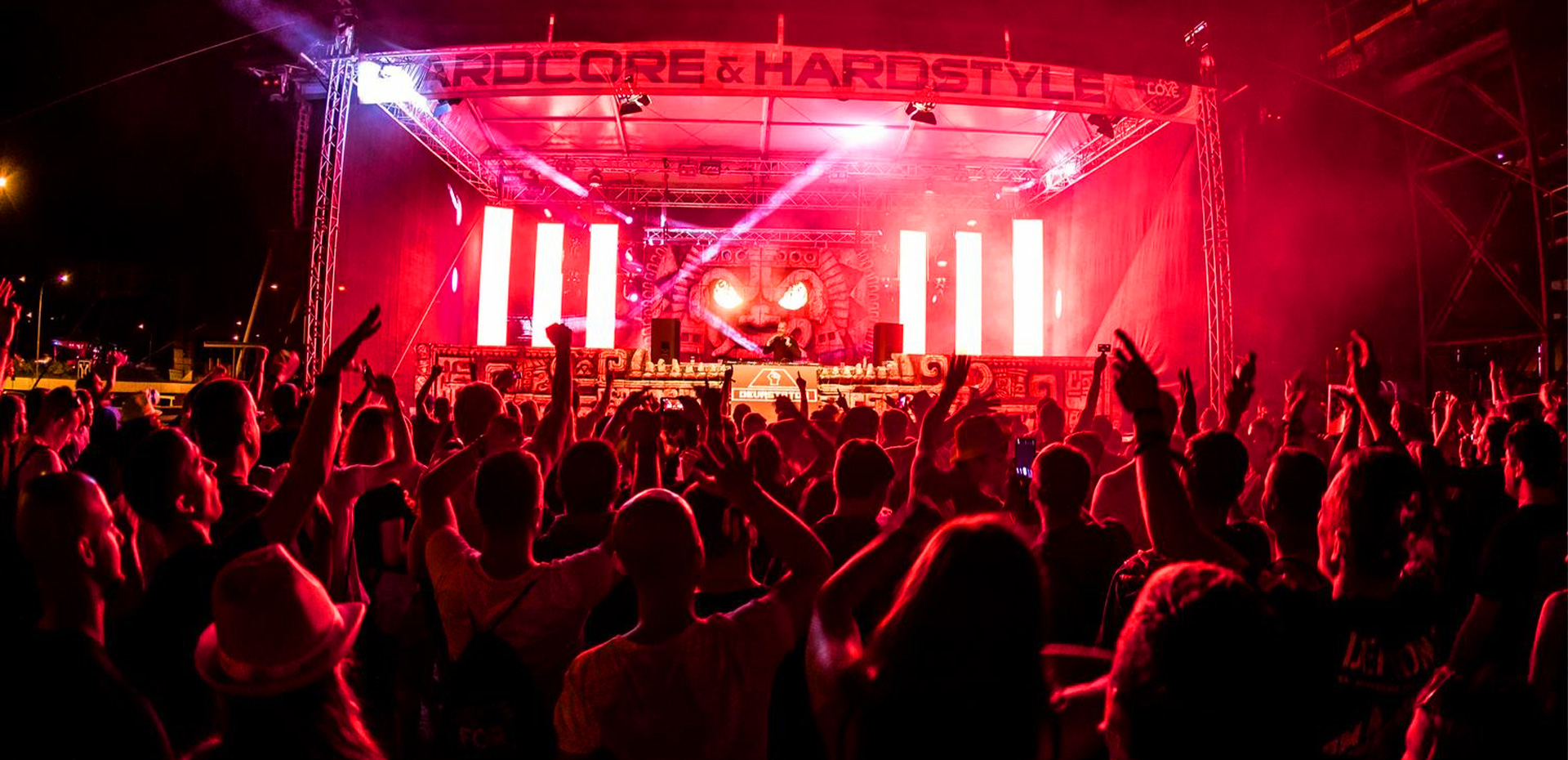
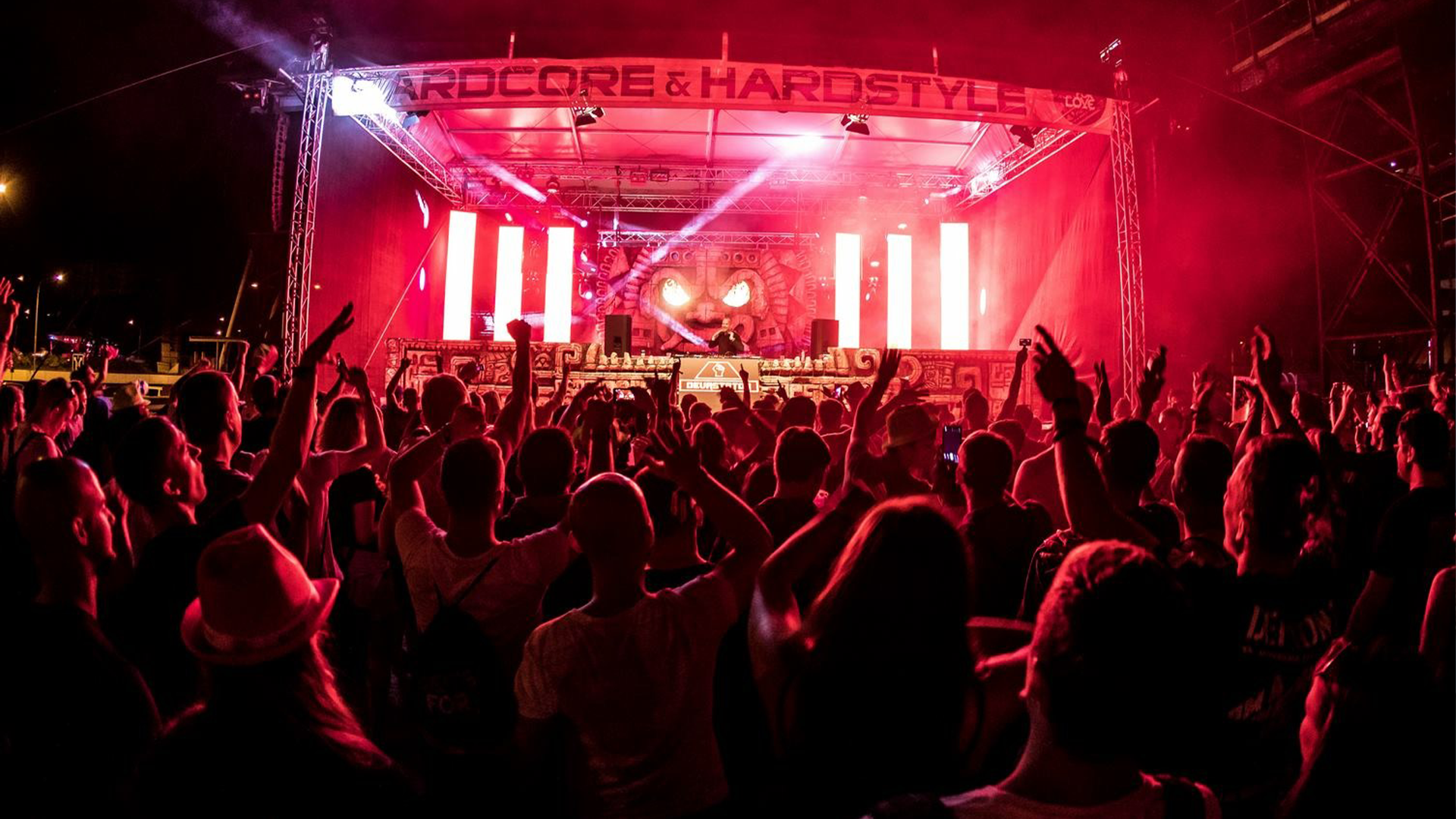
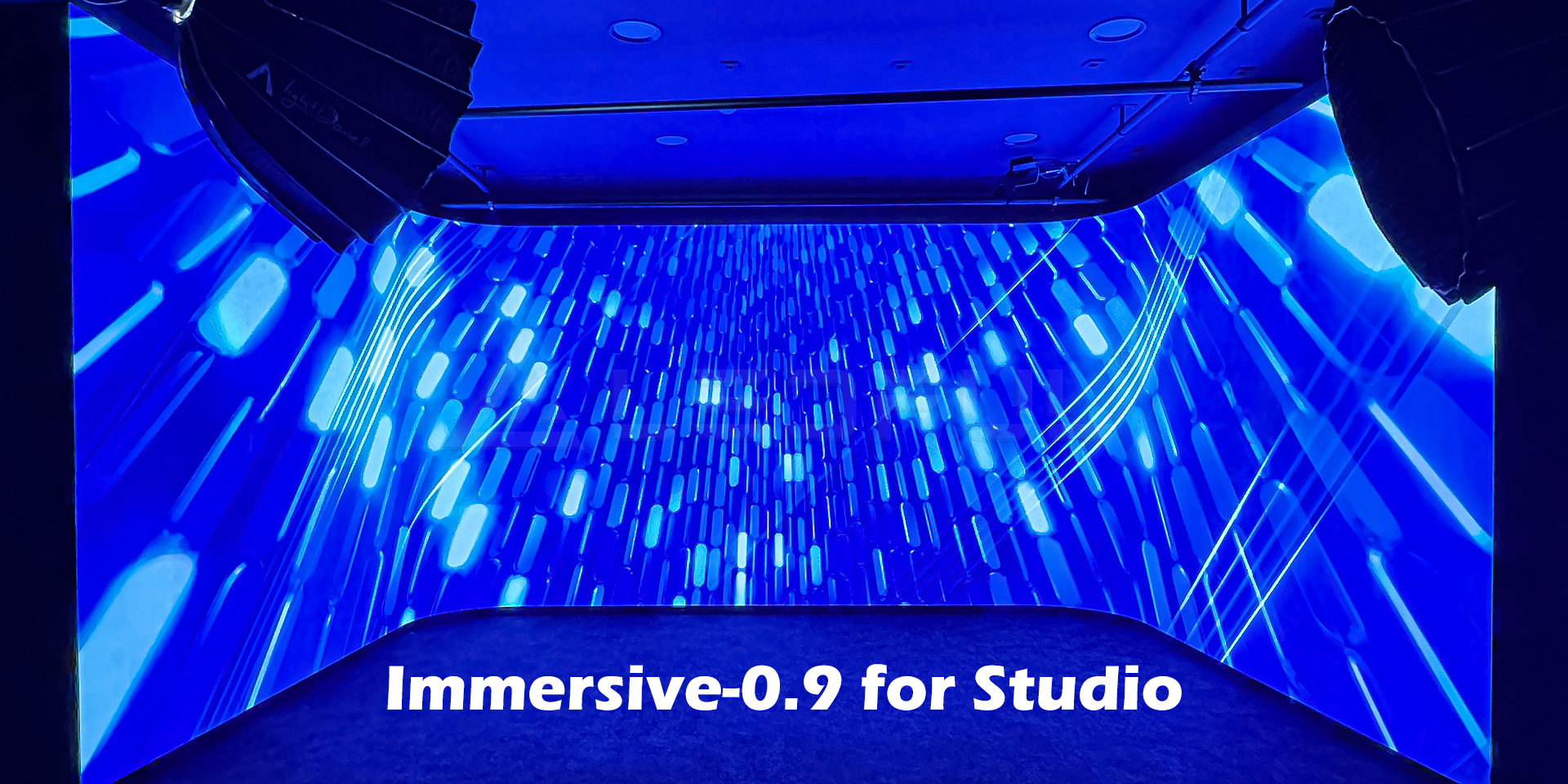
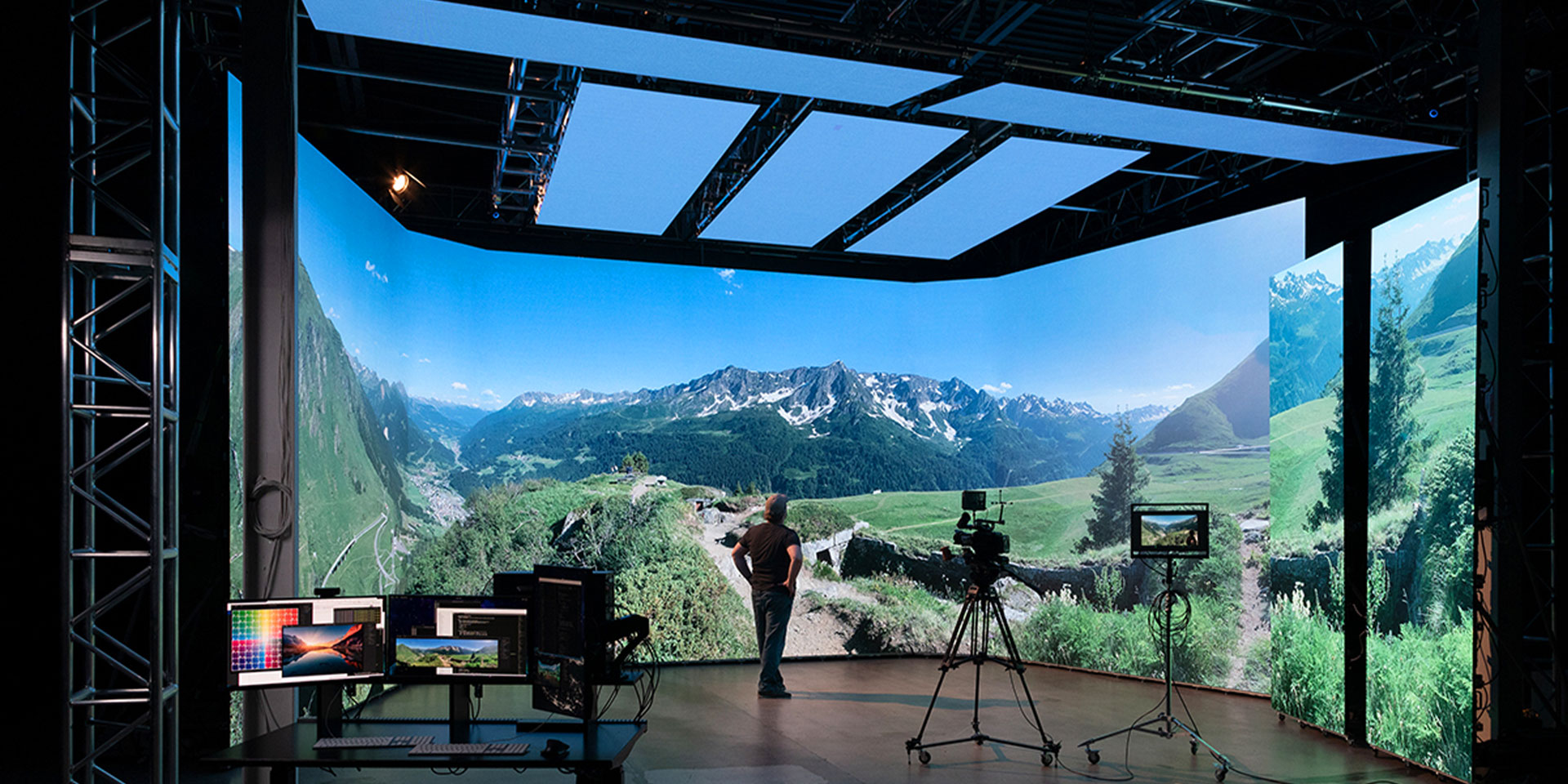
Our advanced production lines and rigorous quality assurance ensure every LEDFUL display meets the highest standards of performance and reliability. We design and develop LED screens for various applications and bring vibrant, colorful displays to shopping malls, stages, stores, conference rooms, studios, digital billboards, stadiums, and houses of worship.
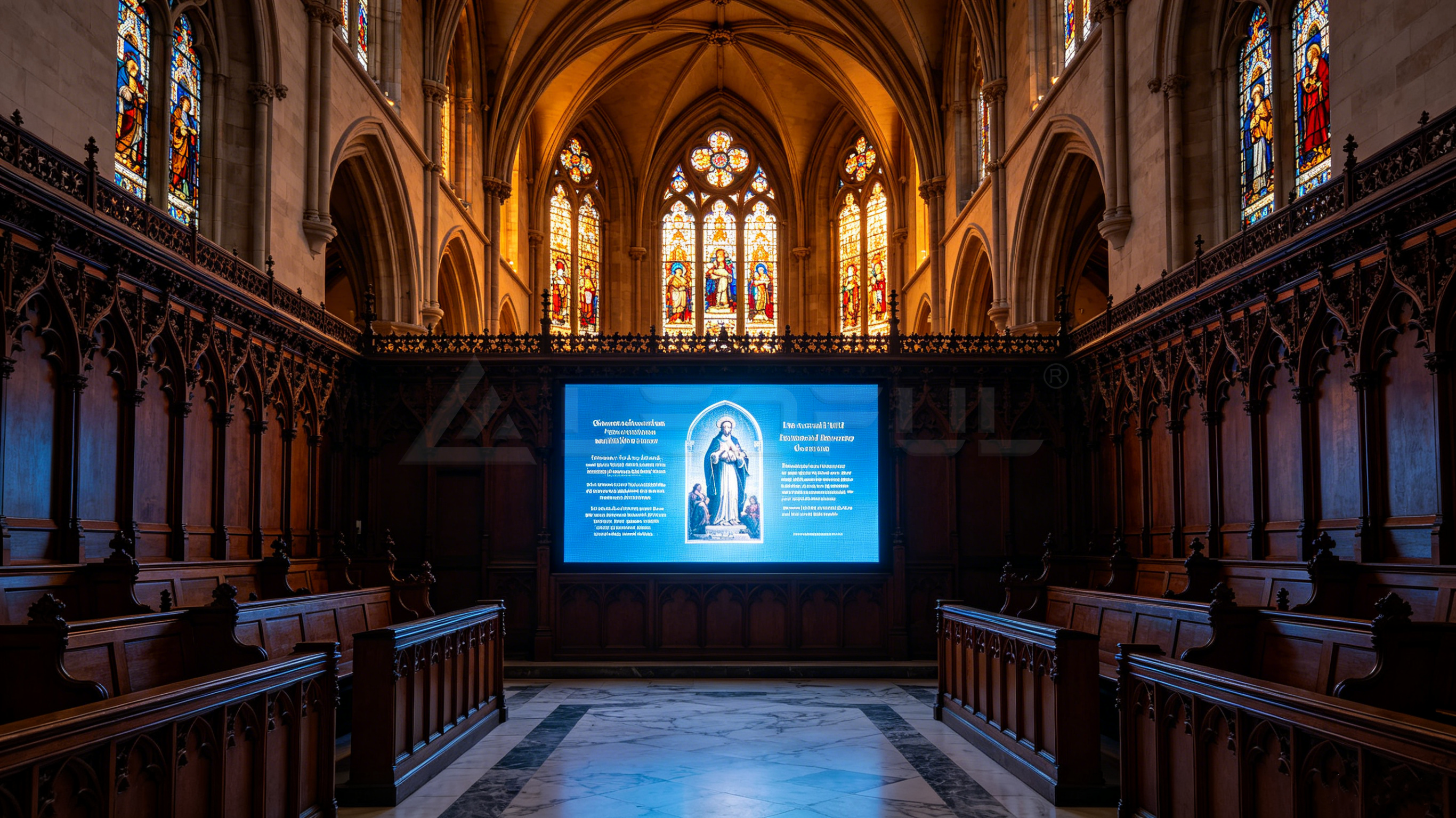
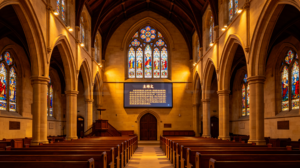
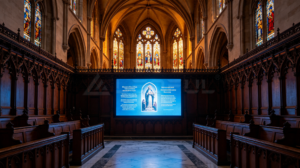
Churches today are embracing modern technology to create more engaging and immersive worship experiences. Among the most impactful upgrades is the use of LED display screens.
From worship lyrics and sermon visuals to live streaming and event presentations, LED screens help churches communicate more effectively while enhancing congregation participation.
In this guide, we’ll explore how churches use LED screens to increase engagement, improve communication, and even boost attendance.
Why Churches Are Switching to LED Screens
Traditional projectors often struggle with brightness, clarity, and visibility in large worship spaces. LED displays solve these issues by providing:
High brightness and visibility
Seamless large-screen presentation
Better audience engagement
Flexible installation options
Long-term reliability
As churches continue modernizing worship environments, LED displays have become a key communication tool.
Key Benefits of LED Screens for Churches
Enhanced Worship Experience
LED screens create a more immersive worship atmosphere by displaying:
Song lyrics
Bible verses
Sermon points
Background visuals
Worship videos
This helps attendees stay focused and actively participate during services.
Better Visibility for Large Congregations
In large churches, people seated farther away may struggle to see traditional projection screens.
LEDFUL provides professional LED display solutions for churches, worship centers, and religious events worldwide.
LEDFUL advantages:
High-definition indoor LED displays
Stable long-term performance
Customized church display solutions
Professional installation support
Global project experience
With over 11,000 successful projects across 116 countries, LEDFUL helps churches create impactful worship environments.
FAQ
Q1: Are LED screens good for churches?
Yes. LED screens improve visibility, engagement, communication, and worship experience.
Q2: What size LED screen does a church need?
It depends on the worship hall size and viewing distance.
Q3: Are LED screens better than projectors for churches?
In most cases, yes. LED displays provide higher brightness, better contrast, wider viewing angles, and lower long-term maintenance compared to projectors.
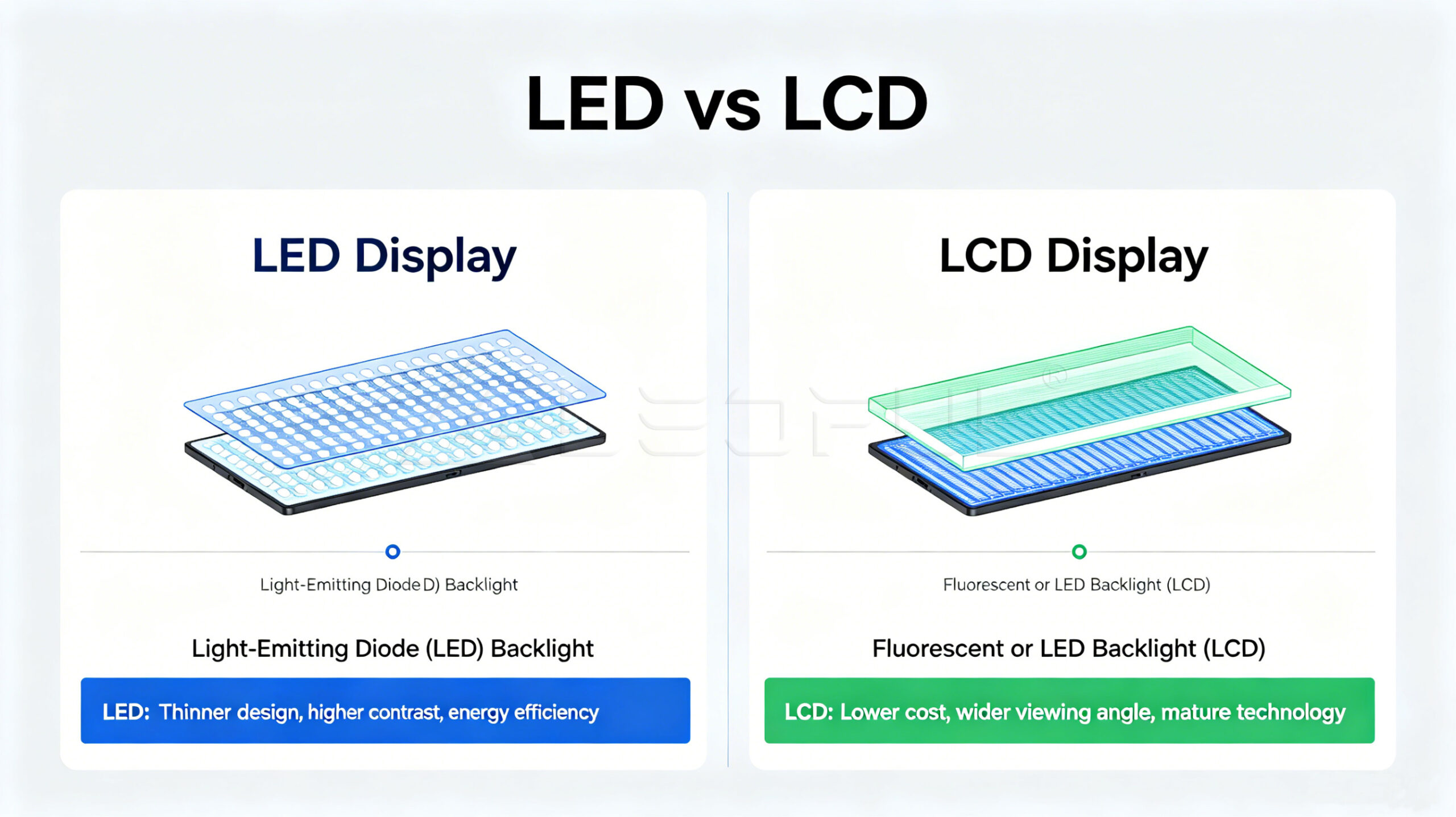
As digital display technology continues evolving, businesses are increasingly comparing LED vs LCD displays for advertising, retail, conference rooms, entertainment, and commercial communication.
While both technologies are widely used, they offer different advantages depending on application requirements.
This guide explains the key differences between LED and LCD displays to help businesses choose the right display solution in 2026.
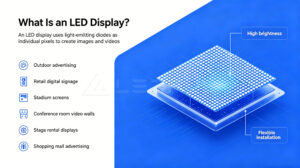
What Is an LED Display?
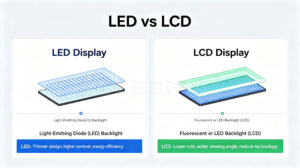
An LED display uses light-emitting diodes as individual pixels to create images and videos.
LED displays are widely used for:
Outdoor advertising
Retail digital signage
Stadium screens
Conference room video walls
Stage rental displays
Shopping mall advertising
Commercial LED displays are known for high brightness and flexible installation.
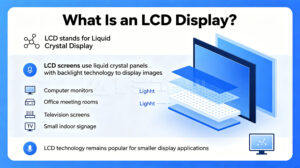
What Is an LCD Display?
LCD stands for Liquid Crystal Display.
LCD screens use liquid crystal panels with backlight technology to display images.
LCD displays are commonly used for:
Computer monitors
Office meeting rooms
Television screens
Small indoor signage
LCD technology remains popular for smaller display applications.
LED vs LCD: Main Differences
Feature
LED Display
LCD Display
Brightness
Very High
Medium
Outdoor Visibility
Excellent
Limited
Seamless Display
Yes
Visible Bezels
Viewing Angle
Wide
Moderate
Lifespan
80,000–100,000 Hours
30,000–60,000 Hours
Screen Size Flexibility
Excellent
Limited
Maintenance
Modular Repair
Panel Replacement
Energy Efficiency
Better for Large Displays
Good for Small Screens
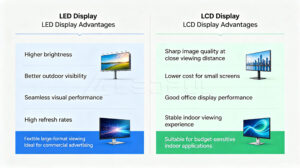
LED vs LCD Image Quality Comparison
LED Display Advantages
LED displays provide:
Higher brightness
Better outdoor visibility
Seamless visual performance
Flexible custom screen sizes
High refresh rates
Better large-format viewing experience
LED technology is ideal for commercial advertising and immersive digital environments.
LCD Display Advantages
LCD displays offer:
Sharp image quality at close viewing distance
Lower cost for small screens
Good office display performance
Stable indoor viewing experience
LCD technology is suitable for budget-sensitive indoor applications.
LED vs LCD for Different Applications
Application
Better Choice
Outdoor Advertising
LED
Shopping Mall Video Wall
LED
Office Monitor
LCD
Conference Room Display
LED
Retail Store Window
LED
Home Television
LCD
Stadium Screen
LED
Commercial environments increasingly prefer LED technology because of scalability and visual impact.
LED Video Wall vs LCD Video Wall
LED Video Wall Advantages
Seamless display without bezels
Better brightness
Larger installation flexibility
Higher durability
Better viewing distance performance
LCD Video Wall Advantages
Lower initial cost
Sharp close-range image quality
Easier for small indoor installations
However, LCD video walls often suffer from visible panel gaps.
Cost Comparison: LED vs LCD
Factor
LED Display
LCD Display
Initial Cost
Higher
Lower
Long-Term Maintenance
Lower
Moderate
Lifespan Value
Better
Standard
Scalability
Excellent
Limited
Although LED displays have higher initial costs, they often provide better long-term commercial value.
Why More Businesses Choose LED Displays in 2026
The commercial display industry is rapidly shifting toward LED technology because businesses increasingly demand:
Large immersive displays
Outdoor visibility
Flexible screen customization
High-impact advertising
Long-term operational stability
Advanced technologies such as COB LED and Mini LED are further improving display performance.
Which Display Technology Should You Choose?
Choose LED Displays If You Need:
Outdoor installation
Large seamless screens
High brightness
Flexible screen shapes
Commercial advertising displays
Long-term operational durability
Choose LCD Displays If You Need:
Budget-friendly office displays
Small indoor monitors
Close-range viewing
Standard indoor applications
The best choice depends on project requirements and budget.
Why Choose LEDFUL LED Display Solutions
LEDFUL specializes in commercial LED display solutions for:
Retail stores
Outdoor advertising
Conference rooms
Events and stages
Sports venues
Digital signage projects
LEDFUL Advantages
High refresh rate LED screens
Energy-efficient technology
Professional technical support
Customized LED video walls
Global installation experience
Reliable commercial performance
LEDFUL delivers professional LED display solutions to clients in more than 116 countries.
FAQ About LED vs LCD Displays
Which is better, LED or LCD display?
LED displays are generally better for commercial advertising, outdoor use, and large video walls because they provide higher brightness and seamless visuals.
Why are LED displays more expensive than LCD?
LED displays offer modular scalability, higher brightness, better durability, and seamless installation, which increases manufacturing and installation costs.
Are LED displays better for outdoor advertising?
Yes. LED displays are specifically designed for outdoor visibility and maintain strong brightness even under direct sunlight.
What are the disadvantages of LCD displays?
LCD displays have visible bezels, lower brightness, and limited scalability for large-format installations.
Which display technology lasts longer?
Commercial LED displays generally have longer operational lifespans compared with LCD displays.
Is LED or LCD better for retail stores?
LED displays are typically better for storefronts, shopping malls, and immersive retail advertising environments.
Can LCD video walls replace LED video walls?
LCD video walls are suitable for indoor environments but cannot fully replace seamless LED video walls for premium commercial applications.
Conclusion
Both LED and LCD technologies have advantages depending on application requirements.
However, in 2026, LED displays continue dominating commercial markets because of superior brightness, scalability, durability, and immersive visual performance.
Businesses seeking long-term commercial display investment increasingly prefer LED technology for modern digital communication.
LED displays are widely used in advertising, retail stores, conference rooms, stadiums, and outdoor media. However, many businesses ignore one critical factor after installation: proper LED display maintenance.
Without regular cleaning and preventive maintenance, dust, humidity, and heat can gradually reduce screen brightness, image quality, and overall lifespan.
This guide explains how to properly clean LED displays and maintain long-term screen performance while reducing repair costs.
Why LED Display Maintenance Is Important
Commercial LED displays are long-term investments. Proper maintenance helps ensure stable operation and protects display performance.
Benefits of Regular LED Screen Cleaning
Maintain high brightness levels
Improve image quality consistency
Reduce overheating risks
Prevent dead pixels
Extend display lifespan
Lower maintenance costs
Improve waterproof reliability
A well-maintained commercial LED display can operate for over 100,000 hours.
Common Causes of LED Display Damage
Cause
Impact on LED Display
Dust accumulation
Reduced brightness & heat buildup
Humidity
Short circuits & corrosion
Poor ventilation
Overheating problems
Improper cleaning chemicals
Surface damage
Static electricity
LED chip damage
Physical impact
Module failure
Outdoor LED displays are especially vulnerable to environmental factors.
Recommended Tools for Cleaning LED Displays
Safe Cleaning Tools
Professional LED display cleaning should use:
Microfiber cloth
Anti-static soft brush
Compressed air blower
Neutral screen cleaning solution
Anti-static gloves
These tools help protect LED lamp beads and module surfaces.
Cleaning Tools to Avoid
Avoid
Why It Is Dangerous
Alcohol-based cleaners
Can damage protective coating
Hard brushes
May scratch LED surface
Excessive water
Risk of short circuit
Strong chemicals
Corrosion risk
High-pressure washing
Module damage
Using incorrect cleaning methods can permanently damage LED modules.
Step-by-Step LED Display Cleaning Process
Step 1: Turn Off the Power Supply
Always disconnect the LED display from power before cleaning.
This helps prevent:
Electrical accidents
Short circuits
Static damage
Safety should always be the first priority.
Step 2: Remove Dust Carefully
Use compressed air or an anti-static soft brush to remove loose dust particles.
As LED display technology continues advancing, COB and SMT have become two of the most discussed technologies in the commercial LED industry.
Businesses searching for high-performance LED displays often compare COB vs SMT to determine which technology offers better image quality, durability, and long-term value.
This guide explains the differences between COB and SMT LED display technology and helps businesses choose the right solution for their applications.
What Is SMT LED Display Technology?
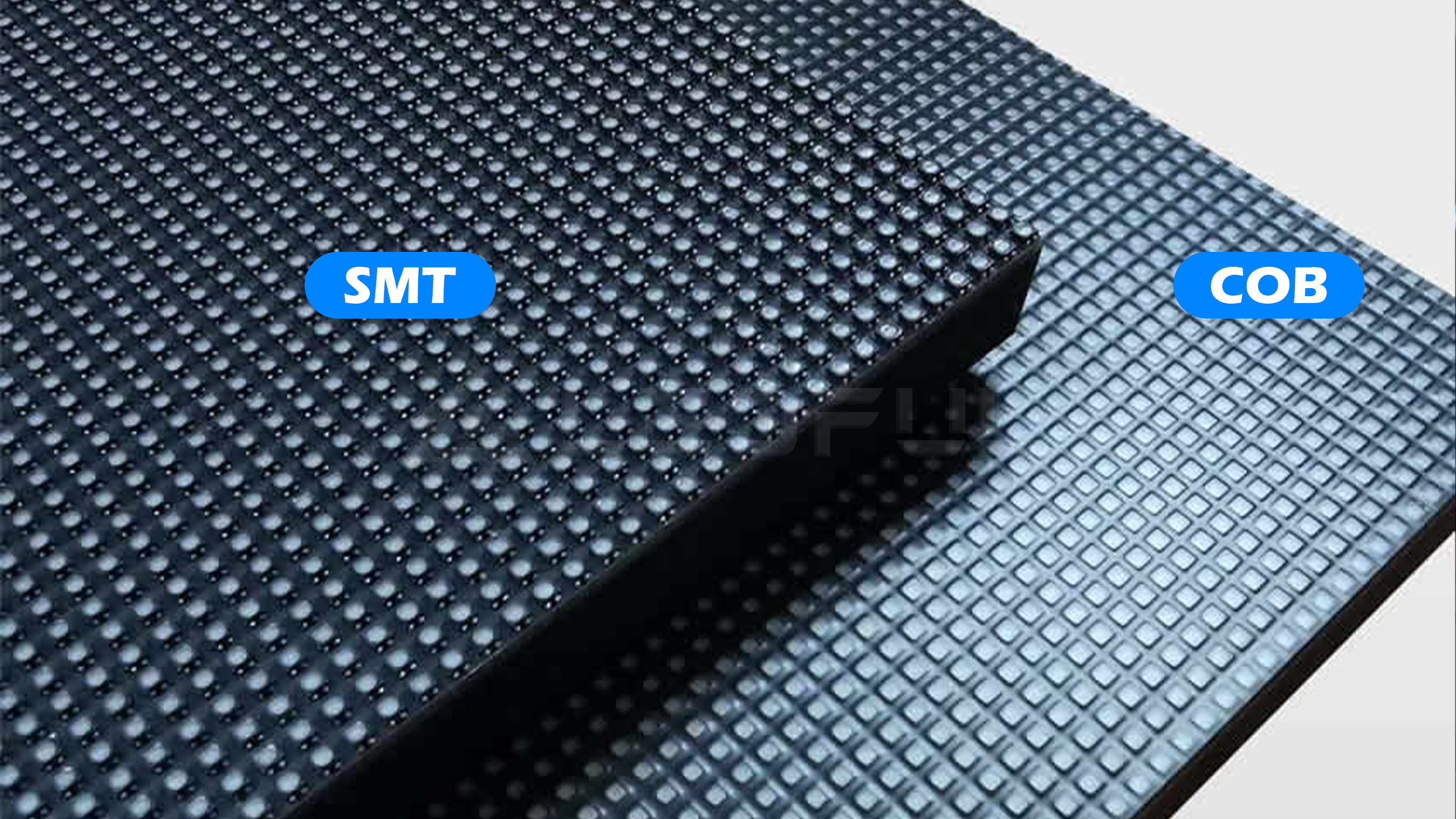
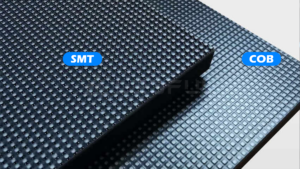
SMT stands for Surface Mount Technology.
SMT LED displays use individual LED lamp beads mounted directly onto PCB boards.
SMT technology is currently the mainstream solution for many commercial LED display applications.
Advantages of SMT LED Displays
Mature manufacturing technology
Lower production cost
Wide product availability
Flexible pixel pitch options
Easier large-scale production
Suitable for outdoor applications
SMT technology remains highly popular in commercial LED markets.
Common Applications of SMT LED Displays
SMT LED displays are widely used for:
Outdoor billboards
Retail advertising
Rental stage displays
Sports stadium screens
Shopping mall LED walls
What Is COB LED Display Technology?
COB stands for Chip on Board.
Unlike SMT technology, COB directly encapsulates LED chips onto the PCB surface.
This creates a more integrated and protected LED module structure.
Advantages of COB LED Displays
Better impact resistance
Improved moisture protection
Superior heat dissipation
Higher reliability
Better black contrast
Improved viewing comfort
COB technology is increasingly used in fine-pitch indoor LED displays.
COB vs SMT LED Display Comparison
Feature
COB LED
SMT LED
Surface Protection
Excellent
Standard
Durability
Higher
Moderate
Black Contrast
Better
Good
Moisture Resistance
Better
Standard
Maintenance
Lower Failure Rate
Easier Lamp Repair
Production Cost
Higher
Lower
Fine Pixel Pitch Performance
Excellent
Good
Viewing Comfort
Better
Standard
Which Technology Has Better Image Quality?
COB LED Advantages
COB technology improves:
Contrast ratio
Black uniformity
Anti-glare performance
Visual comfort
Fine-pitch clarity
This makes COB ideal for:
Conference rooms
Broadcasting studios
Monitoring centers
Corporate video walls
SMT LED Advantages
SMT displays still provide excellent image quality for:
Outdoor advertising
Rental displays
Commercial signage
Cost-sensitive projects
SMT remains highly competitive because of mature manufacturing and affordability.
COB vs SMT Durability Comparison
COB LED displays offer stronger protection against:
Dust
Humidity
Physical impact
Static electricity
This reduces dead pixel risks and improves long-term operational stability.
SMT displays remain easier to repair because individual lamp beads can be replaced more easily.
COB vs SMT Cost Comparison
Technology
Initial Cost
Long-Term Maintenance
COB LED
Higher
Lower
SMT LED
Lower
Moderate
Businesses should evaluate total ownership cost instead of only initial purchase price.
In 2026, COB technology continues growing rapidly because of:
Mini LED development
Higher reliability demands
Improved visual comfort
Better energy efficiency
Growth of fine-pitch LED markets
Many industry experts believe COB will become the future standard for premium indoor LED displays.
How to Choose Between COB and SMT
Choose COB LED If You Need:
Ultra-fine pixel pitch
Premium image quality
Better durability
Luxury indoor applications
Long-term stability
Choose SMT LED If You Need:
Cost-effective solutions
Outdoor advertising displays
Rental LED screens
Flexible commercial applications
Easier maintenance
Choosing the right technology depends on project requirements and budget.
Why Choose LEDFUL LED Display Solutions
LEDFUL provides both COB and SMT LED display solutions for global commercial projects.
LEDFUL Advantages
Advanced manufacturing technology
High refresh rate performance
Stable image quality
Customized project support
Professional technical consultation
Global installation experience
LEDFUL delivers professional commercial LED display solutions for clients worldwide.
FAQ About COB vs SMT LED Displays
What is the difference between COB and SMT LED displays?
COB directly encapsulates LED chips onto the PCB surface, while SMT mounts individual LED lamp beads onto the PCB board.
Which is better, COB or SMT LED display?
COB LED displays provide better durability and fine-pitch performance, while SMT displays are more cost-effective and versatile.
Is COB LED better for fine pixel pitch displays?
Yes. COB technology offers improved image uniformity and viewing comfort for ultra-fine pixel pitch applications.
Why are COB LED displays more expensive?
COB manufacturing technology is more advanced and provides better protection, durability, and image quality.
Are SMT LED displays still good in 2026?
Yes. SMT LED displays remain highly popular for outdoor advertising, rental staging, and cost-effective commercial projects.
Which LED technology has better durability?
COB LED displays generally provide stronger resistance against dust, moisture, and physical impact.
What applications are best for COB LED displays?
COB LED displays are ideal for conference rooms, broadcasting studios, control centers, and premium indoor video walls.
Conclusion
Both COB and SMT LED technologies offer strong advantages depending on application requirements.
COB is becoming the preferred solution for premium fine-pitch indoor displays, while SMT remains highly competitive for versatile and cost-effective commercial LED projects.
Understanding the differences between COB vs SMT helps businesses choose the most suitable LED display technology for long-term success.
In today’s competitive retail environment, attracting customer attention is more challenging than ever. Traditional printed posters and static billboards are gradually losing effectiveness as consumers increasingly expect immersive and dynamic shopping experiences.
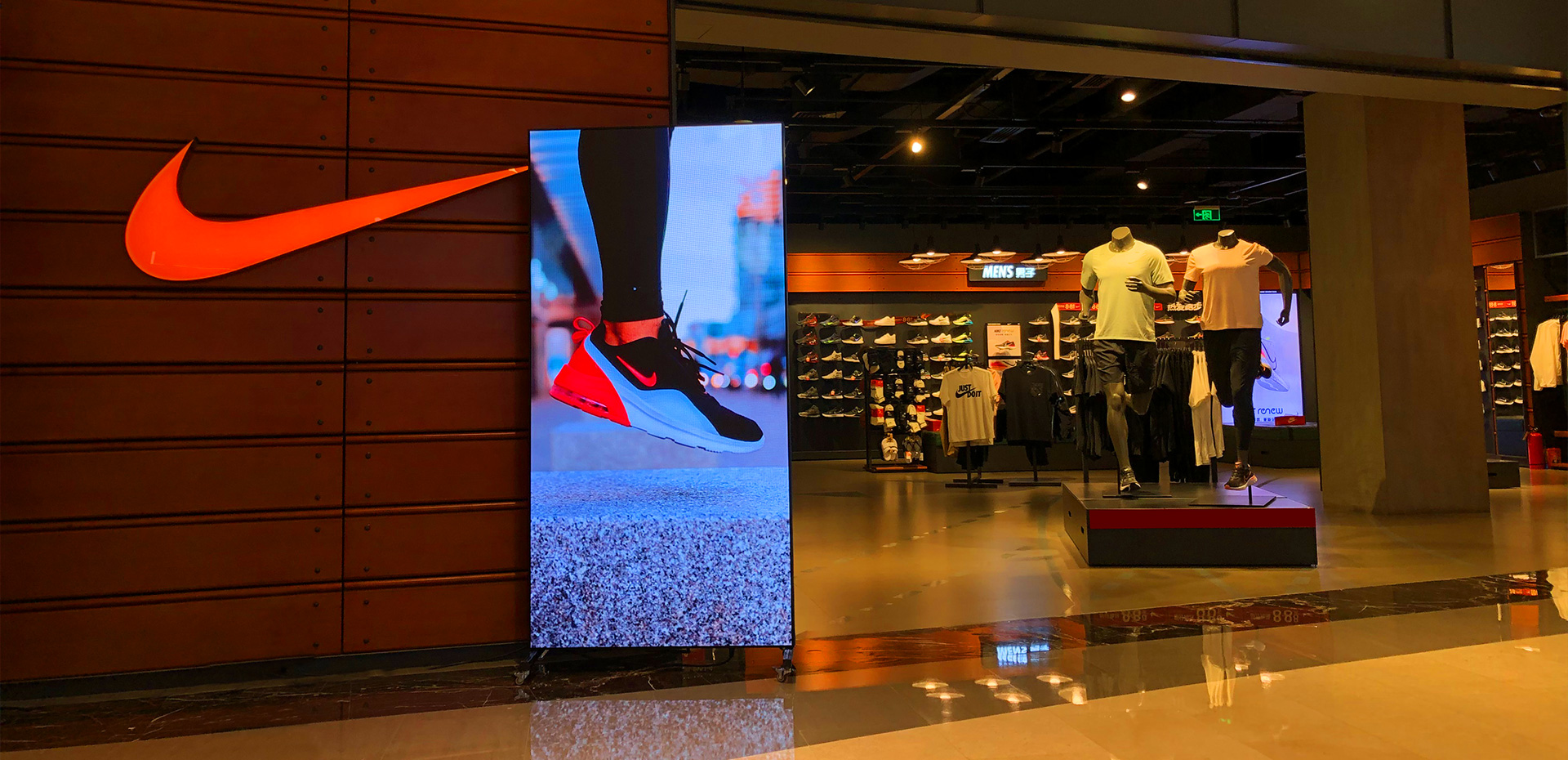
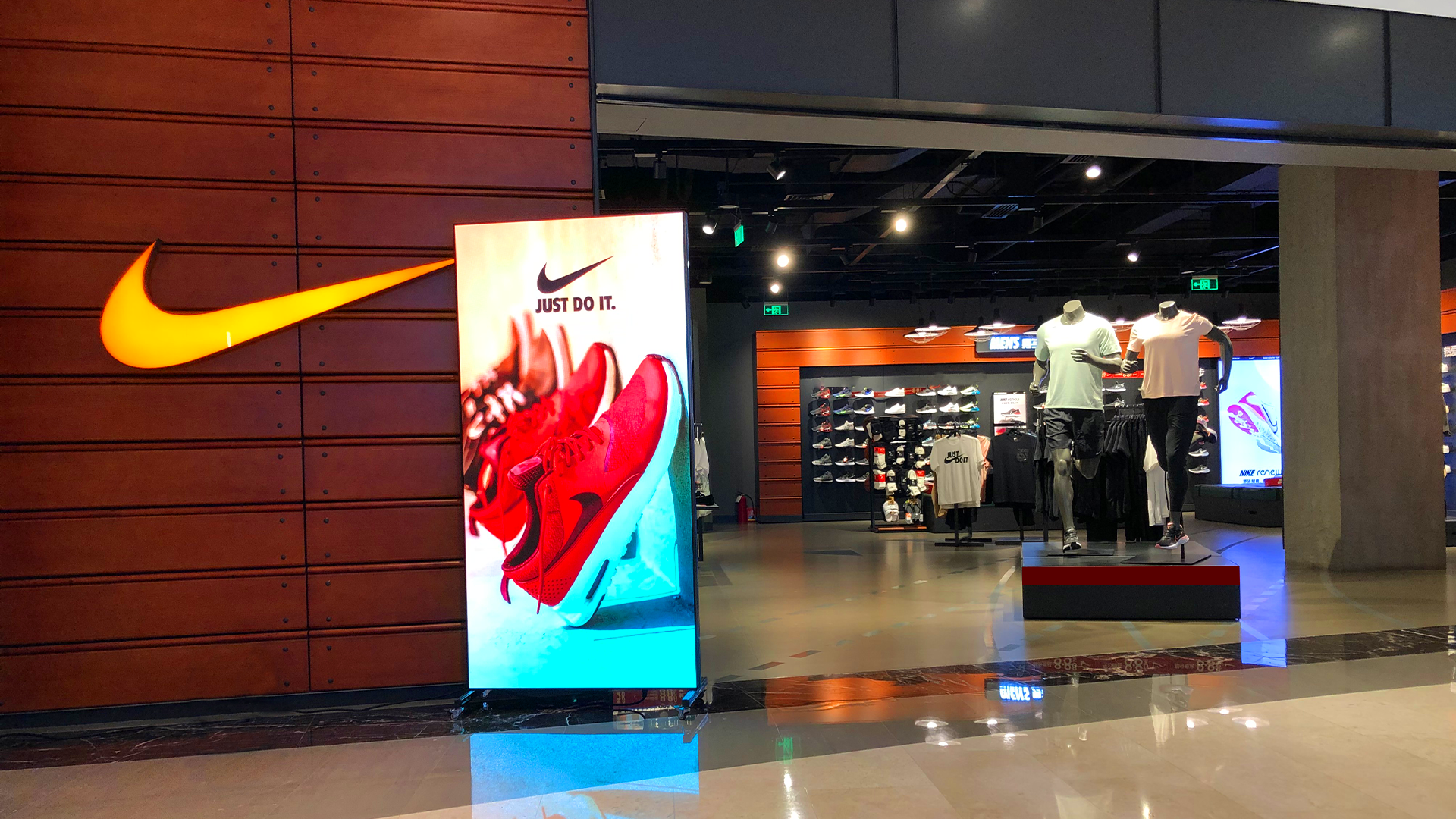
As a result, more retail brands are investing in professional LED display solutions to enhance storefront visibility, improve customer engagement, and increase in-store traffic.
From luxury fashion boutiques to shopping malls and chain stores, LED displays are becoming an essential digital marketing tool in 2026.
This guide explores the best LED display solutions for retail stores and shopping windows while helping businesses choose the right commercial LED display technology based on application scenarios and budget.
Why Retail Stores Are Switching to LED Displays
Modern retail businesses need visually impactful advertising solutions that can compete with online shopping experiences.
Compared with traditional signage, LED displays offer several advantages:
Dynamic video advertising
Real-time content updates
High brightness under sunlight
Modern and premium appearance
Better customer engagement
Lower long-term advertising costs
Flexible installation options
Retail LED displays help brands create stronger visual communication while improving customer conversion rates.
Best Types of LED Displays for Retail Applications
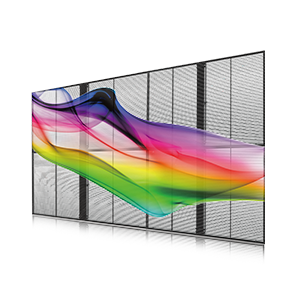
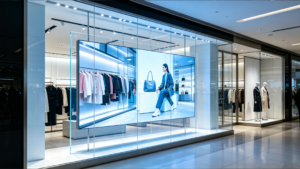
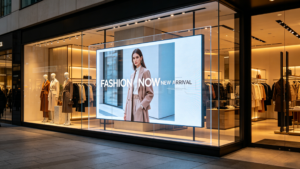
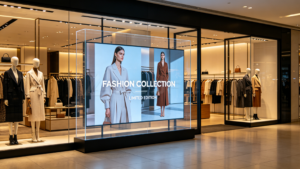
1. Transparent LED Displays for Shopping Windows
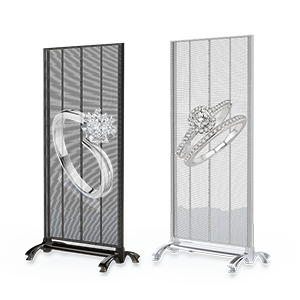
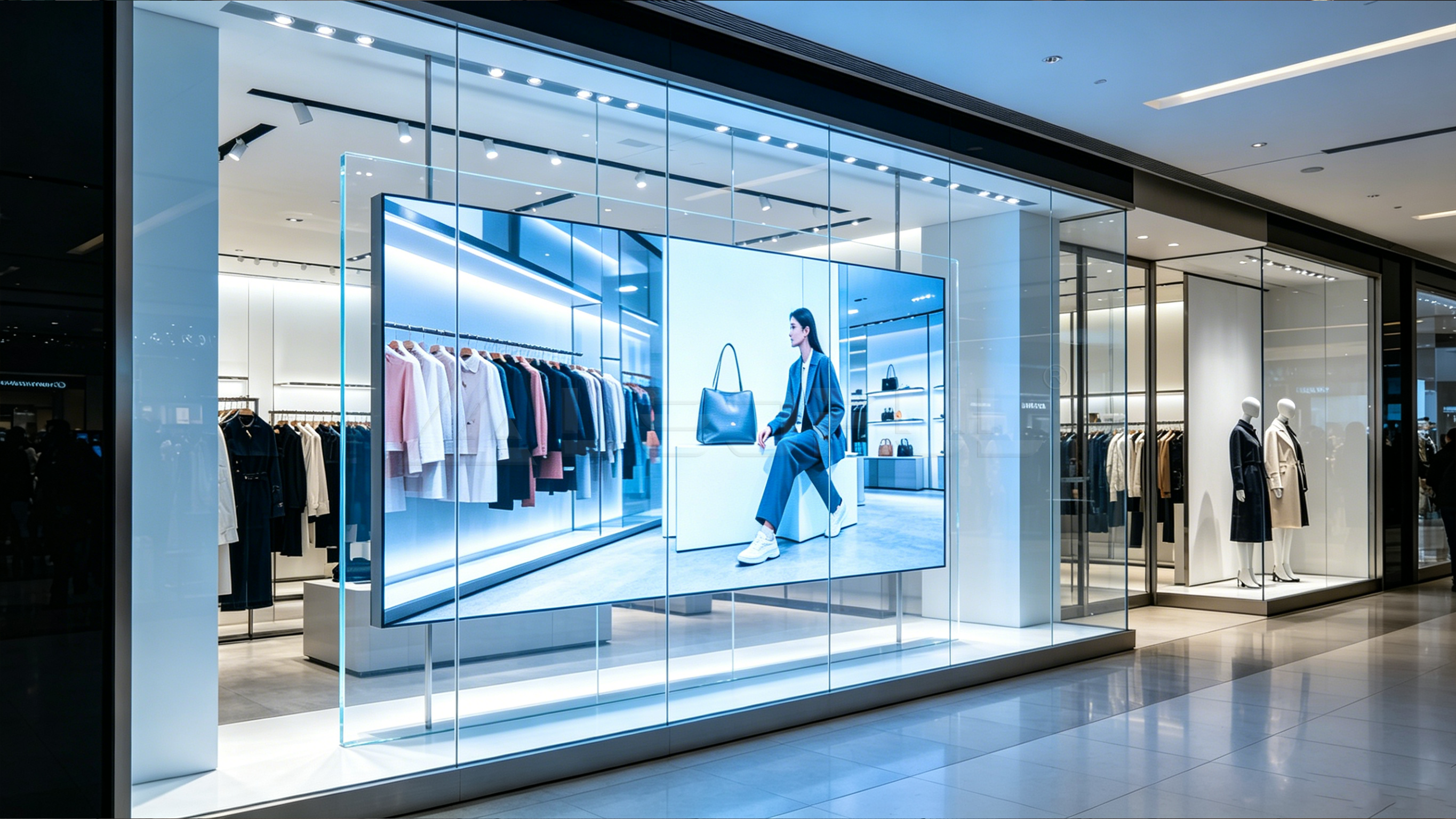
Transparent LED displays are one of the fastest-growing solutions for modern storefront advertising.
These displays allow retailers to showcase promotional videos while maintaining visibility inside the store.
Best Applications
Luxury retail stores
Shopping malls
Fashion boutiques
Automotive showrooms
Electronics stores
Main Advantages
Feature
Benefit
High Transparency
Maintains storefront visibility
Ultra High Brightness
Excellent daylight visibility
Lightweight Structure
Easier installation
Modern Appearance
Premium brand image
Space Saving Design
Ideal for shopping windows
Recommended Pixel Pitch
Viewing Distance
Recommended Pixel Pitch
2–3 meters
P2.9–P3.9
3–5 meters
P3.9–P5
5+ meters
P5–P10
Transparent LED displays are especially suitable for luxury retail environments where visual aesthetics are critical.
2. Indoor LED Video Walls for Retail Stores
Indoor LED video walls are widely used to create immersive shopping experiences.
These displays are commonly installed in:
Flagship stores
Shopping mall atriums
Brand experience centers
Cosmetic stores
Technology showrooms
Advantages of LED Video Walls
Seamless large-format visuals
High brightness and contrast
Flexible custom sizes
Strong visual impact
Better customer engagement
Many international retail brands use LED video walls to display advertising campaigns, product launches, and social media content.
3. LED Poster Displays
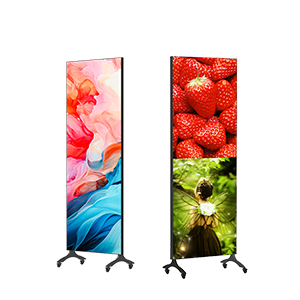
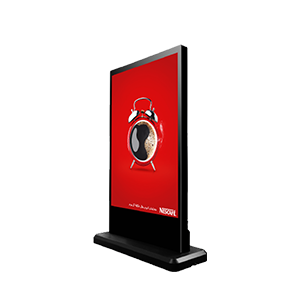
LED poster displays are portable digital signage solutions designed for flexible retail advertising.
Common Retail Applications
Entrance promotions
Seasonal discounts
Product launches
Event campaigns
Shopping mall advertising
Benefits of LED Poster Displays
Advantage
Description
Plug-and-Play
Easy operation
Portable Design
Flexible positioning
Cost Effective
Lower investment cost
Fast Content Updates
Real-time advertising
For small retail stores, LED posters are one of the most affordable commercial LED display solutions.
4. Shelf LED Displays and Smart Retail Signage
Small-format LED displays are increasingly used in smart retail environments.
Applications Include
Smart shelves
Dynamic pricing systems
Product information displays
Interactive shopping experiences
These solutions improve customer interaction while reducing manual operational costs.
Transparent LED vs LCD Displays for Retail Stores
Feature
Transparent LED Display
LCD Display
Brightness
Very High
Medium
Seamless Display
Yes
No
Visibility Under Sunlight
Excellent
Limited
Transparency
Yes
No
Installation Flexibility
High
Moderate
Lifespan
80,000–100,000 Hours
30,000–50,000 Hours
Premium Visual Experience
Excellent
Standard
For storefront advertising and shopping windows, transparent LED displays offer significantly better visual impact than traditional LCD screens.
How to Choose the Right Retail LED Display
Before purchasing a retail LED display, businesses should evaluate several important factors.
1. Store Environment
Indoor and outdoor conditions affect brightness requirements and waterproof protection levels.
2. Viewing Distance
Pixel pitch should match customer viewing distance for optimal image quality.
3. Content Type
Video-heavy advertising requires higher refresh rates and better grayscale performance.
4. Budget Planning
Transparent LED displays provide premium branding effects but have higher initial investment costs.
5. Installation Space
Retailers should evaluate ceiling height, power supply, structural support, and installation conditions.
Future Trends of Retail LED Displays in 2026
The retail display industry continues evolving rapidly.
Key Trends Include
AI-powered advertising systems
Interactive LED touch displays
3D naked-eye LED advertising
COB LED technology
Cloud content management
Energy-efficient LED displays
As retail competition grows, digital display technology is becoming increasingly important for customer attraction and brand positioning.
Why Choose LEDFUL Retail LED Display Solutions
LEDFUL specializes in customized commercial LED display solutions for retail stores, shopping malls, and advertising applications worldwide.
LEDFUL Advantages
High-brightness LED displays
Transparent LED display solutions
Custom screen sizes
Professional installation support
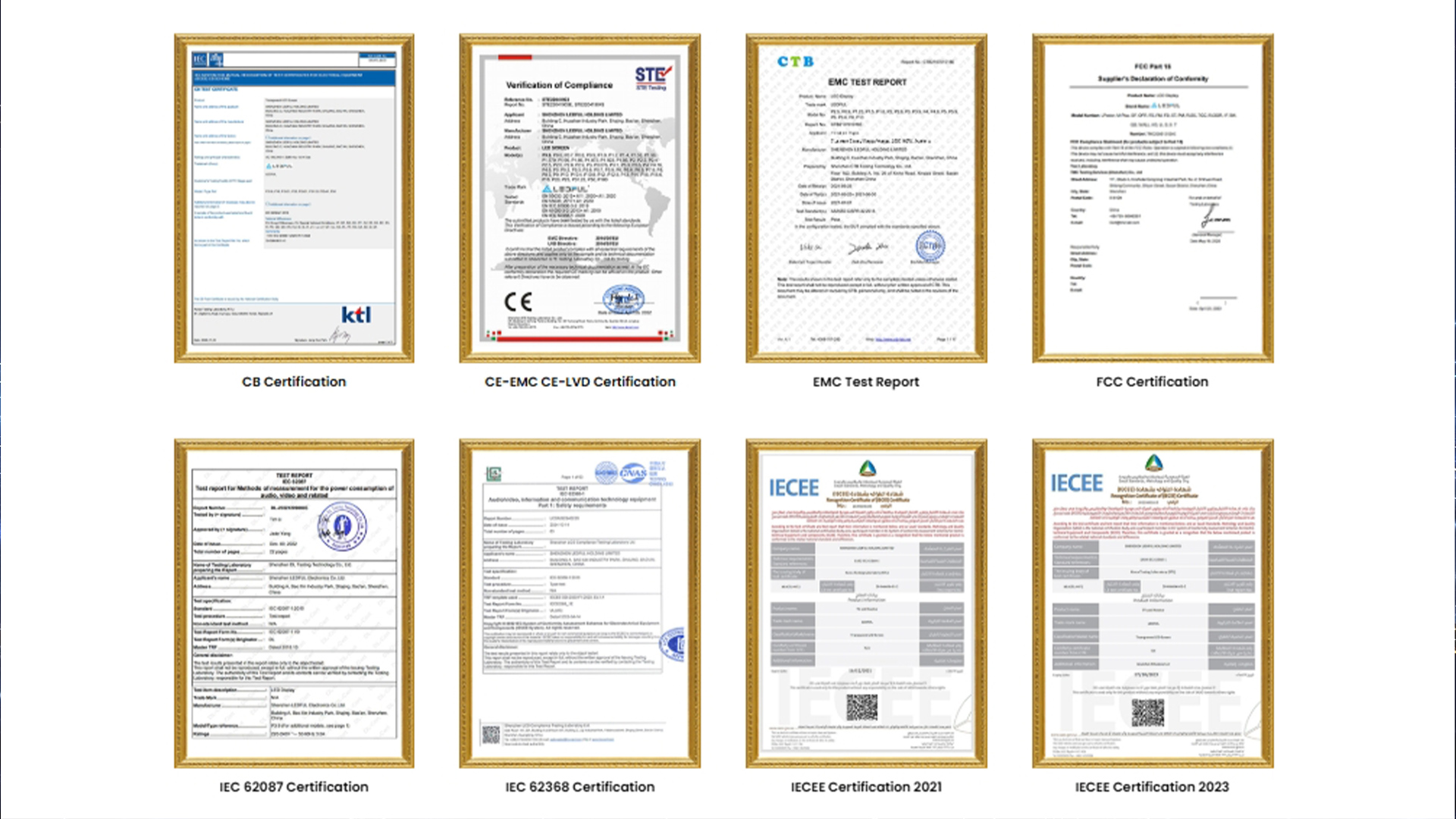
CE, FCC, and RoHS certifications
Global project experience in 116+ countries
Stable image performance
Professional technical consultation
LEDFUL helps retailers create modern digital shopping experiences with reliable and visually impactful LED display technology.
FAQ About Retail LED Displays
What is the best LED display for retail stores?
The best LED display for retail stores depends on the application scenario. Transparent LED displays are ideal for shopping windows, while indoor LED video walls are better for immersive in-store brand experiences.
Are LED displays better than LCD screens for shop windows?
Yes. LED displays offer higher brightness, seamless visuals, and better visibility under sunlight, making them more suitable for storefront advertising.
How much does a retail LED display cost?
Retail LED display prices vary depending on screen size, pixel pitch, brightness, and installation requirements.
What pixel pitch is best for retail LED displays?
For close viewing distances, fine pixel pitches such as P2.5, P2, or P1.8 are recommended for better image clarity.
Can transparent LED displays be used in shopping windows?
Yes. Transparent LED displays are specifically designed for storefront windows because they allow customers to see both digital content and the store interior.
Are LED displays energy efficient for retail stores?
Modern LED displays are highly energy efficient and can reduce long-term operational costs compared with traditional advertising systems.
How long do retail LED displays last?
High-quality commercial LED displays can last between 80,000 and 100,000 hours with proper maintenance.
Conclusion
Retail LED displays are transforming how brands communicate with customers in physical shopping environments.
From transparent shopping window displays to immersive LED video walls, the right commercial LED display solution can significantly improve customer engagement, brand visibility, and sales conversion.
As digital retail experiences continue evolving in 2026, investing in professional LED display technology is becoming a long-term competitive advantage.
Unite passion to build a stronger and more professional team.
In today’s highly competitive LED display industry, a company’s true strength is not only reflected in its technology, manufacturing capabilities or global projects, but also in the cohesion, execution and vitality of its team.
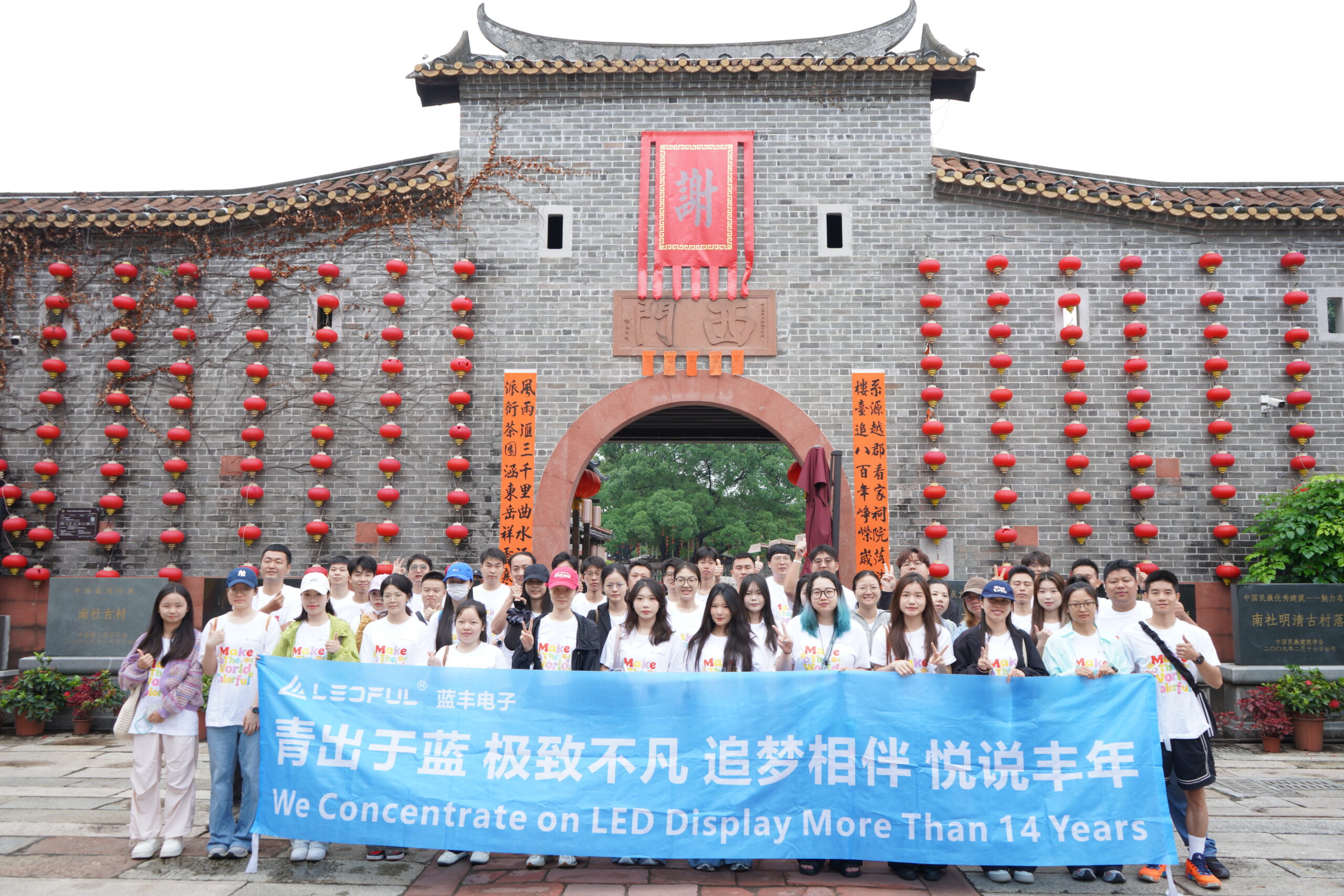
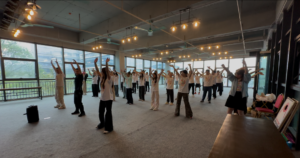
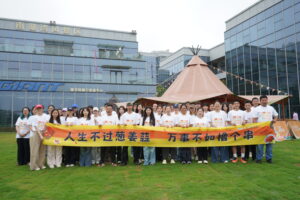
Recently, LEDFUL successfully held a splendid and highly significant team-building event in Dongguan. Through outdoor collaborative challenges, cultural exploration and immersive team experiences, the event brought employees together, fully demonstrating LEDFUL’s professional, collaborative, innovative and dynamic corporate culture.
Explore the history and culture of Dongguan hand in hand
The journey begins at the renowned Nanshe Ancient Village of the Ming and Qing Dynasties in Dongguan. This well-preserved historical village has a rich heritage spanning several centuries. According to the itinerary of the event, the village boasts numerous architectural remains, ancient residences, ancestral halls, and elements of Lingnan traditional culture from the Ming and Qing periods.
Wandering through the ancient streets and alleys, the members of the LEDFUL team were able to slow down from their busy work, appreciate traditional Chinese culture, and enhance their connections with each other in a relaxed environment.
For LEDFUL, culture and teamwork are inseparable. A company with a global perspective must also maintain strong internal values and close connections among people.
Enhance team cohesion through outdoor challenges
The second part of the event was held at the South Lake Bay Campground of Songshan Lake, an upscale outdoor activity venue located by the Songshan Lake.
The team participated in a number of interactive activities, including:
Ice-breaking warm-up games
160-Second Challenge
Team rhythm coordination task
Human chain collaboration
“Power Circle” Team Challenge
Team Drumbeat Synchronization Competition
Strategy puzzle game
These activities are designed to enhance the team’s communication efficiency, trust, teamwork ability, leadership and execution ability.
As a professional LED display manufacturer serving 116 countries and regions around the world, LEDFUL is well aware that outstanding project delivery not only relies on advanced LED display technology, but also depends on the efficient collaboration among various departments such as sales, engineering, production, logistics and after-sales service.
Every successful LED display project requires close cooperation among various departments – and this is precisely what this team-building activity emphasizes.
LEDFUL: More than just an LED display manufacturer
LEDFUL was established in 2015 and is dedicated to the research and development, manufacturing, customized solutions, and global project delivery of LED displays. With over 11,000 successful cases worldwide, LEDFUL has become a trusted LED display partner for customers in various fields such as commercial advertising, events, retail, sports, broadcasting, control rooms, and creative display applications.
The core advantages of LEDFUL include:
Professional manufacturing capability
Advanced production facilities
A strict quality control system
Rich international project experience
Reliable delivery capability
Strong team collaboration
Effective communication
Rapid response support
An experienced engineering team
Professional after-sales service
Innovative corporate culture
Encourage innovation and collaboration
Invest in employee growth
Build a long-term stable team
Maintain a positive and uplifting corporate atmosphere.
This team-building activity once again demonstrated LEDFUL’s commitment to fostering a united, dynamic and highly professional team.
Work hard, grow together and share happiness.
In addition to business growth, LEDFUL believes that successful companies should also create meaningful experiences for their employees.
During the evening barbecue party and outdoor leisure activities, team members enjoyed relaxed conversations, outdoor dining, cycling around Songshan Lake, and interactive entertainment together.
These moments help to enhance trust, improve communication and foster a collaborative spirit that supports LEDFUL’s long-term development in the global LED display market.
Look forward to a brighter future
As the global demand for high-quality LED display solutions continues to grow, LEDFUL will continue to increase its investment in technology and talent.
Strong companies stem from strong teams.
Through every project, every innovation and every team activity, LEDFUL constantly demonstrates:
Professionalism
Reliability
Solidarity and cooperation
Be passionate and devoted.
Global service capability
With a highly cohesive and dynamic team, LEDFUL is committed to providing global customers with smarter, more reliable and more innovative LED display solutions.
Walk into any modern football venue and the difference becomes immediately apparent. Massive, brilliant displays now dominate spaces where static scoreboards with incandescent bulbs once stood. This transformation reflects broader changes in audience expectations, revenue strategies, and operational capabilities. We at LEDFUL have witnessed this evolution firsthand while helping stadiums across the country upgrade their visual infrastructure. The shift from traditional scoreboards to dynamic digital systems represents more than technological progress—it fundamentally changes how venues engage with fans and generate revenue. This article explores the compelling reasons behind this industry-wide transition.
Enhanced Fan Engagement and Experience
Real-Time Information Delivery transforms how spectators follow match action. Old scoreboards showed only basic data: the score, time remaining, and perhaps player numbers. However, modern football stadium led display systems deliver instant statistics, player information, and video highlights that enrich the viewing experience. We have observed that fans attending matches now expect this level of interaction, having grown accustomed to comprehensive data during televised broadcasts. A quality sports led display installation brings the at-home viewing experience into the stadium, satisfying audiences who crave deeper engagement with the game.
Replay Capabilities address the natural human desire to see critical moments again. Traditional scoreboards offered no opportunity to review controversial calls or spectacular goals. Today’s football stadium led display screens provide instant replays from multiple angles, allowing fans to appreciate exceptional plays and understand officiating decisions. This capability reduces frustration during disputed moments and increases overall satisfaction with the live experience. Stadiums investing in advanced sports led display technology find that fans remain more engaged throughout the match, even during pauses in live action.
Immersive Atmosphere Creation extends beyond basic game information. Dynamic content, including player introductions, crowd prompts, and celebratory animations, transforms the venue environment. Large-scale football stadium led display installations create shared emotional experiences that static signage could never achieve. The ability to coordinate content across multiple displays synchronizes crowd response and builds the electric atmosphere that makes live football unique.
Revenue Generation and Sponsorship Opportunities
Dynamic Advertising Inventory represents perhaps the most compelling financial argument for replacement. Old scoreboards offered fixed advertising space with limited visibility and no flexibility. Modern sports led display systems enable venues to sell rotating advertisements to multiple sponsors, dramatically increasing revenue potential. We have helped stadiums implement football stadium led display networks that deliver targeted messages throughout events, maximizing exposure for sponsors while generating substantial income for facility operators. The ability to change content instantly also allows last-minute sponsorship opportunities that static boards cannot accommodate.
Sponsorship Activation Capabilities exceed what traditional scoreboards could provide. Modern displays showcase sponsor content in creative formats including video, animation, and interactive segments. This enhanced presentation increases sponsorship value, justifying higher rates and longer commitments from corporate partners. Football stadium led display technology allows sponsors to connect with audiences emotionally rather than simply displaying logos, creating partnerships that benefit both venues and their commercial partners.
In-Game Promotional Opportunities multiply when static boards become dynamic screens. Contests, fan features, and sponsored segments during breaks generate additional revenue while entertaining spectators. These activations would be impossible with old scoreboard technology but become seamless with integrated sports led display systems.
Operational Flexibility and Future-Proofing
Content Versatility ensures stadiums maximize their visual investment throughout the year. While old scoreboards served only during matches, modern football stadium led display installations provide value during concerts, corporate events, and other venue bookings. The ability to configure content for diverse applications makes these systems revenue generators beyond game days, improving overall facility utilization and return on investment.
Remote Management Capabilities simplify operations for venue staff. Modern sports led display systems allow content updates, diagnostics, and troubleshooting from centralized locations, reducing labor requirements and improving response times. This operational efficiency appeals to facilities managing multiple events with limited technical staff.
Scalability and Integration with emerging technologies protect venue investments for years ahead. Football stadium led display infrastructure accommodates future innovations including augmented reality integration, advanced analytics visualization, and enhanced mobile connectivity. Venues choosing modern systems position themselves for technological developments rather than facing obsolescence.
The migration from traditional scoreboards to dynamic displays reflects fundamental changes in how stadiums serve fans, sponsors, and operators. We believe that understanding engagement enhancement, revenue generation, and operational flexibility explains why this transition accelerates across the football industry. LEDFUL remains committed to delivering sports led display solutions that transform venues into immersive environments while delivering measurable business results. Remember that investing in quality football stadium led display technology today positions your facility for success in an increasingly competitive entertainment landscape.
The integration of digital displays into athletic venues has fundamentally transformed how audiences experience live competition. Modern spectators expect instant access to statistics, player information, and game developments beyond what the naked eye can perceive. This demand for immediate information drives technological advancement in arena infrastructure worldwide. We at LEDFUL have observed this evolution firsthand, supplying visual systems that bridge the gap between on-field action and audience understanding. The capabilities embedded in contemporary sports LED display technology enable information delivery at speeds and scales previously impossible, creating richer experiences for attendees while providing valuable operational tools for venue managers.
Delivering Instant Statistics and Game Flow Information
The primary function of arena displays involves keeping spectators informed about contest developments as they unfold. Traditional scoreboards conveyed only basic information through static numbers updated manually. Current sports led display installations present comprehensive data streams that update automatically through integration with timing systems and official scoring equipment. Shot clocks, possession indicators, penalty times, and individual player statistics appear instantly as officials register events. This real-time synchronization eliminates confusion about game state while reducing the mental effort required from fans tracking complex rule structures. For fast-paced sports where decisions occur in seconds, immediate visual confirmation of official calls helps maintain crowd engagement and understanding. The high refresh rates engineered into our displays ensure smooth presentation of rapidly changing information without motion blur or lag that could mislead viewers. Teams and venues investing in these capabilities report improved spectator satisfaction and reduced inquiries to guest services regarding basic game information.
Enabling Advanced Replay and Analysis Features
Video review has become integral to modern athletic competition across multiple sports. Official reviews examine close calls, while broadcast partners analyze technique and strategy. Large-format sports led display installations serve both functions simultaneously. When officials review plays, arena screens can display relevant angles to crowds, maintaining transparency in decision-making processes. This openness helps spectators understand rulings that might otherwise appear controversial from distant seats. During pauses in action, displays present slow-motion analysis highlighting exceptional athletic performances or tactical developments. Coaches and athletes increasingly reference these replays during competitions, using large-format visuals to identify opponent tendencies or evaluate their own positioning. The brightness capabilities of our displays ensure visibility even in venues with abundant natural light entering through translucent roofs or wall openings. This clarity is especially important when detailed analysis requires distinguishing subtle movements or ball trajectories against complex backgrounds.
Supporting Sponsorship Integration and Commercial Messaging
The financial structure of modern sports depends heavily on sponsorship revenue, much of which flows through venue display systems. Digital boards surrounding playing surfaces generate significant income while maintaining clean aesthetics through coordinated content presentation. Sports led screen technology allows seamless rotation between game information, sponsor messages, and promotional content without physical sign changes or labor costs. Dynamic advertising spaces adjust content based on time of day, audience demographics, or specific game situations, maximizing commercial value for venue operators. Perimeter displays integrated with playing surfaces must withstand occasional player contact, ball impacts, and environmental exposure while maintaining perfect visual performance. Our engineering addresses these demands through robust protective measures that preserve image quality despite physical stress. The revenue generated through these systems often justifies the entire display investment within contracted sponsorship periods, making them financially self-sustaining assets for forward-thinking venues.
Facilitating Crowd Engagement and Entertainment
Beyond game-critical information, arena displays create entertainment experiences extending the value of attendance. Between plays and during breaks, sports led screen content engages audiences through interactive features, contest promotions, and celebratory animations. Cameras scanning crowds appear on displays, creating communal moments as attendees see themselves and neighbors on massive screens. Trivia contests, dance challenges, and sponsored games maintain energy levels during timeouts while providing additional sponsorship inventory. For neutral-site events or tournaments featuring multiple teams, displays orient casual fans by presenting team introductions, player backgrounds, and tournament context. These engagement features transform stadiums and arenas from mere viewing locations into comprehensive entertainment destinations. Attendance at live events competes with home viewing experiences offering convenience and cost savings; the unique atmosphere created partly through display-driven engagement justifies the premium associated with being present.
The evolution from static scoreboards to dynamic visual systems represents a fundamental advancement in how venues communicate with audiences. Real-time statistics, instant replay capabilities, sponsorship integration, and crowd engagement features collectively transform attendance experiences while generating operational revenue. Organizations evaluating arena improvements increasingly recognize sports led display technology as infrastructure investment rather than discretionary expense. We at LEDFUL continue developing systems that push visualization boundaries, ensuring our clients maintain competitive advantages in attracting audiences and serving their information needs. The future of live event attendance depends partly on these visual systems delivering value beyond what remote viewing provides.
Facility managers and stadium operations teams face critical decisions when implementing visual systems in athletic venues. The placement of display technology directly impacts viewer experience, advertising revenue potential, and operational safety. Two primary installation approaches dominate the sports environment, each offering distinct advantages for different applications. Understanding these methodologies ensures optimal selection for basketball arenas, football stadiums, and multi-purpose athletic facilities. At LEDFUL, we regularly consult with sports venue operators seeking guidance on whether a hanging or perimeter configuration best serves their specific requirements for a sports led display installation.
Hanging Installations for Centralized Viewing
Suspended display configurations position visual elements directly above the playing surface, creating focal points visible from most seats in the venue. This approach proves particularly valuable for multi-sport facilities where spectator sightlines must accommodate various event configurations without obstruction. A centrally hung sports led display delivers consistent viewing angles throughout the arena, ensuring fans in upper bowl sections receive the same visual information as courtside spectators. The engineering requirements for hanging installations demand careful attention to structural loading, seismic considerations, and wind sway in retractable roof stadiums. Modern hanging systems incorporate advanced rigging that allows height adjustment for different events, lowering displays for basketball games and raising them for concerts or ice hockey. When specifying a hanging sports led display, evaluating the venue’s existing structural capacity becomes essential, as retrofitting support points often requires significant architectural modification.
Perimeter Installations for Boundary Definition
Edge-mounted configurations line the boundaries of playing surfaces, creating continuous visual bands that define competition space while delivering advertising and replay content. This approach excels in professional leagues where rink boards or sideline panels generate substantial sponsorship revenue through consistent camera visibility. A perimeter led display for sports applications typically withstands more physical contact than hanging alternatives, with impact-resistant faces protecting LED components from player collisions and errant equipment. The lower placement allows intimate viewing for participants and nearby spectators, though visibility diminishes for upper bowl seating compared to suspended alternatives. Perimeter installations must accommodate varying boundary configurations across different sports, requiring modular systems that reconfigure quickly between events. Additionally, these displays often incorporate protective padding systems that maintain player safety while preserving display functionality during active competition.
Signal Distribution and Content Zoning Considerations
The installation method fundamentally influences how content reaches the display and how operators manage multiple viewing zones throughout the facility. Hanging sports led display configurations typically function as unified canvases presenting single large-format content, though advanced processors enable split-screen arrangements showing multiple camera feeds simultaneously. The centralized location simplifies signal distribution, requiring shorter cable runs from control rooms to display positions. Perimeter led display for sports installations often involve numerous individual panels distributed around the venue, demanding sophisticated signal distribution networks that maintain synchronization across all boundary sections. Content management strategies differ substantially between these approaches, with perimeter systems frequently supporting independent zoning that displays different advertising messages on opposite sides of the playing surface. Modern venues increasingly combine both installation methods, creating comprehensive visual ecosystems where hanging displays provide primary replay content while perimeter screens deliver continuous sponsor messaging and supplementary statistics.
Maintenance Access and Operational Continuity
Long-term operational planning must account for how maintenance activities affect venue scheduling and revenue generation. Hanging sports led display installations require specialized access equipment for service operations, often necessitating arena downtime or overnight maintenance windows when lifts can position technicians at display height. The complexity of accessing suspended displays influences warranty decisions and service contract structures. Perimeter led display for sports configurations offer immediate ground-level access, simplifying routine maintenance and rapid troubleshooting during events. However, their exposed positions increase vulnerability to spectator interaction and accidental damage during competitions. Evaluating maintenance pathways during initial specification prevents unexpected operational disruptions, ensuring your chosen configuration aligns with facility staffing capabilities and event scheduling requirements.
Integration with Venue Control Systems
Modern athletic facilities operate through centralized management platforms that coordinate lighting, audio, and visual elements throughout competition spaces. Hanging installations typically integrate as primary visual anchors within these systems, receiving priority signal routing and backup power provisions. The concentrated nature of suspended displays simplifies redundancy planning, allowing straightforward implementation of backup processors and power supplies. Perimeter led display for sports applications often distribute control across multiple zones, requiring more sophisticated network architecture to maintain synchronization during live events. The integration complexity influences training requirements for venue technical staff and determines whether operators can manage all displays from a single workstations or require distributed control positions.
Successful sports venue implementation requires matching installation methodology to specific operational priorities and architectural constraints. LEDFUL recommends that facility managers evaluate both hanging and perimeter approaches through the lens of their event schedule, revenue models, and long-term maintenance capabilities before committing to a sports led display configuration.
Selecting visualization equipment for athletic venues requires balancing technical specifications against operational realities. The visual system supporting a professional sporting event must perform flawlessly under demanding conditions while satisfying diverse stakeholder expectations. Athletes require accurate information, officials depend on reliable replay capabilities, and spectators expect immersive experiences that enhance their connection to live competition. At LEDFUL, we recognize that purchasing decisions for these environments carry long-term implications for venue reputation and revenue generation. This guide outlines the essential considerations when evaluating a sports competition led display for your facility.
Evaluating Refresh Rate and Image Processing Requirements
Fast-moving athletic action places unique demands on display technology that standard commercial screens cannot satisfy. The refresh rate determines how smoothly motion appears and whether high-speed footage exhibits blurring or tearing during critical moments. For professional sports applications, a sports led display should deliver refresh rates exceeding 1920Hz, with premium configurations reaching 3840Hz or higher to accommodate broadcast cameras without scanning lines. Additionally, image processing capabilities influence how the display handles rapid scene changes between live action, instant replay, and sponsored content. Advanced processing minimizes latency, ensuring that action on the display synchronizes precisely with on-field events. When comparing sports competition led display options, request demonstrations showing fast-motion content to evaluate real-world performance rather than relying solely on specification sheets.
Assessing Brightness and Viewing Angle Uniformity
Indoor arenas and outdoor stadiums present dramatically different lighting environments that influence display visibility throughout events. An indoor basketball facility requires different brightness specifications than a partially covered football stadium hosting afternoon games. Your sports led display must deliver sufficient luminance to overcome ambient light without creating uncomfortable glare for spectators seated nearby. Uniformity across the viewing cone is equally important, as spectators seated at extreme angles deserve the same visual experience as those facing the display directly. Wide viewing angles ensure that advertising partners receive value from all seating sections, maximizing sponsorship inventory value. Modern sports competition led display engineering addresses these requirements through precise optical design and component selection that maintains color accuracy regardless of viewing position.
Considering Structural Engineering and Weight Distribution
The physical installation of large-format displays in sports venues involves complex structural considerations that extend beyond typical commercial projects. Hanging configurations must account for dynamic loads during events, including crowd movement, wind exposure in partially open facilities, and seismic activity in certain geographic regions. The weight of your sports led display directly affects structural reinforcement requirements and installation costs. Lightweight cabinet construction reduces demands on existing support systems while simplifying maintenance access throughout the facility’s operational life. Additionally, the wind load characteristics of outdoor installations influence cabinet design, with perforated or vented options reducing stress during high-wind events. Engineering partners should provide detailed structural calculations demonstrating how your chosen sports competition led display integrates safely with venue infrastructure.
Evaluating Control System Integration and Content Management
Modern sports venues operate as sophisticated broadcast environments where multiple display types coordinate to deliver cohesive fan experiences. Your primary sports led display must integrate seamlessly with existing control infrastructure, including scoring systems, broadcast feeds, and advertising management platforms. The control system should support multiple simultaneous input sources, allowing instant switching between live action, replay, statistical graphics, and sponsor messages. User interface design affects how easily operational staff manage content during fast-paced events, with intuitive controls reducing training requirements and minimizing error potential during live broadcasts. Additionally, remote monitoring capabilities enable technical teams to verify sports competition led display status from centralized locations, identifying potential issues before they affect viewer experience.
Assessing Durability for Competition Environment Demands
Athletic venues subject display equipment to conditions rarely encountered in other applications. Impact from balls and equipment, vibration from crowd movement and sound systems, and exposure to cleaning chemicals all challenge display longevity. Your sports led display should incorporate protective features appropriate for its specific location within the venue. Perimeter installations require impact-resistant surfaces and potentially protective padding systems that maintain player safety. Hanging configurations demand robust cabinet construction that maintains alignment despite building movement and acoustic vibration. Inquire about component sourcing and environmental testing protocols when evaluating sports competition led display durability, as these factors directly influence long-term reliability and maintenance frequency.
Making an informed choice requires thorough evaluation of technical performance, structural requirements, and operational integration capabilities. LEDFUL encourages venue operators to prioritize motion handling and durability when selecting a sports led display for competition environments.
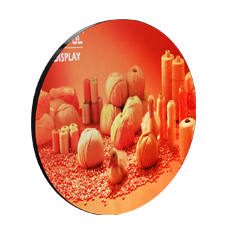
Visual communication continues evolving as brands seek distinctive formats that differentiate their messaging from conventional rectangular displays. Circular configurations have emerged as compelling alternatives that naturally attract viewer attention through their unique geometry. The growing adoption of these specialized displays reflects broader industry movement toward creative applications that enhance architectural environments and brand experiences. We at LEDFUL have monitored these developments closely, observing how creative led display innovations shape purchasing decisions across multiple sectors. Understanding the trajectory of circle led screen technology helps organizations plan investments that remain relevant throughout changing market conditions. This overview examines the five key trends defining the circular display industry during 2026.
Architectural Integration and Customization Capabilities
Modern construction projects increasingly specify creative led display elements during initial design phases rather than treating screens as retrofitted additions. Architects now routinely incorporate circular configurations into building features such as lobby columns, atrium centerpieces, and curved wall surfaces. This integration trend drives demand for circle led screen solutions that complement rather than compete with surrounding design elements. LEDFUL has responded by developing products offering installation flexibility while maintaining professional visual performance standards. Clients now expect displays that recess flush with surrounding surfaces and minimize visible cabling, transforming screens from standalone equipment into integrated architectural features. Furthermore, customization capabilities have expanded significantly, with manufacturers offering various diameters, curvature radii, and resolution options tailored to specific project requirements. This trend toward bespoke solutions enables truly unique implementations that strengthen brand identity through distinctive visual presentations.
Content Management Evolution and Software Advancement
Sophisticated display hardware requires equally capable content development tools to maximize its communication potential. The industry has witnessed substantial investment in software platforms designed specifically for non-rectangular canvas formats. Creating engaging material for creative led display applications previously required extensive manual effort and specialized technical skills that limited widespread adoption. Current developments show content management systems evolving to include native support for circular mapping, enabling easier development of immersive visuals that utilize the entire display surface effectively. LEDFUL collaborates with software developers to ensure our circle led screen products integrate seamlessly with leading content platforms, reducing implementation complexity for clients. Artificial intelligence tools now assist in adapting existing rectangular content for circular presentation, preserving brand messaging investments while enabling format expansion. Additionally, cloud-based management platforms allow centralized control of distributed circular display networks, proving particularly valuable for retail chains and hospitality groups managing multiple locations.
Enhanced Viewer Engagement Through Immersive Experiences
Audience attention has become the most valuable currency in commercial environments, driving demand for display formats that naturally capture and retain viewer focus. Circular configurations create immersive experiences through their departure from expected rectangular formats, encouraging longer viewing durations and deeper message processing. Retail environments utilize creative led display installations to highlight promotional merchandise and create memorable brand moments that generate social media sharing and repeat visits. Hospitality venues incorporate circle led screen elements as central design features that establish distinctive atmospheres while delivering practical information to guests. LEDFUL has supported numerous implementations across these sectors, observing how circular displays naturally encourage customer engagement through their unique visual presence. The trend toward experience-focused commercial design continues accelerating throughout 2026, suggesting sustained growth for creative display applications. Furthermore, integration with interactive technologies such as motion sensors and touch capabilities transforms passive viewing into active participation, deepening audience connections with displayed content.
Technical Performance Improvements and Manufacturing Advances
Display technology advancements benefit circular configurations as much as traditional formats, with resolution, brightness, and color performance reaching new benchmarks annually. Current creative led display offerings achieve pixel densities previously impossible at reasonable price points, enabling closer viewing distances and expanded application possibilities. LEDFUL incorporates the latest LED technology across circular product lines, ensuring clients receive performance matching or exceeding conventional rectangular alternatives. The circle led screen category now includes options suitable for applications ranging from intimate interior installations to large-scale exterior landmark displays. Improved manufacturing precision enables tighter curvature radii and seamless segment joining, eliminating visual disruptions that earlier generation circular displays sometimes exhibited. Additionally, enhanced weather resistance and thermal management capabilities extend outdoor application possibilities, allowing circular displays to function reliably in diverse environmental conditions throughout extended operational periods.
Environmental responsibility has moved from a secondary consideration to a primary purchasing factor for many organizations evaluating display investments. Clients increasingly examine energy consumption profiles, material composition, and end-of-life recyclability when comparing creative led display options. Manufacturers responding to this trend develop products with reduced power requirements, longer operational lifespans, and components designed for eventual recycling. LEDFUL addresses these concerns through efficient cabinet designs that minimize material usage while maintaining structural integrity. Our circle led screen products incorporate energy-saving features that reduce operational costs and environmental impact simultaneously. Furthermore, modular construction enables component-level repairs rather than complete panel replacement when issues arise, extending useful life and reducing waste. This sustainability focus resonates particularly strongly with European and North American clients facing increasing regulatory pressure to document and reduce their environmental footprints across all business operations. To learn more about how green technology is changing the industry, read our full guide on the benefits of an energy efficient display. Understanding the architecture of an energy saving led display can help you choose a low power led display that lowers long-term utility costs without sacrificing brightness.
The circular display market continues continues to mature through architectural integration, software advancement, engagement enhancement, technical improvement, and sustainability focus. These five trends collectively expand opportunities for organizations seeking distinctive visual communication solutions that capture attention effectively. We invite you to contact LEDFUL to discuss how our creative led display offerings can address your specific project requirements and deliver the engaging visual experiences that 2026 audiences expect from forward-thinking brands.
Businesses seeking memorable visual experiences often face a critical technology decision that shapes how audiences perceive their message. Both sphere led screen installations and projection mapping techniques offer spectacular results, yet they operate on fundamentally different principles with distinct advantages and limitations. At LEDFUL, we have helped clients evaluate these options for venues ranging from corporate lobbies to entertainment districts. The choice between investing in physical display hardware versus projection-based solutions depends on multiple factors including environment, content requirements, budget constraints, and long-term operational goals. Understanding these differences ensures your investment delivers the intended impact.
Visual Impact and Environmental Considerations
The visual characteristics of a sphere led screen differ dramatically from projection mapping in ways that affect audience experience. A sphere led screen generates its own light through thousands of individual pixels, maintaining consistent brightness regardless of ambient lighting conditions. This self-illuminating property makes sphere installations suitable for environments where projection would wash out, including daylight-exposed atriums and brightly lit retail spaces. LEDFUL manufactures creative led display spheres that achieve vivid color saturation and deep blacks through precise pixel control. Projection mapping, by contrast, relies on reflected light and requires carefully controlled darkness to achieve optimal results. The projection surface must have suitable reflective properties, and any ambient light can significantly degrade image quality. For venues hosting daytime events or operating in spaces with abundant natural light, a creative led display sphere often delivers superior visibility throughout all operating hours.
Installation Flexibility and Structural Requirements
The physical footprint and installation process for each technology presents different opportunities and challenges. A sphere led screen requires structural support engineered to bear its weight, with power and data distribution integrated into the mounting system. These installations demand careful planning during construction or significant structural modifications to existing buildings. LEDFUL designs modular sphere systems that assemble efficiently while maintaining perfect geometric alignment, yet they remain permanent or semi-permanent installations requiring committed space. Projection mapping offers greater flexibility, projecting onto existing architectural surfaces without adding physical mass to the structure. Multiple projectors can map content onto complex geometries including spheres, transforming ordinary buildings into dynamic canvases. However, projector placement requires adequate throw distance and unobstructed sightlines, which some venues cannot accommodate. The creative led display approach suits locations where the sphere itself becomes a permanent architectural feature, while projection mapping serves applications requiring temporary installations or content rotation across multiple surfaces.
Long-Term Value and Operational Costs
Evaluating total cost of ownership reveals important distinctions between these visual technologies. A sphere led screen represents higher initial investment but delivers decades of reliable operation with predictable maintenance requirements. The daily operating cost remains constant regardless of usage frequency, making sphere installations economical for venues displaying content continuously. LEDFUL engineering ensures efficient power consumption and modular component replacement that minimizes downtime over the creative led display lifespan. Projection mapping involves lower equipment costs initially but consumes lamps and filters that require regular replacement. The precision alignment of multiple projectors demands skilled technicians for setup and ongoing adjustment, particularly if projectors shift slightly over time. For venues producing frequent events, the cumulative costs of projection equipment maintenance and technical labor may approach or exceed sphere led screen ownership expenses. Additionally, projection brightness degrades gradually between lamp changes, while an led sphere maintains consistent output throughout its operational life.
Content creation methodologies differ substantially between these platforms, affecting production budgets and creative possibilities. A sphere led screen displays native digital content mapped precisely to its spherical geometry, with content creators building visuals specifically for the display’s dimensions and curvature. LEDFUL collaborates with content studios to ensure creative work takes full advantage of the medium’s capabilities. Projection mapping requires sophisticated software that warps and blends content to match irregular surfaces, with each projector contributing a portion of the complete image. This process demands extensive calibration and testing, particularly for complex geometries where multiple projections must align perfectly. The creative led display approach simplifies content playback by treating the sphere as a single unified screen, while projection mapping introduces variables that increase production complexity.
The decision between sphere led screen technology and projection mapping ultimately reflects your organization’s priorities regarding permanence, environmental conditions, and operational philosophy. At LEDFUL, we encourage clients to visit both types of installations, experiencing each technology in person before committing resources. The spectacular results possible with either approach should not obscure the practical considerations that determine long-term satisfaction. Evaluate your venue realistically, consider your content production capabilities, and choose the solution that aligns with how you intend to engage audiences for years to come.
2026-05-13
BEYOND THE SCREEN
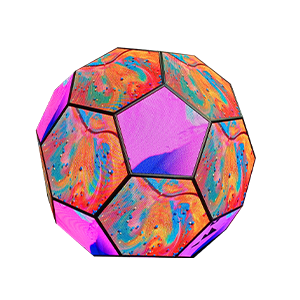
Any shape. Any surface. Any vision. LEDFUL builds creative LED displays that don't just show content — they become the architecture.
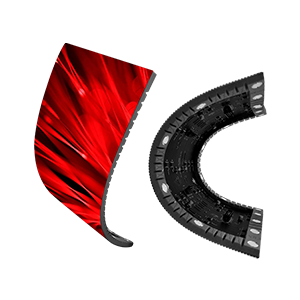
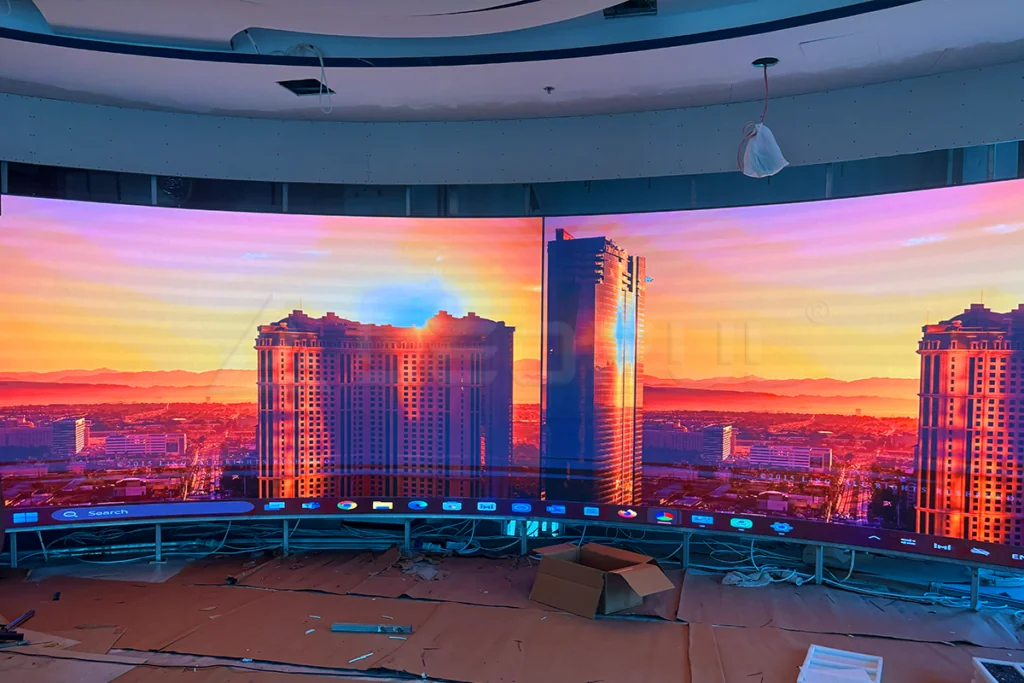
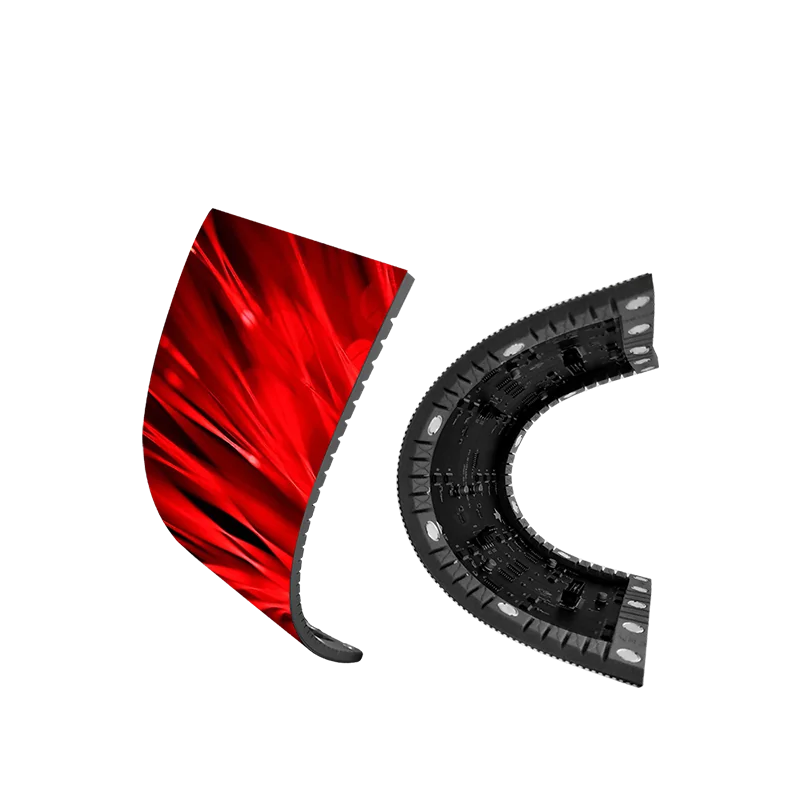
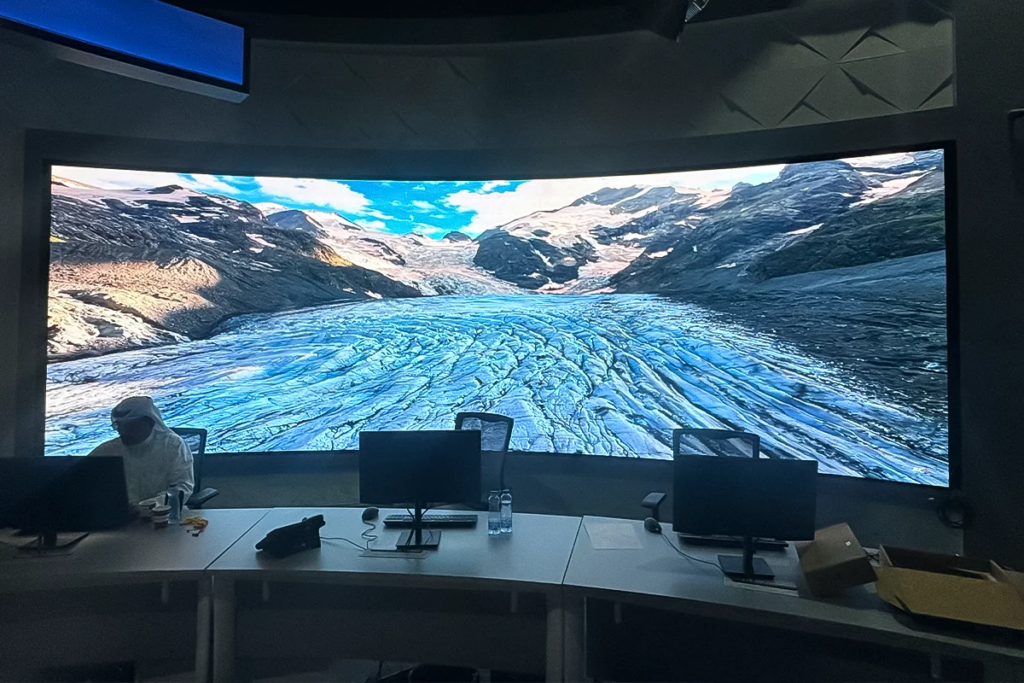
Designed for the Qatar Ministry of Environment and Climate Change, this large-format flexible LED display combines ultra-fine P1.56 resolution with seamless curved geometry. Compared with traditional flat screens, the flexible structure creates stronger visual depth and a more refined architectural appearance. Integrated GOB protection technology enhances resistance to dust, moisture, oil, and impact for long-term reliability.
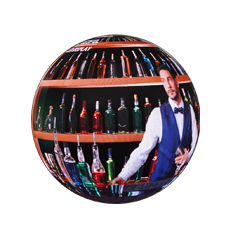
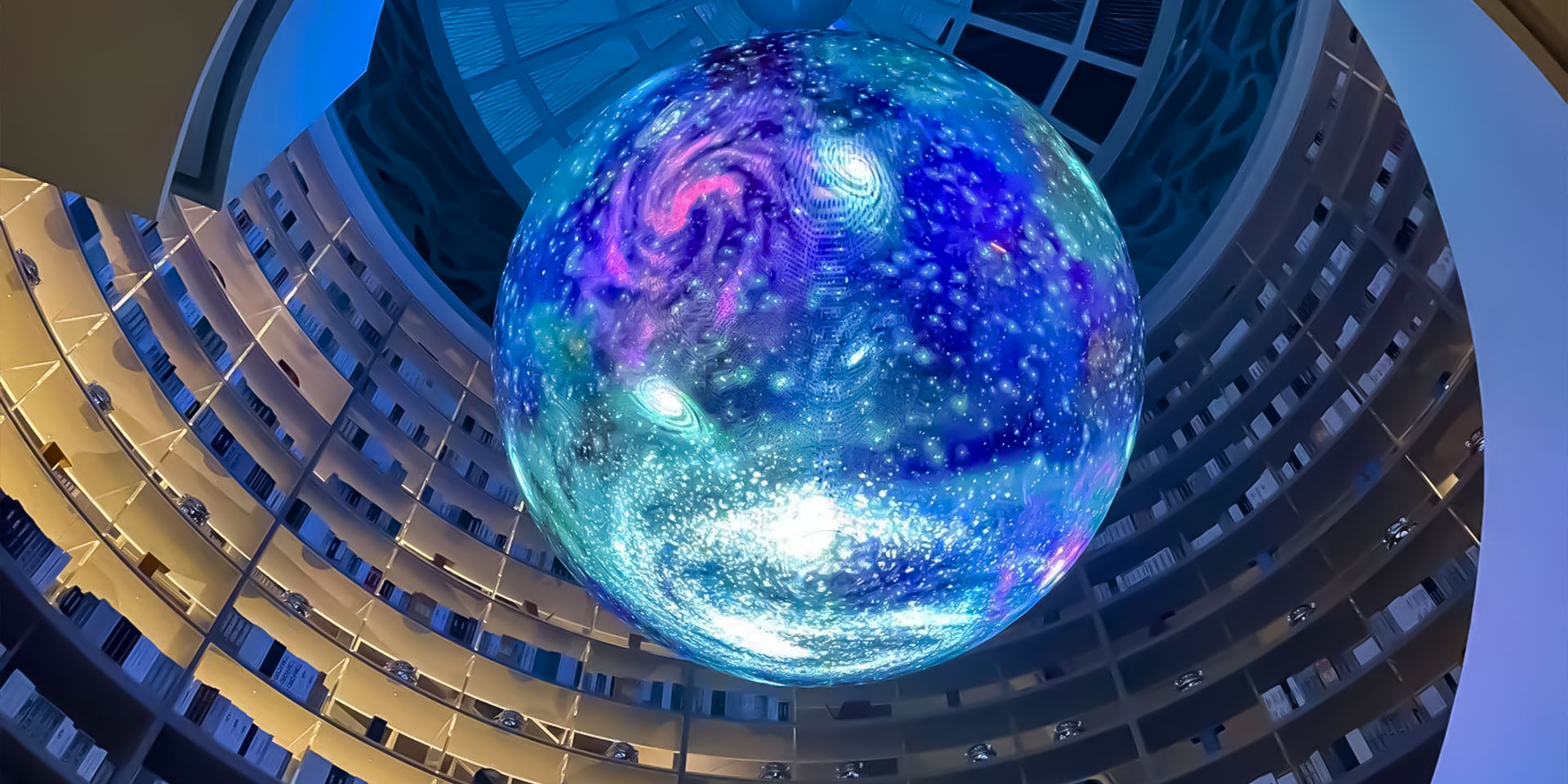
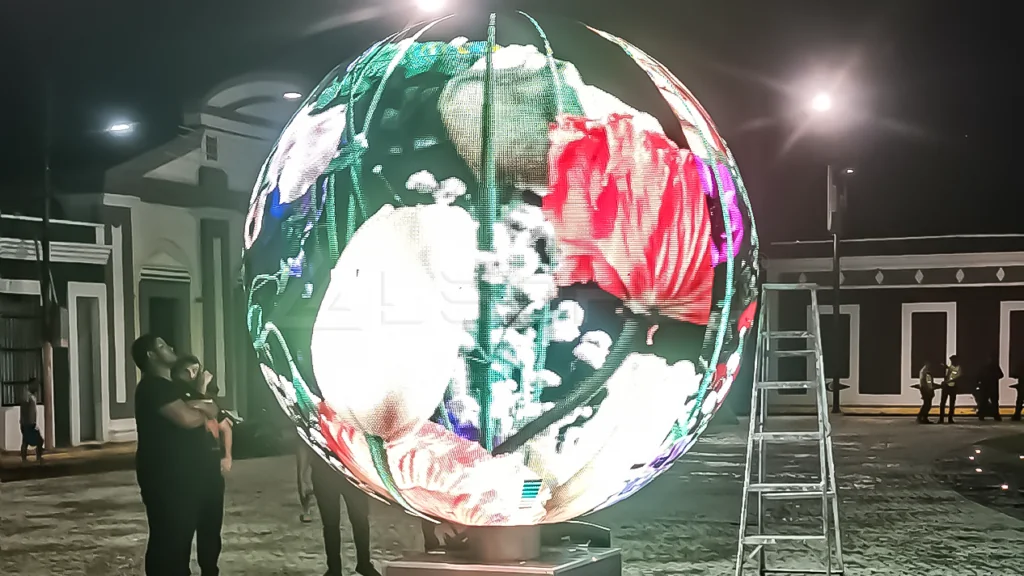
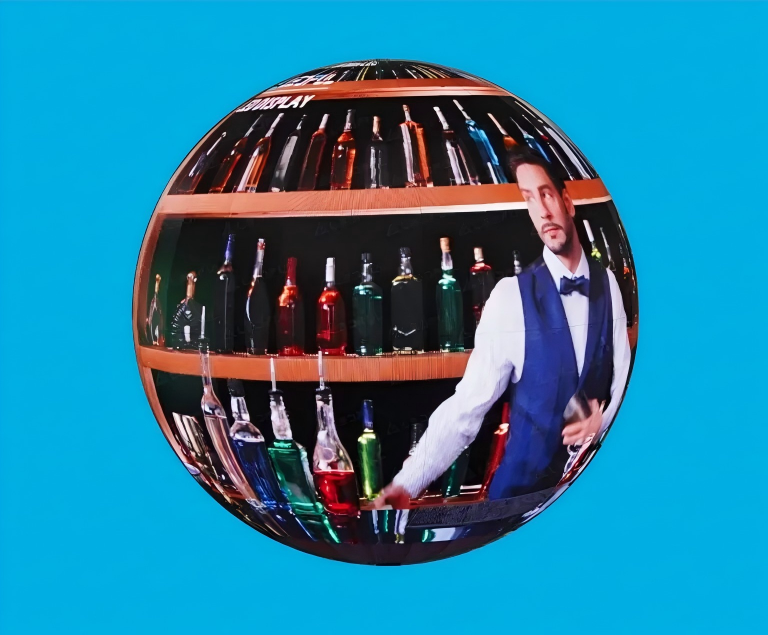
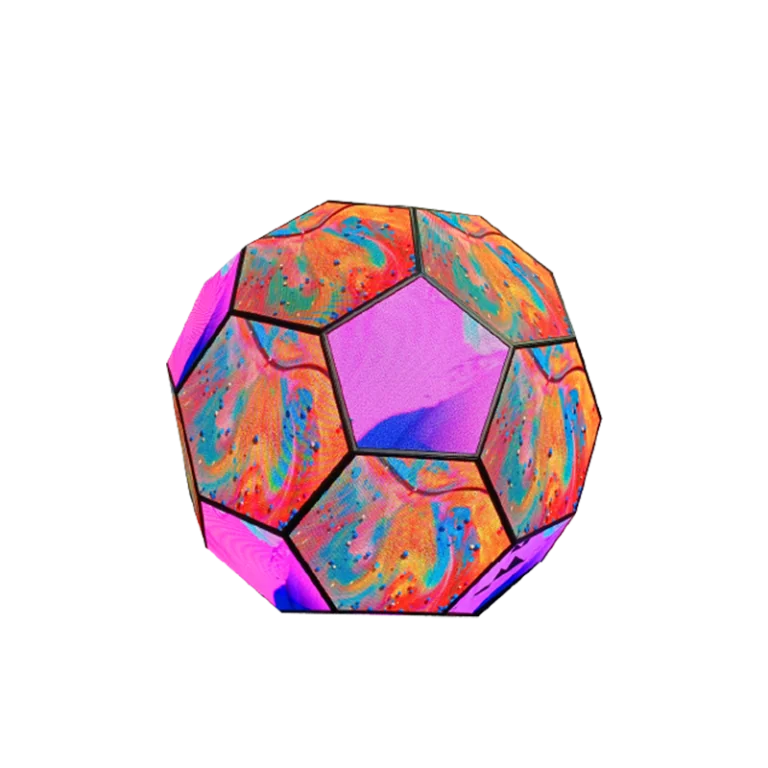
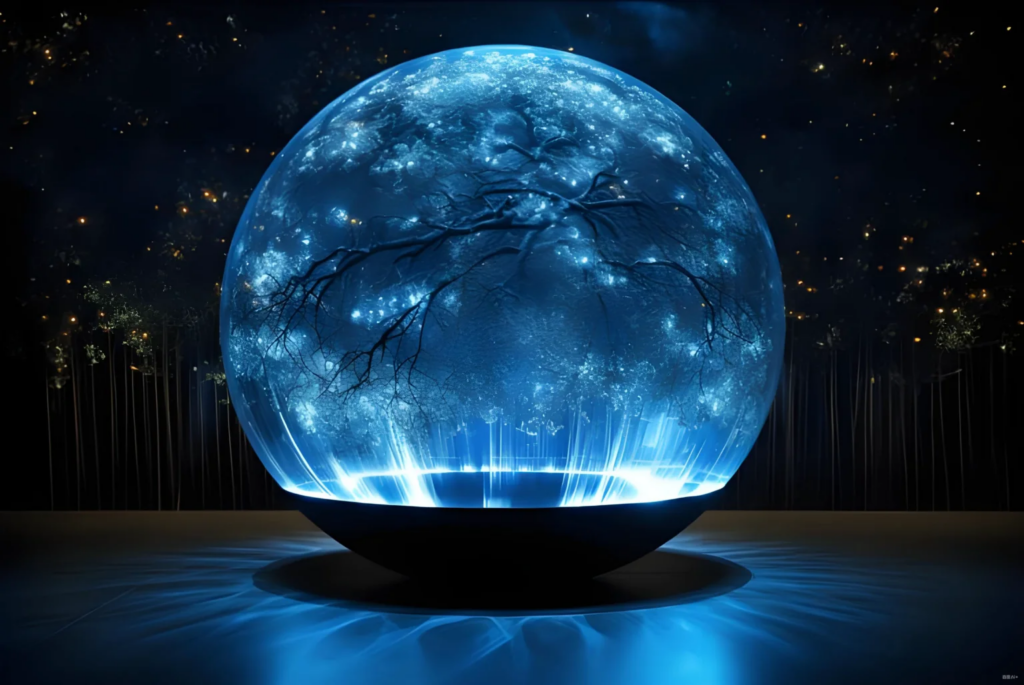
Built to command attention, this spherical LED display transforms digital content into a fully immersive viewing experience. Installed for a VIP client in Venezuela, the 3-meter sphere screen delivers eye-catching visuals with strong structural quality and consistent display performance. A creative LED solution designed to elevate brand presence and audience engagement.
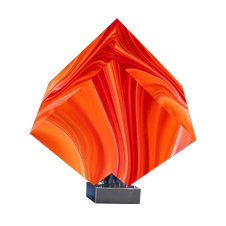
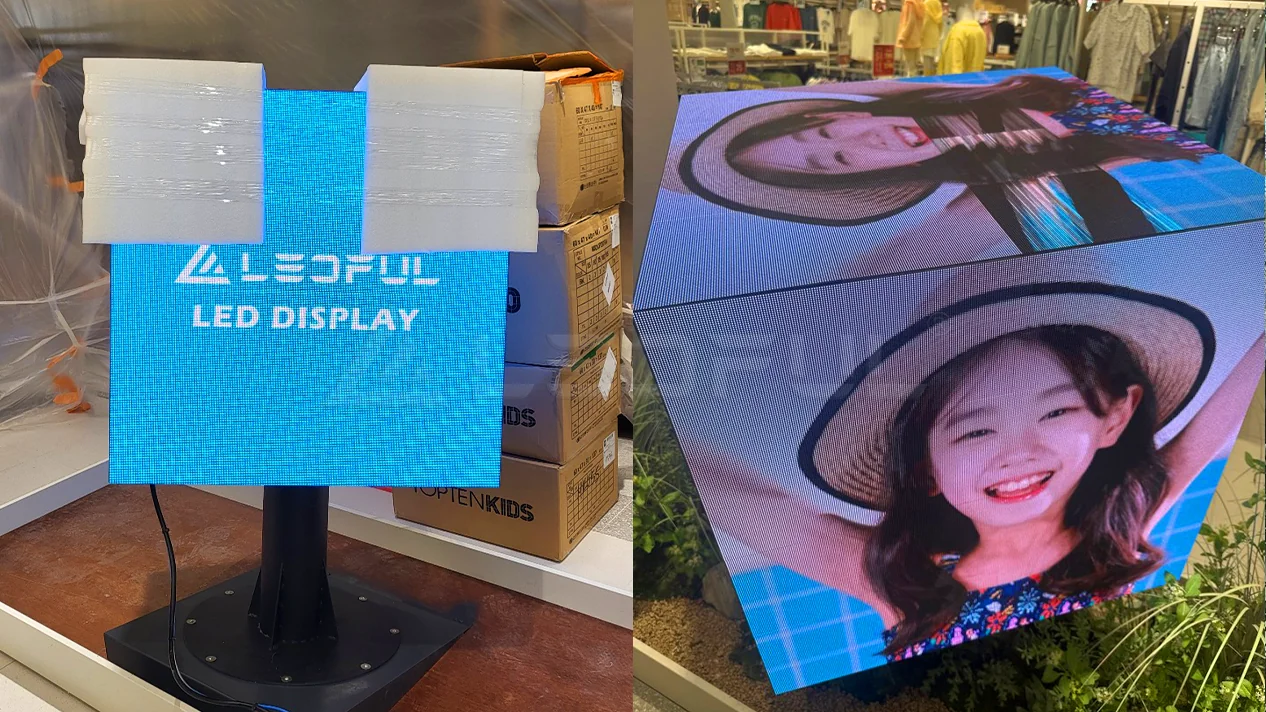
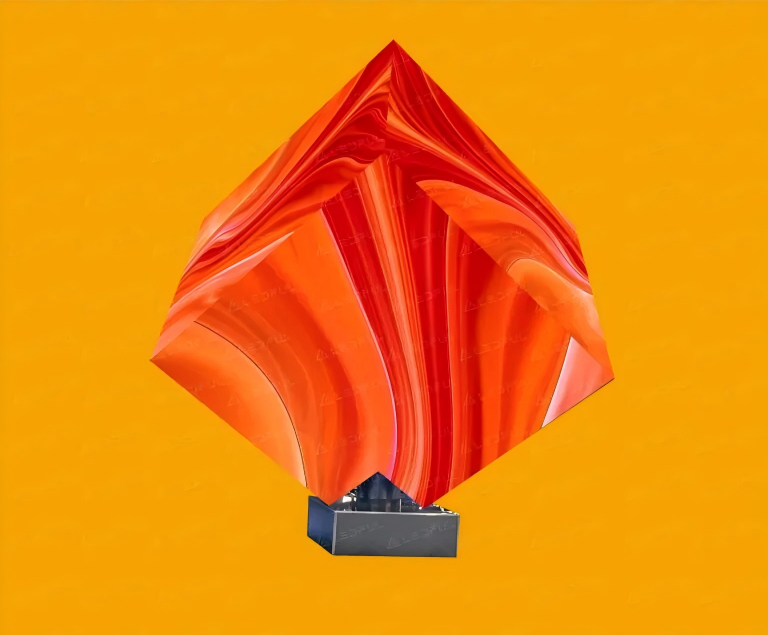
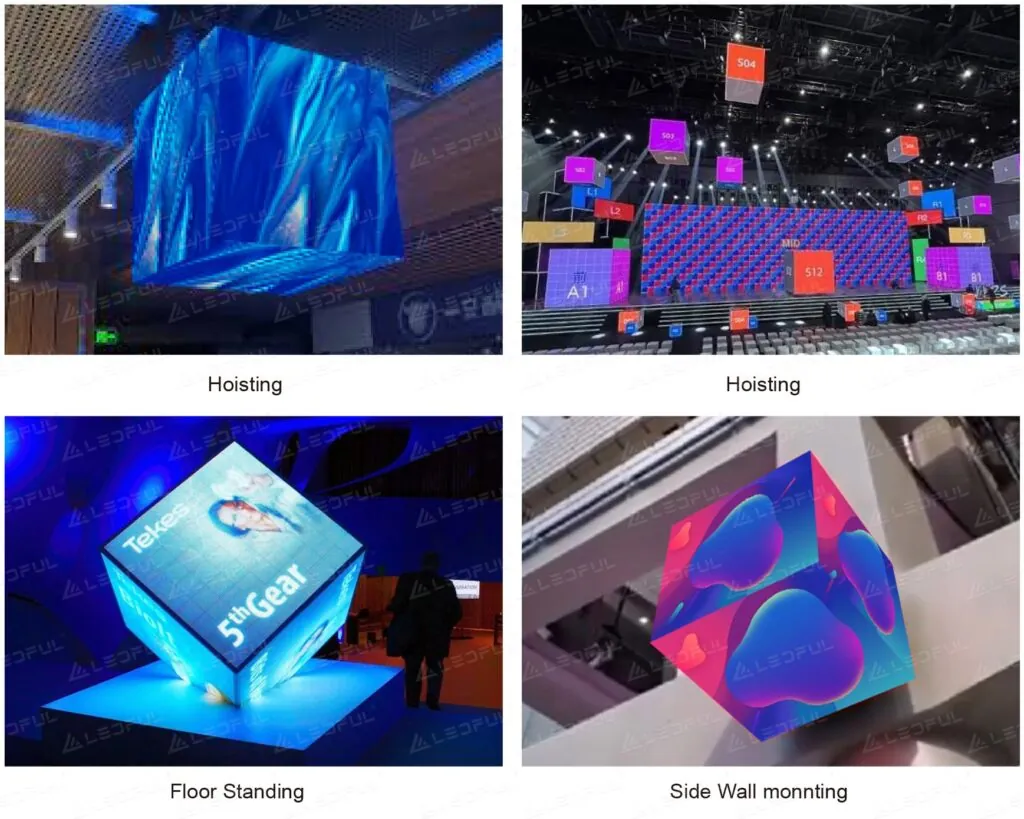
Installed for a TOPTEN fashion retail location, this five-sided cube LED display turns conventional in-store advertising into a dynamic visual centerpiece. The multi-angle configuration maximizes visibility while maintaining seamless content continuity across all surfaces. A compact yet powerful creative LED display built to attract attention and strengthen retail experiences.
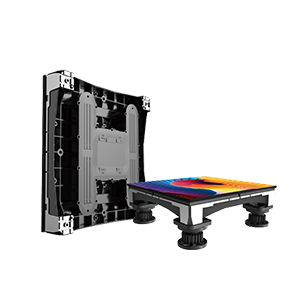
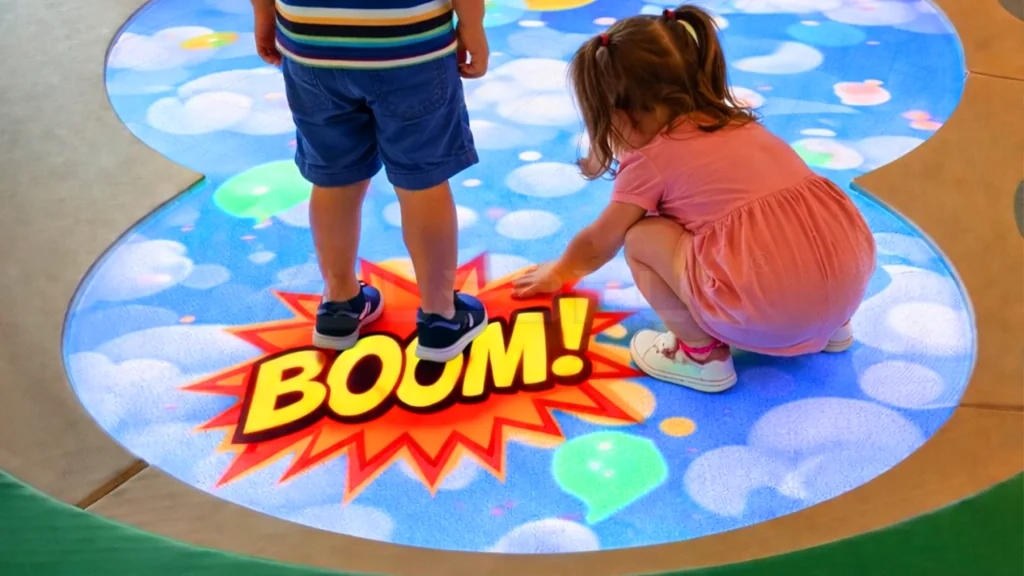
Created for a children’s entertainment center in Melbourne, this interactive floor LED display transforms movement into play. Responsive visuals, durable construction, and immersive effects combine to deliver an engaging experience designed for high-traffic environments. A playful application of interactive LED technology that keeps visitors moving, exploring, and returning.
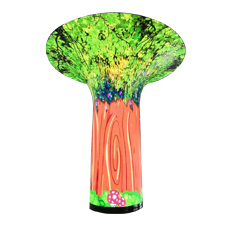
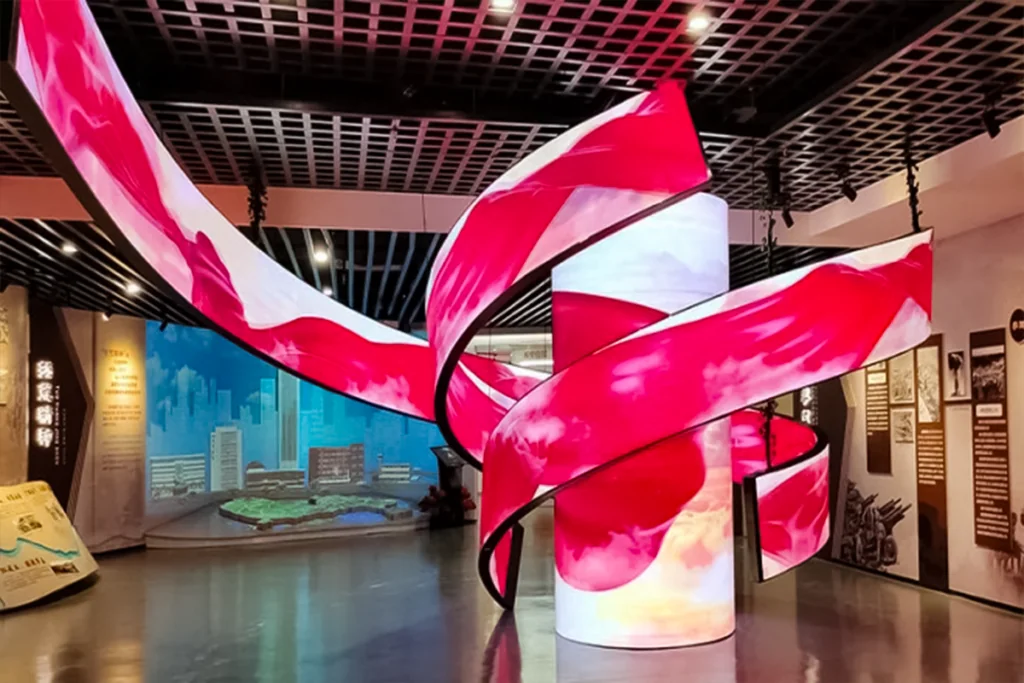
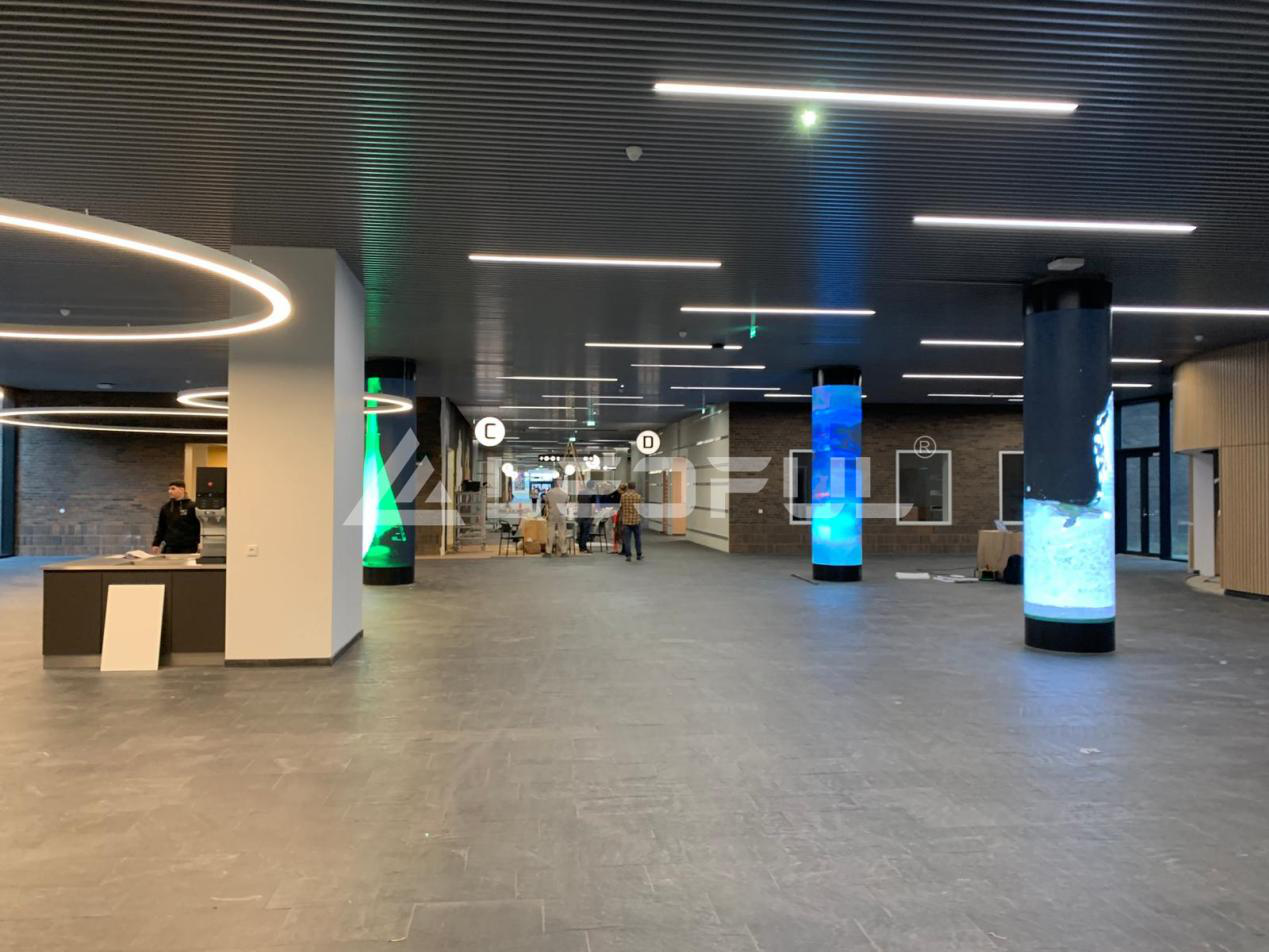
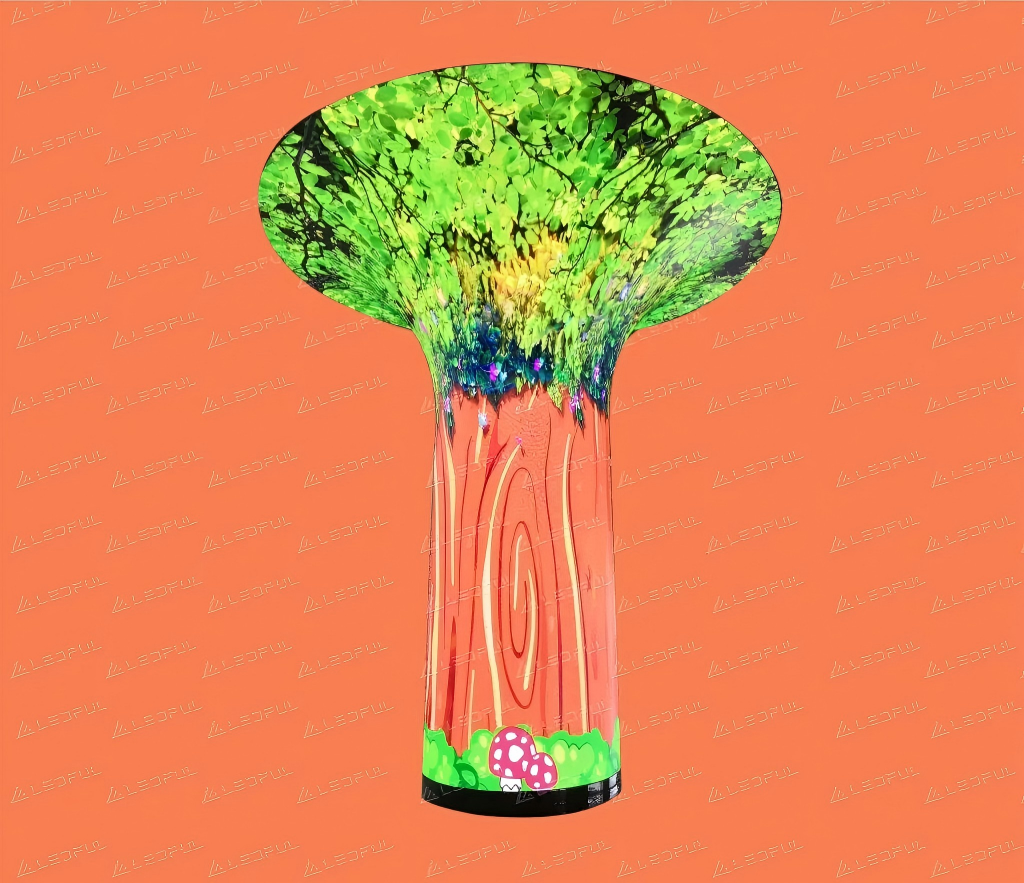
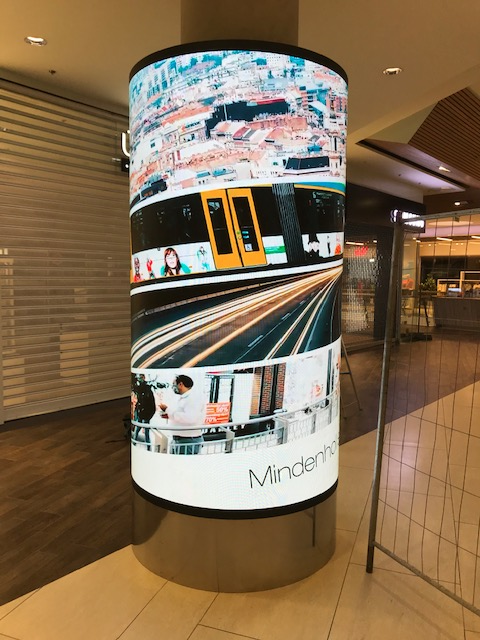
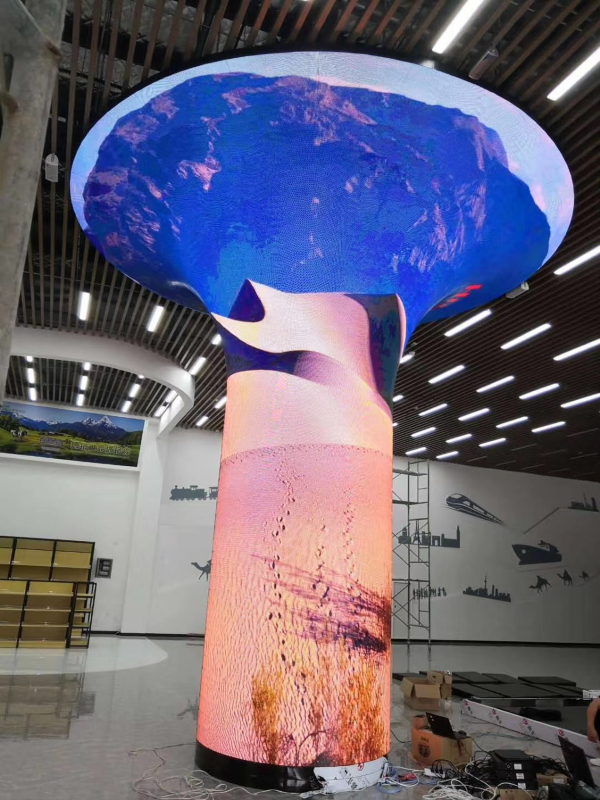
These custom column LED displays bring together curved design and high-impact digital storytelling. Built using flexible LED modules, the cylindrical screens create smooth, uninterrupted visuals across a 360° surface. Used for video playback, advertising, and visual attraction, the installation demonstrates how architectural LED displays can transform space into communication.
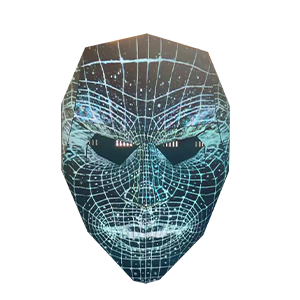
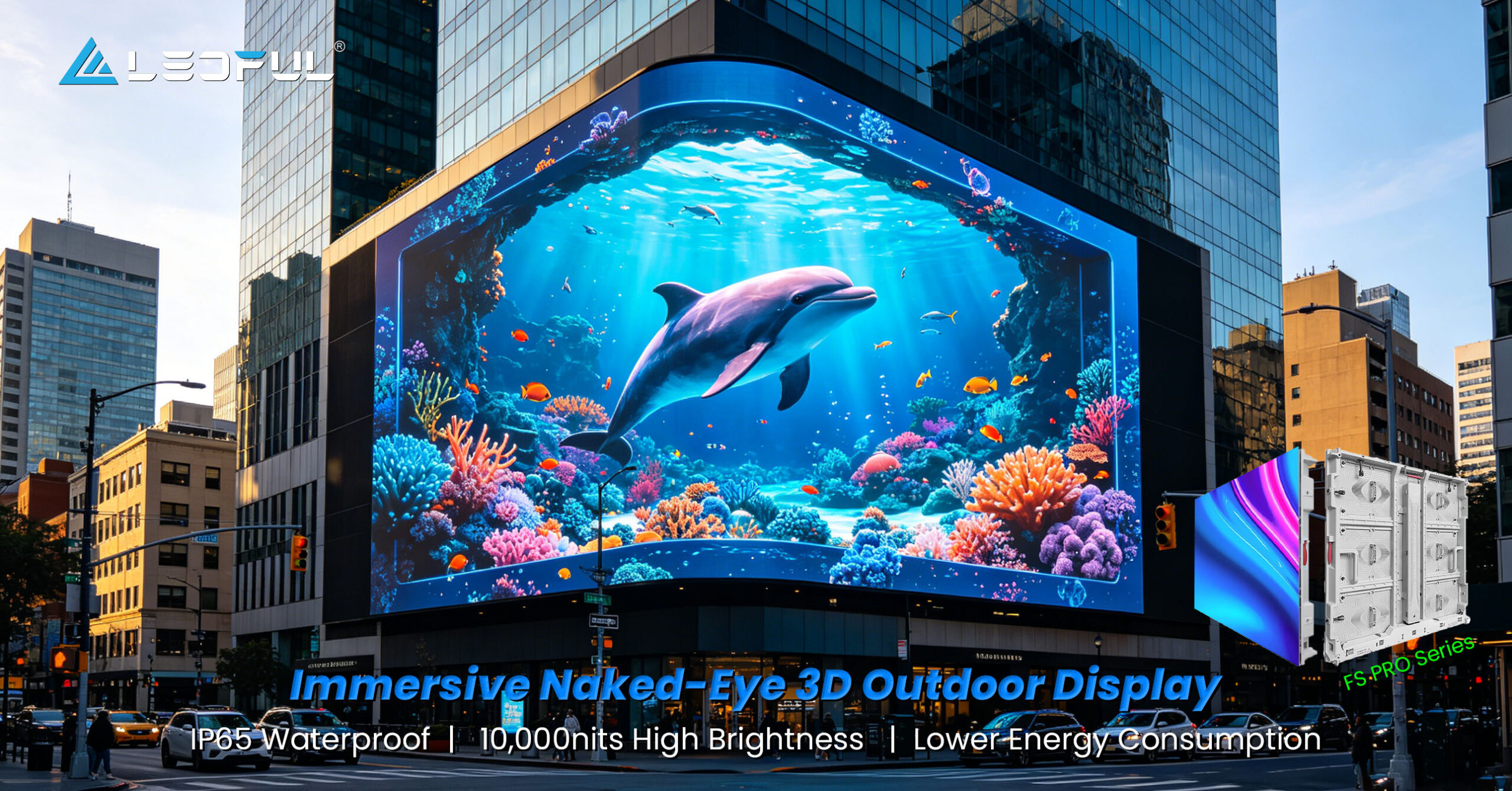
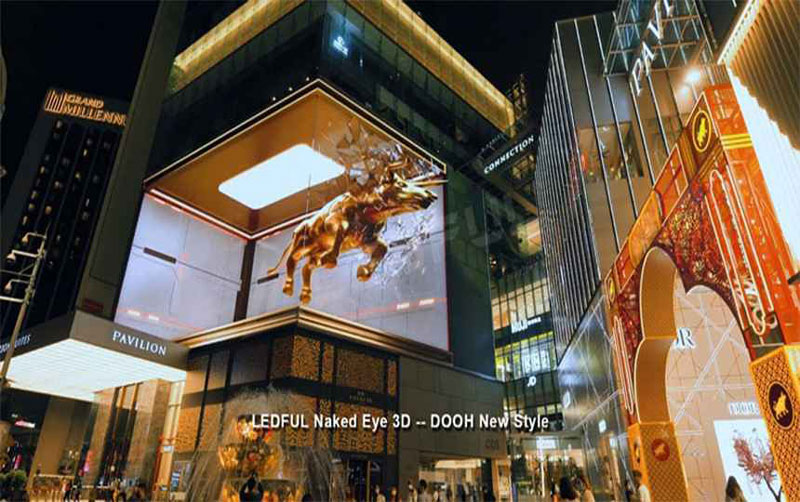
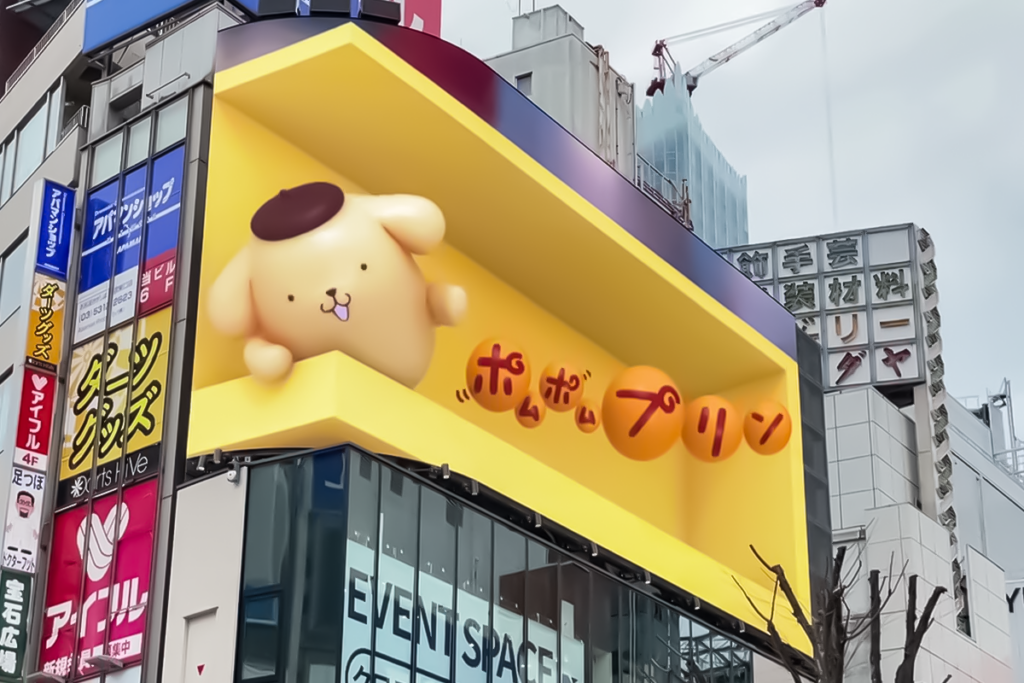
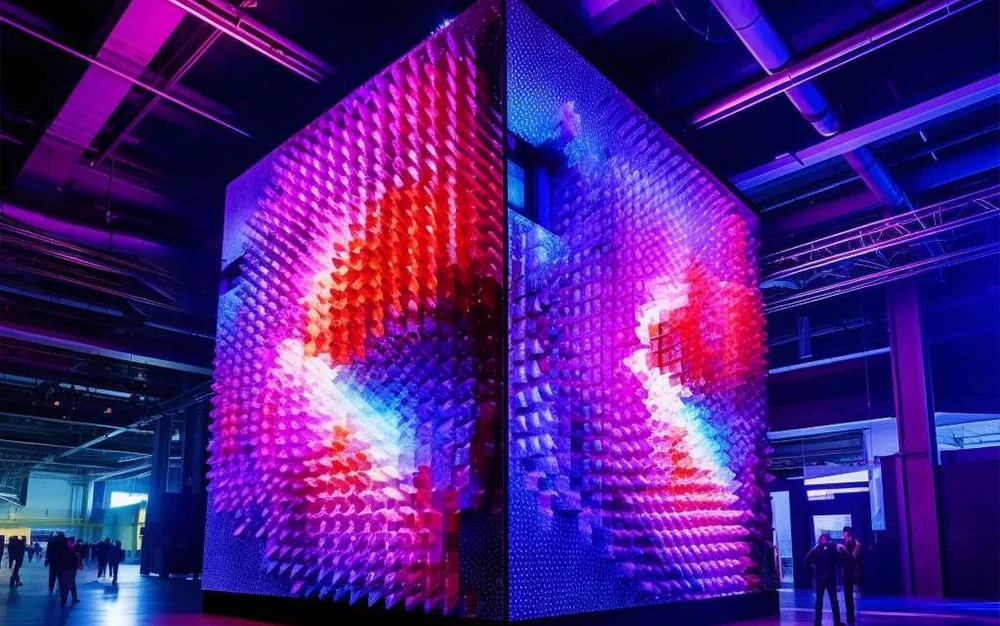
This naked-eye 3D LED display delivers striking depth and realism through custom screen geometry and perspective-driven content design. Developed for modern DOOH advertising and experiential environments, the solution creates high-impact visual illusions that capture attention instantly — no headset, no glasses, just pure visual immersion.
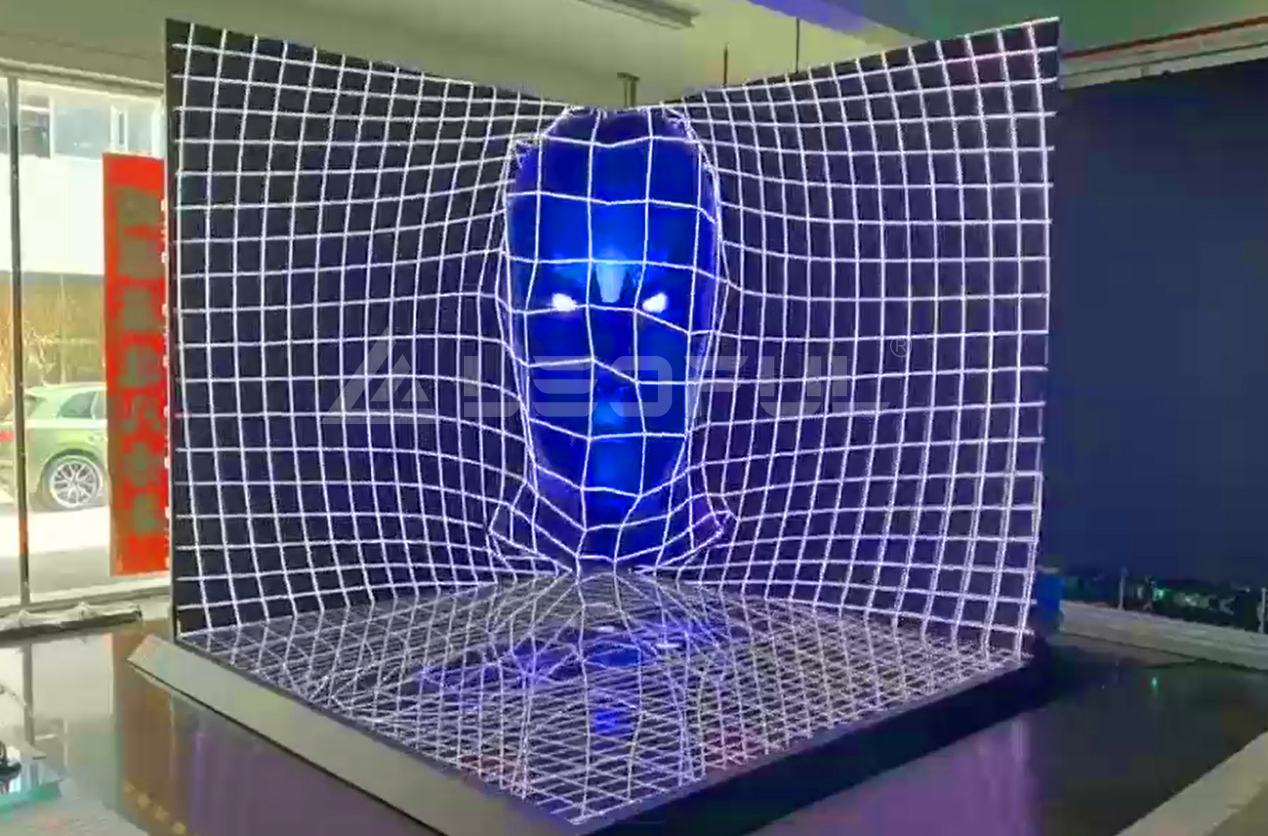
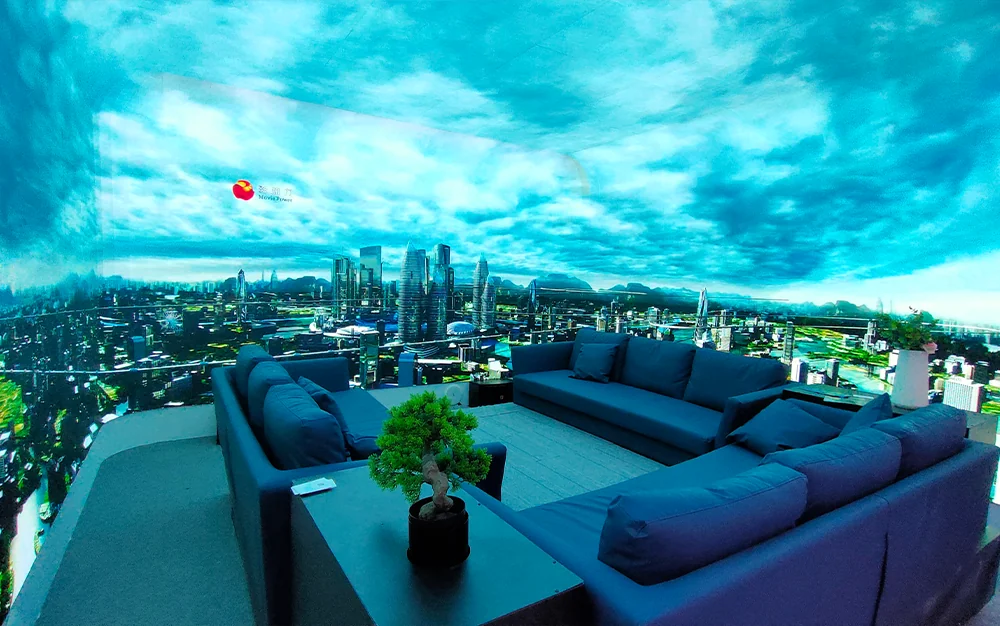
Combining wall displays and interactive flooring, this three-sided custom LED display creates a synchronized 3D viewing environment through tailored video content and multi-surface integration. Designed for immersive presentation, the project showcases LEDFUL’s capability in creative LED engineering, customized structures, and unconventional display experiences.
Share your vision, installation environment, dimensions, and budget. LEDFUL defines the optimal display solution, including pixel pitch, brightness, structure, and system configuration, ensuring the right technical approach from the start.
WEEK 2–4: Design & Prototype
LEDFUL develops 3D renderings, pixel-level simulations, and detailed structural drawings to visualize your project before production. This process helps ensure accurate performance, seamless installation, and alignment with project expectations.
WEEK 4–10: Production & Quality Control
Manufactured according to precise specifications in LEDFUL’s ISO-certified facility, each display undergoes strict quality control procedures, including SMT processing, module testing, and a 72-hour aging (burn-in) test to ensure stability and consistency before shipment.
ON-SITE: Installation & Support
LEDFUL provides professional technical guidance for installation and system commissioning. Services include a 2-year warranty, remote monitoring support, and long-term maintenance to ensure reliable operation worldwide.
When global buyers shortlist reliable suppliers, LED display manufacturers in China consistently top the list. China hosts roughly 70%-80%+ of worldwide LED manufacturing capacity, backed by government-supported R&D, a fully vertical supply chain from chip to cabinet, and cost-performance ratios no other region can match. Shenzhen, in particular, has become the world’s largest LED display manufacturing hub.
This guide focuses on 9 established China LED display manufacturers with strong export track records — to help buyers confidently shortlist partners for 2026–2027 projects.
LEDFUL is a top China LED display manufacturer with a strong focus on export projects, customized LED screens, and turnkey display solutions. For contractors, distributors, churches, sports venues, shopping malls, and event organizers, LEDFUL is especially relevant because its portfolio covers outdoor advertising, rental staging, stadium displays, transparent LED screens, creative LED displays, and fine-pitch indoor solutions.
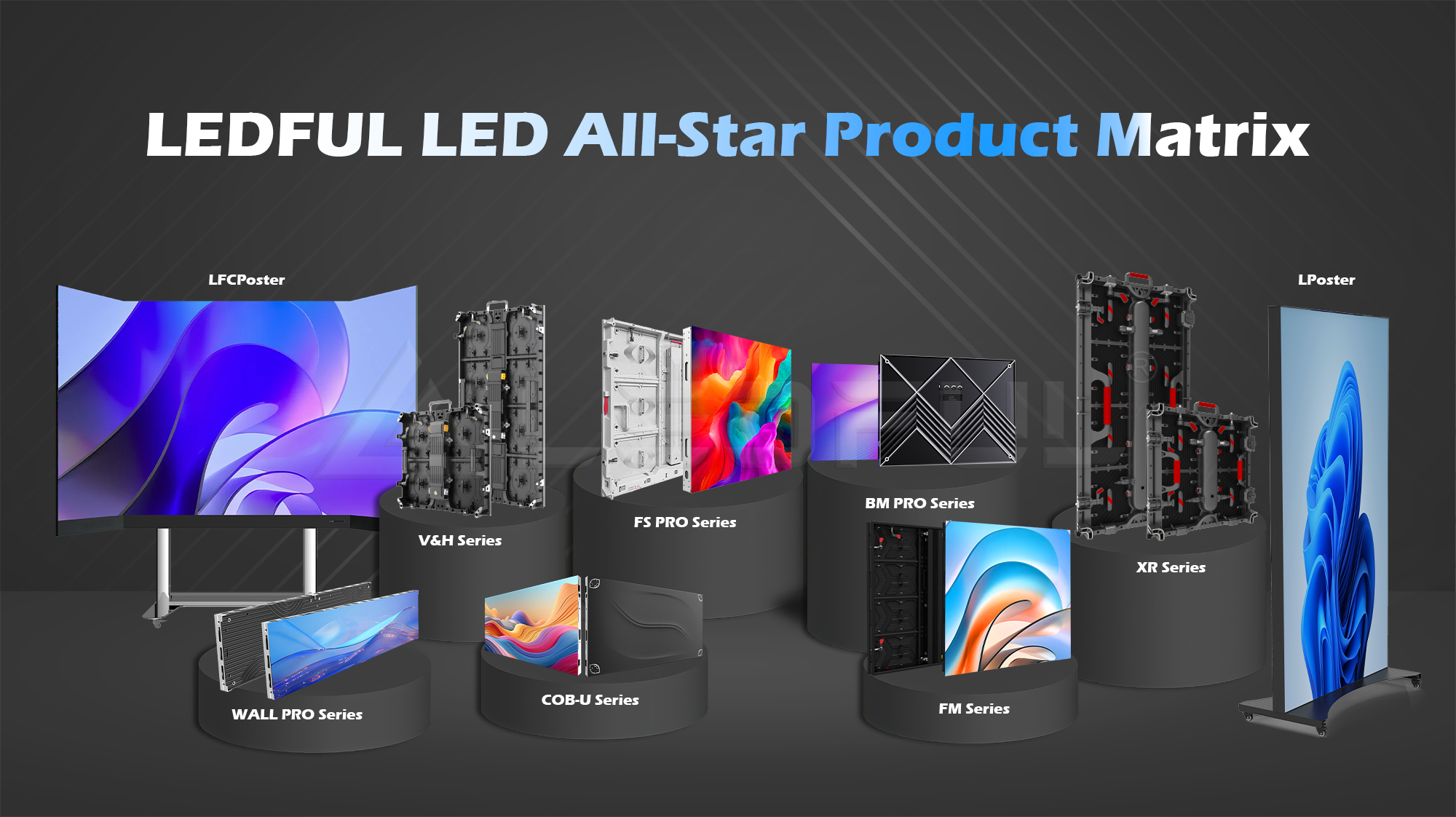
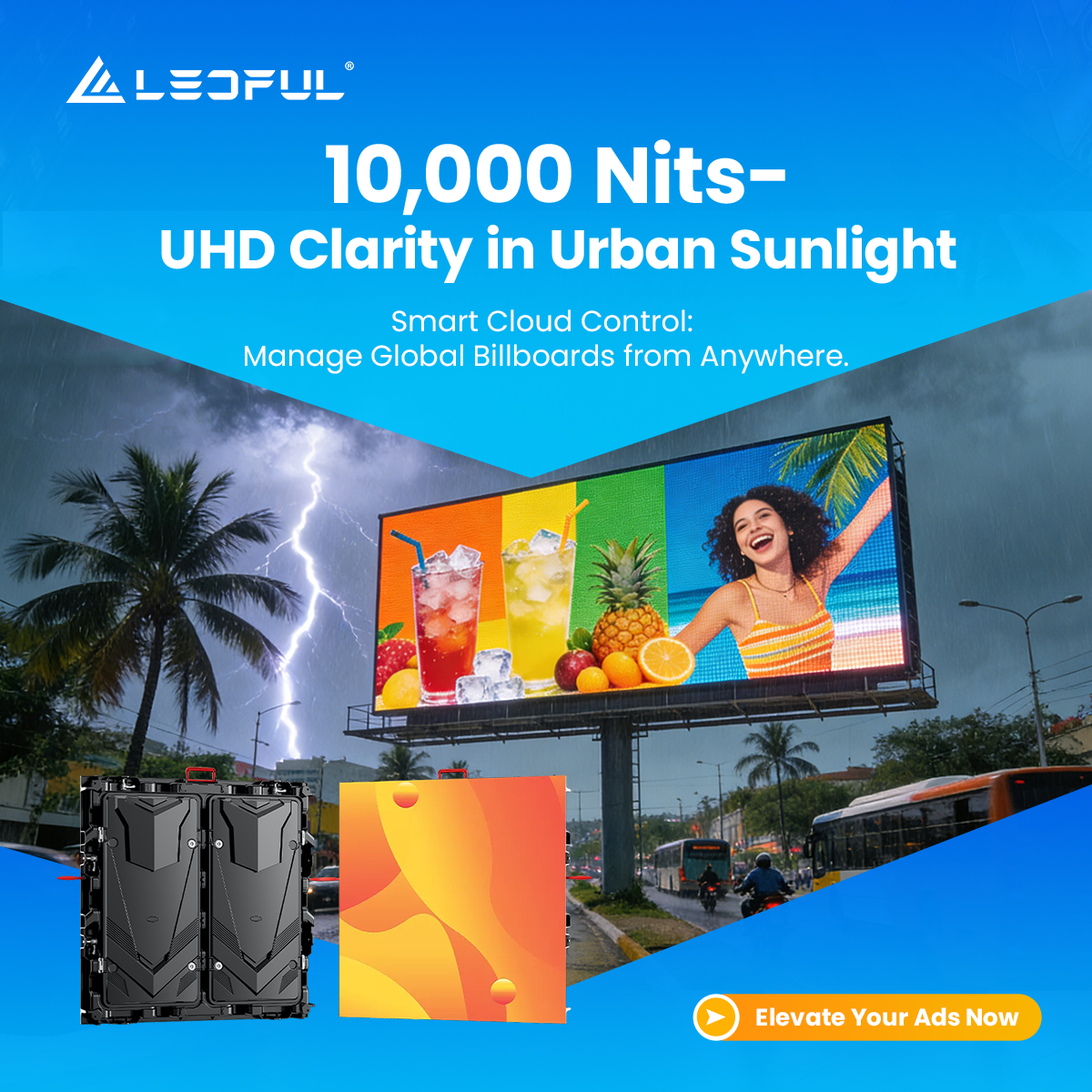
Example: For outdoor projects, LEDFUL’s FS PRO Series is positioned for high-brightness applications, featuring 10,000-nit brightness and common cathode technology. This makes it suitable for roadside DOOH, building façades, outdoor 3D advertising, transportation hubs, and public-service display projects where daylight visibility and energy efficiency matter.
The company also promotes global project experience across 116+ countries. Iconic projects include:
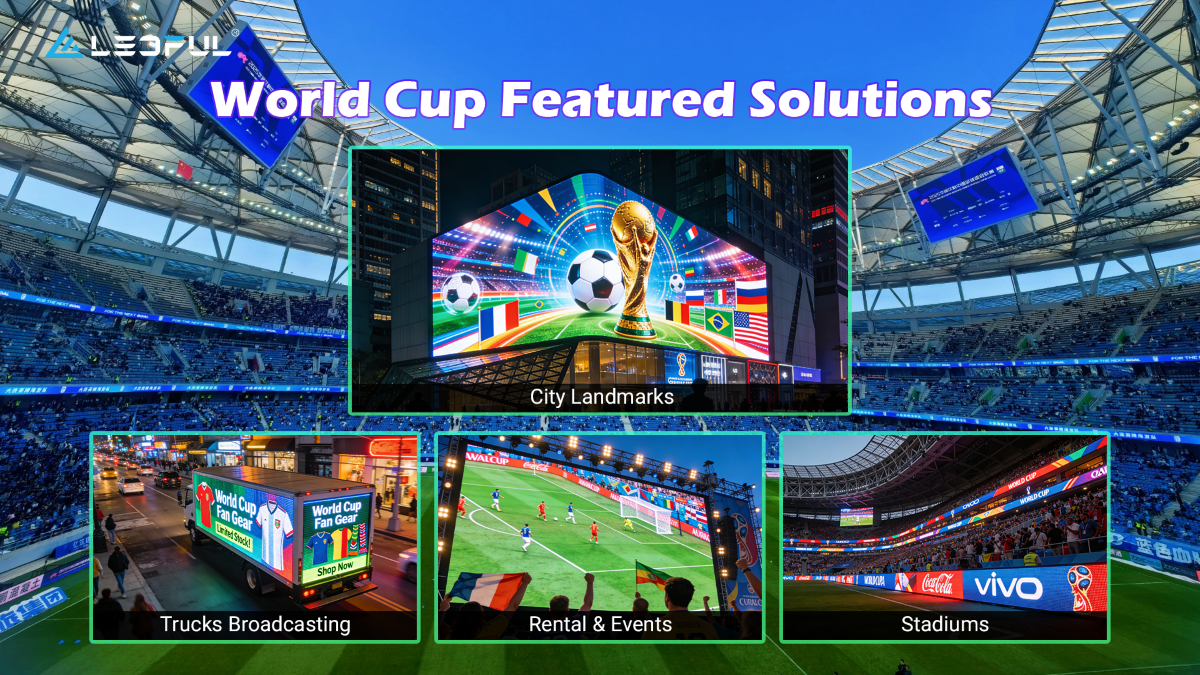
World-Class Sports & Esports Events: 2020 Tokyo Olympics, 2022 Qatar World Cup, 2018 UEFA Champions League Final, 2023 World Table Tennis (WTT), 2023 Africa Cup, WorldSBK, and 2021 Euro LOL Final.
Global Summits & Corporate Clients: 2024 G7 Summit, 2025 Kuwait Ministry of Information, and Fortune 500 company NTT.
Creative & Custom LED Installations Worldwide: Curved flexible displays for Qatar government projects, cube LED retail displays in South Korea, spherical LED screens in Venezuela, interactive LED floors in Australia, cylindrical column displays in Denmark, and immersive 3D LED environments in Cambodia.
Specialized Industry Applications: DOOH naked-eye 3D outdoor advertising screens, XR & virtual production studio displays (e.g., broadcast studios), and sports perimeter LED systems for international leagues.
LEDFUL is a strong choice for buyers who need a balance of customization, international service, outdoor performance, and project flexibility.
2. Unilumin (Shenzhen | Est. 2004)
Unilumin is one of the most recognized LED display companies in China, with strong industry influence supported by large-scale manufacturing, advanced R&D, and extensive international partnerships.
It has a wide global footprint, supported by more than 5,600 partners across 160+ countries, along with strong R&D capabilities backed by over 3,000 patents. In 2025, the company reported over RMB 8 billion in annual revenue, highlighting its solid market position.
Unilumin is particularly suitable for buyers who need a large supplier with deep product lines and experience in complex international projects.
3. Absen (Shenzhen | Est. 2001)
Absen is another major LED display company with strong global recognition. It has delivered over 60,000 projects across 140+ countries, supported by a strong global service network with more than 5,400 ACE-certified engineers and 40+ service centers.
The company is known for its reliable after-sales support, training programs, and project delivery capabilities. Its product portfolio includes the NT V2 rental series with high durability and fast ROI, the KLCOB Micro LED series with high contrast and refresh performance, and the X V2 Series all-in-one solution for meeting and collaboration scenarios.
For buyers looking for a mature supplier with a broad international footprint, Absen is one of the top LED display manufacturers in China to evaluate.
4. Leyard (Beijing | Est. 1995)
Leyard is a global visual technology company specializing in fine-pitch LED, Micro LED, control room solutions, broadcast studios, command centers, and high-end commercial displays. Its integration with Planar further strengthens its position in premium international display markets and broadens its global project capabilities.
The company operates 9 R&D centers and 10 smart manufacturing bases, supporting continuous innovation and large-scale production. Its flagship product portfolio includes the Hi-Micro Series, which features substrate-free Micro LED technology with high-yield performance, the TVF Series designed for flexible and curved surface installations, and the LN Series, a lightweight rental solution for touring and live events.
Leyard is a strong fit for control centers, government command rooms, enterprise lobbies, broadcast studios, and premium corporate projects.
5. LianTronics (Shenzhen | Est. 2003)
LianTronics is a listed LED display solution provider focused on LED application products from R&D and manufacturing to sales and service. The company operates an 80,000 m² manufacturing base and has delivered over 40,000 projects across more than 200 countries and regions.
It is especially strong in outdoor media, naked-eye 3D displays, commercial landmarks, control rooms, and creative visual installations. Its flagship “The WOW” 3D solution features seamless curved splicing and patented distortion-free technology, while the VT Series (COB) delivers sub-1.0 mm pixel pitch with high contrast and wide viewing angles. The Pilot Series is designed for XR applications with an ultra-high refresh rate and advanced grayscale performance.
LianTronics is a good choice for buyers planning 3D billboards, commercial façades, creative public displays, or professional visualization environments.
6. INFiLED (Shenzhen | Est. 2009)
INFiLED is an LED display manufacturer known for rental, touring, XR, virtual production, broadcast, control room, and creative display applications. The company operates a 35,000 m² factory and serves customers across more than 80 countries.
Its core technologies include ColdLED, which reduces heat output by up to 50% for improved stability; CBSF, which maintains consistent color performance across wide viewing angles; and ArmorLED, designed to significantly enhance mechanical strength and impact resistance.
Key product lines include the Titan-X Series for rental applications with high durability and wide temperature tolerance, the STUDIO Series optimized for XR and virtual production with precise color uniformity, and the DB/DBmk2 Series featuring curved seamless splicing for immersive displays.
For buyers in entertainment, culture, sports events, broadcast, and virtual production, INFiLED deserves close attention.
7. AOTO (Shenzhen | Est. 1993)
AOTO is an intelligent visual solution provider with strengths in virtual production, LED cinema, sports display, transportation, finance, and commercial display.
Its VP/XR-focused LED systems are designed with low-scan architecture, high refresh rates, wide color gamut, and stable visual performance for professional environments. The DL Series targets film production and virtual reality, offering pixel pitches of 1.95 mm, 2.31 mm, and 2.60 mm, with up to a 7680 Hz refresh rate and 240 Hz frame rate support. Meanwhile, the RM Series features a 7,680 Hz refresh rate and a 99.9% DCI-P3 color gamut.
For buyers seeking a professional LED partner for XR, VP, cinema, or high-end sports display, AOTO is a strong candidate.
8. LEDMAN (Shenzhen | Est. 2004)
LEDMAN is an LED display company known for COB and Micro LED display technologies. With nearly 800 patent applications and 100+ COB-related patents, it has built a strong position in fine-pitch and high-resolution LED display innovation. Its product portfolio covers LED video walls, COB displays, outdoor advertising screens, rental products, and intelligent control systems.
Key products include the “UHD King” QS Series (COB), powered by proprietary PSE technology that delivers up to 50% lower power consumption and “cold screen” operation with surface temperatures below body temperature. The company also introduced the PM Glass Substrate Micro LED, an advanced Micro LED solution, and the LEDHUB Series, an AI-enabled interactive system for conference and education applications.
For engineers and procurement teams comparing fine-pitch or COB LED display options, LEDMAN is worth including in the shortlist.
9. QSTECH (Xi’an | Est. 2013)
QSTECH is known for all-in-one LED displays, Micro/Mini LED, indoor LED, outdoor LED, cinema LED, and rental display products. It is also associated with CVTE, a major display and interactive technology company.
QSTECH is particularly strong in meeting rooms, education, corporate collaboration, government conference rooms, and standardized commercial deployment. According to company reports citing TrendForce data, QSTECH captured a 36% global market share in the LED all-in-one display segment.
For enterprises, schools, training centers, government agencies, and conference venues, QSTECH is a strong all-in-one LED display option.
Suitable for custom-shaped displays, landmark installations, commercial façades, and immersive public screens.
Stage Rental & Live Events
LEDFUL, INFiLED, Absen, AOTO
Optimized for fast setup, touring, high refresh rates, and temporary event applications.
Sports & Stadiums
LEDFUL, Unilumin, AOTO, Absen
Well-suited for perimeter boards, scoreboards, arena displays, and fan engagement experiences.
XR & Virtual Production
AOTO, INFiLED, Unilumin, Absen
Stronger capabilities in camera-friendly refresh rates, color accuracy, and studio environments.
Control Rooms & Command Centers
Leyard, LEDMAN, LianTronics, Unilumin
Strong expertise in fine-pitch LED, COB, Micro LED, and advanced visualization solutions.
Corporate Meetings & Education
QSTECH, LEDMAN, Absen, LEDFUL
Good choices for all-in-one LED displays, fine-pitch solutions, and interactive presentation environments.
Churches & Public Welfare Venues
LEDFUL, Absen, QSTECH
Practical options offering reliable visuals, installation support, and solutions across different budget levels.
How to Choose the Right LED Display Manufacturer
1. Define the Project Type First
Start by defining whether the display is for outdoor advertising, indoor retail, a church stage, a sports venue, a control room, a conference room, or a short-term rental event.
Different project types require different cabinet structures, refresh rates, brightness levels, maintenance methods, and installation support. A manufacturer that is excellent in XR studios may not be the best fit for a roadside billboard.
2. Check Pixel Pitch, Brightness, and Viewing Distance
Pixel pitch to viewing distance (general recommendation): P1.2–P1.8 suits indoor viewing at 1–3 m; P2–P3 covers 3–6 m; P8–P10 is adequate for outdoor billboards at 15 m+. Over-specifying wastes budget; under-specifying hurts image quality.
Brightness: Indoor screens need 800–1,500 nits; outdoor screens require ≥5,000 nits (6,000–8,000+ in direct sunlight). Look for built-in light sensors for automatic dimming.
3. Ask About Certifications, Warranty, and Spare Parts
Reliable LED display manufacturers in China should be able to provide relevant certifications such as CE, FCC, RoHS, ETL, UL, or ISO-related documents, depending on the target market.
Also, ask for the warranty terms in writing. Check what is covered, how replacement parts are handled, and whether local or remote technical support is available.
For large projects, request spare LED modules, receiving cards, power supplies, and other key parts from the same production batch. This can reduce downtime and avoid color differences during future maintenance.
4. Review Export Experience and Case Studies
Export experience matters because international LED projects involve packaging, shipping, customs, installation guidance, voltage requirements, language communication, and after-sales support.
Ask for case studies in your region or in similar climates. For example, a coastal outdoor screen needs strong corrosion and moisture resistance, while a hot-weather project needs good heat management.
Do not only look at new installations. If possible, ask about projects that have been running for more than one year. Long-term performance is more valuable than showroom photos.
5. Compare Lead Time, MOQ, and Installation Support
Lead time can affect the whole project schedule. Ask each supplier about production time, testing time, shipping time, and possible delays during busy seasons.
MOQ is also important for distributors, businesses, churches, and local event companies. Some manufacturers are better for large infrastructure projects, while others are more flexible for smaller orders or custom designs.
Finally, compare installation support. A strong supplier should provide drawings, wiring diagrams, software guidance, remote debugging, and training. For complex projects, ask whether on-site technical support is available.
Conclusion
The best LED display manufacturer in China depends on your project requirements. LEDFUL is a strong choice for buyers who need customizable LED display solutions, outdoor display options, rental products, and export-oriented support.
Unilumin, Absen, Leyard, LianTronics, INFiLED, AOTO, LEDMAN, and QSTECH each have clear strengths in areas such as XR production, fine-pitch LED, rental staging, All-in-One LED, COB display, sports venues, and commercial display.
For 2026-2027 procurement, buyers should not choose only by price. A better approach is to compare application fit, product specifications, certifications, warranty, spare parts, export experience, and installation support.
If you need any further support, you could contact LEDFUL!
Choosing the best LED display pixel pitch for your project is one of the most consequential decisions you’ll make — it directly impacts image quality, viewing experience, and total cost.
More importantly, there is no single “best” pixel pitch value. A P2 fine pixel pitch LED display is great in indoor conference rooms for clear image detail, but it is not suitable for elevated DOOH installations.
This guide walks you through exactly what pixel pitch means, how it varies across indoor and outdoor applications, and which factors should drive your final selection!
What Is Pixel Pitch in an LED Display?
In an LED display, pixel pitch — also commonly known as dot pitch or the “P value” — refers to the physical distance between the centers of two adjacent LED pixels, measured in millimeters (mm). A P4 display, for example, has a 4 mm gap between neighboring pixel centers.
A smaller pixel pitch means pixels are packed more tightly together, which means a greater number of LED pixels can be fitted within the same surface area. This directly increases the pixel density of the display, often measured in pixels per square meter. And the tighter pixel spacing typically contributes to a higher resolution and sharper, more refined visuals.
What Is the Best Pixel Pitch for Outdoor LED Displays?
The good pixel pitch for outdoor applications generally spans P3 to P10 and beyond, with the best choice depending heavily on the viewing distance, screen size, and specific deployment scenario.
Typical Outdoor Pixel Pitch Range
P3 – P4 (Close viewing, approximately 3–12 meters): High pixel density produces exceptionally fine-detail visuals. Ideal for luxury brand billboards in city centers, pedestrian shopping streets, and retail building facades where viewers pass within a few meters.
P5 – P6 (Medium viewing distance, approximately 5–18 meters): An ideal range for balancing image clarity with budget. This is currently the most popular and cost-effective choice for many outdoor commercial applications.
P8 – P10 (Medium to long distance, approximately 8–30 meters): Larger pixel spacing keeps costs manageable while still delivering clear images when viewers are farther away. At these distances, the human eye naturally smooths individual pixels.
P10 and above (Extreme distance, 10-30+ meters): Designed for very large screens viewed from highways, distant buildings, or stadium upper decks. Examples include P16 and P25.
Digital Billboards: City-center or pedestrian-facing billboards typically call for P3, P4, or P6 to deliver sharp, eye-catching detail at close range. Highway and rooftop large-format displays, where audiences are dozens of meters away, are well served by P8, P10, or P16.
Stadiums & Arenas: Large stadium scoreboards commonly use P10 for super-sized displays viewed at great distances. Perimeter boards and mid-venue screens showing real-time action benefit from P6 or P8.
Outdoor Events: Concert stages, festivals, and branded activations require weatherproof rental panels that combine adequate visual quality with fast rigging. P3.91, P4.81, and P5.9 options are popular in this category.
Building Facades: Lower-floor exterior walls may use P4 or P6 for close-up impact, while upper-story facades often rely on P10 or larger.
Other Key Outdoor LED Display Technical Requirements
High Brightness Performance
In many scenarios, outdoor LED displays must remain visible under direct sunlight. That is why most outdoor screens need at least 5,000 nits, while premium models often exceed 8,000 nits. Smart brightness adjustment is also valuable for balancing visibility and power efficiency throughout the day.
Comprehensive Weather Resistance
Ingress Protection
A minimum IP65 rating is necessary for outdoor applications to protect against rain and dust intrusion. Installations in coastal or harsh industrial environments may require IP66 or IP67 protection.
Thermal Resilience
Outdoor LED displays must operate consistently across extreme temperature conditions, typically from -30°C to 60°C, supported by effective heat dissipation systems.
Structural Durability
Cabinets made from aluminum alloy or stainless steel provide enhanced corrosion resistance, mechanical stability, and thermal conductivity for long-term outdoor operation.
What Is the Best Pixel Pitch for Indoor LED Displays?
Indoor environments place viewers at far closer distances, which is why fine pixel pitch LED displays — typically ranging from P0.9 to P2.5 — dominate this space.
Typical Indoor Fine Pixel Pitch Range
P0.9 – P1.5 (Ultra-fine pitch, 0.9–4.5 meters viewing distance): Delivers native 4K or even 8K resolution with ultra-fine detail. No visible pixels whatsoever, even when viewers stand arms-length away. The gold standard for high-impact boardrooms and broadcast studios.
P1.5 – P2.5 (Standard fine pitch, 1.5–7.5 meters viewing distance): A versatile range for most commercial and corporate indoor applications. Balances stunning high-definition visuals with practical budget considerations.
Key Indoor LED Display Applications
Conference Rooms & Boardrooms: For high-end executive spaces displaying financial charts, video conferences, and detailed presentations, P1.2–P1.5 is recommended. For larger mid-sized meeting rooms, P1.5–P1.8 offers excellent value.
Control Rooms & Command Centers: Operators sit close to screens for hours, viewing dense data streams, fine text, and detailed maps. P0.9–P1.2 generally ensures accurate, fatigue-free information reading.
Broadcast Studios & Virtual Production: Cameras zoom in on LED walls, making fine pitch essential to avoid moiré patterns and maintain realistic backgrounds. P0.9–P1.5 is often the industry standard for broadcast.
Retail Stores & Luxury Showrooms: High-end cosmetics, jewelry, and fashion brands use P1.2–P2.5 to showcase products with exceptional sharpness, drawing customers closer.
Corporate Lobbies & Reception Areas: These spaces often feature large-brand video walls viewed from mid-distance. P1.5–P2.5 delivers impressive visual impact without overspending.
Other Key Indoor LED Display Technical Requirements
Lower Brightness for Comfortable Viewing
Indoor LED displays do not need extreme brightness. In fact, too much brightness can create glare and eye fatigue. Most indoor screens perform best between 500 and 1,000 nits. Further, auto-brightness adjustment is especially useful for optimizing both comfort and energy savings.
Deep Blacks and Strong Contrast
A high contrast ratio creates richer image depth and sharper visual definition. Premium indoor displays can reach 10,000:1, delivering deep blacks and immersive HDR-like visuals.
Excellent Color Accuracy and Smooth Grayscale
High-end indoor environments require precise color accuracy and consistent grayscale performance. Even when brightness is lowered, top-tier displays maintain 16-bit grayscale depth, preserving subtle shadow details and ensuring seamless color transitions.
How to Choose the Best LED Display Pixel Pitch
Now that you understand the basics and the requirements for specific environments, here is a systematic approach to selecting the optimal pixel pitch for your unique project.
1. The Viewing Distance Factor (Primary Consideration)
Viewing distance is the single most critical factor determining the correct pixel pitch. The rule is simple: the closer your audience stands, the smaller the required pixel pitch.
Minimum Viewing Distance (meters) ≈ Pixel Pitch (mm): For a P1.2 display, viewers should be at least 1.2 meters away to avoid seeing individual pixels. For a P10 display, the minimum distance is 10 meters.
Optimal Viewing Distance (meters) ≈ Pixel Pitch (mm) × 2.5 to 3: This is where the image looks its best—sharp and seamless.
The “10x Rule”: Pixel pitch (mm) × 10 ≈ comfortable viewing distance in feet (approximate conversion).
Example: If the closest audience member stands 3 meters from your screen, divide 3 by 2.5–3, giving you a recommended pixel pitch of approximately P1.0 to P1.2.
2. Display Size & Target Resolution
Screen size and desired resolution work together to determine the ideal pixel pitch.
Relationship: For a given screen size, a smaller pixel pitch delivers higher resolution. For a given budget and resolution target, the pixel pitch determines how large the screen can be.
Resolution Calculation: To achieve true 4K resolution (3840×2160 pixels), multiply the pixel pitch by 3840 to find the screen width. For P1.5: 1.5 mm × 3840 = 5.76 meters wide. For P2.5: 2.5 mm × 3840 = 9.6 meters wide.
Professional tip: You may define your required resolution based on content type and viewing distance first, then calculate the necessary screen size and pixel pitch.
3. Budget
Pixel pitch is one of the primary cost drivers for any LED display project. A smaller pitch means exponentially more LED lamps per square meter, driving up manufacturing, driver IC, processing, and long-term maintenance costs.
Cost and pitch are inversely proportional: For example, a P1.2 screen with the same specifications may cost 30–40% more than a P2.5 screen.
Return on Investment (ROI): Do not blindly chase the smallest number. If your audience stands 15 meters away, a P1.2 ultra-fine pitch provides few visible benefits over a reasonably priced P4 or P5 display. Match pixel pitch to actual need, not to marketing specifications.
4. Content Type
The material you plan to display significantly influences pixel pitch requirements.
High-detail content demands a smaller pitch: Dense text (meeting presentations, financial data), complex charts and graphs, detailed maps, and close-up product shots all require small pixel spacing to remain sharp and readable.
Dynamic or macro content can use a larger pitch: Movies, live sports, simple large-format graphics, bold text, and atmospheric background visuals look excellent on larger pixel pitches when viewed at appropriate distances.
Real-world example: A control room displaying real-time GIS maps with street names and building numbers needs P0.9–P1.2. A nightclub displaying abstract visuals and music videos can use P3.9 or larger with excellent results.
Let LEDFUL Help You Choose the Right LED Display
With over 11,000 successful installations across more than 116 countries, LEDFUL is a professional LED display manufacturer with deep expertise in both indoor and outdoor applications. We do not simply sell screens—we engineer solutions tailored to your specific viewing distances, environmental conditions, content requirements, and budget constraints.
10,000 nits ultra-high brightness – visible even under direct noon sunlight
IP66 highest-rated waterproof and dust protection – operates reliably in rain, snow, salt spray, and extreme temperatures (-40°C to 80°C)
Up to 40% energy savings using common cathode technology with fin-shapedheat dissipation
140° wide viewing angle with seamless curved and cornersplicing for stunning naked-eye 3D installations
Start Your Project with Confidence
Choosing the best LED display pixel pitch does not have to be overwhelming. LEDFUL provides end-to-end support: from custom design to professional installation and after-sales service. If you need any support, reach out to us here!
An LED display uses light-emitting diodes to produce bright, high-quality visuals. However, as screen sizes and resolutions grow, power consumption becomes a critical concern for operators. Choosing an energy-efficient display is no longer just an environmental choice but a financial necessity.
In this guide, LEDFUL helps explore the factors affecting consumption, cutting-edge saving technologies, and industry-leading solutions for sustainable operation.
What Affects LED Display Efficiency?
1. Physical Hardware
The internal design of the display dictates its baseline efficiency.
l LED Chip Driving Method
The driving method is the single most decisive factor in energy efficiency. Traditional common anode technology applies a uniform high voltage to red, green, and blue chips, resulting in excessive voltage drop and heat loss.
In contrast, common cathode technology provides precise voltages to each chip (e.g., ~2.8V for red, ~3.8V for green/blue), eliminating redundant voltage loss and reducing heat generation significantly.
l Packaging Technology
Innovations like flip-chip COB (Chip on Board) remove fragile wire bonds, allowing the LED chip to contact the substrate directly. This shortens thermal and electrical paths, lowering thermal resistance and boosting luminous efficiency.
l Pixel Density and Screen Size
This is a critical trade-off. Smaller pixel pitches (e.g., P2.5 vs. P10) pack more LEDs per square meter, increasing total power consumption, while larger LED displays also consume more energy due to the higher number of LEDs in operation.
l Power Supply and Driver IC Efficiency
High-quality power supplies with >90% conversion efficiency minimize AC-to-DC losses. Furthermore, advanced PWM driver ICs act as the “neural center,” offering precise current control and dynamically reducing current during dark scenes to save power without compromising image quality.
2. Operating Conditions
How you use the screen is as important as how it is built.
l Brightness Level
Power consumption scales almost linearly with LED display brightness. The most immediate way to save energy is to reduce brightness when high output is not required, such as during nighttime or in indoor settings.
l Display Content
Light-colored and high-motion videos consume more power than darker, static images. Utilizing content management strategies like dark backgrounds or zone dimming can drastically lower the average pixel load.
l Refresh Rate and Grayscale
While high refresh rates (3840Hz) and 16-bit grayscale are necessary for fluid, high-quality visuals, they require more data processing and current. Finding the right balance for your specific application helps in maintaining a low-power LED display profile.
3. External Environment
The physical installation site plays a role in long-term efficiency.
l Ambient Light Intensity
Displays fighting against direct sunlight must run at full capacity to remain legible. Integrating ambient light sensors allows the display to automatically adjust brightness based on the surrounding light intensity, avoiding waste.
l Cooling Conditions and Temperature
High temperatures can cause LED efficiency to drop and accelerate light decay. Well-ventilated designs or those using die-cast aluminum heat sinks allow for natural heat dissipation, reducing the need for power-hungry external fans or air conditioning.
l IP Ratings and Structural Design
Outdoor displays require high-level IP protection (such as IP65, IP66, or IP68) to resist water and dust, while structural design directly affects heat dissipation. Fully sealed die-cast aluminum cabinets or fanless modules enhance protection while enabling efficient natural cooling, reducing the need for air conditioning or ventilation, and lowering overall energy consumption.
Die-cast aluminum offers high structural strength and excellent heat dissipation.
Typical Energy-Efficient LED Display Technologies
As discussed above, there are several innovative technologies that enable energy-efficient displays. LED display manufacturers like LEDFUL are leveraging these technological innovations.
1. Common Cathode Driving Technology
The cornerstone of modern energy-saving LED display design. By supplying independent, precise voltages to red, green, and blue LEDs, it eliminates the voltage waste inherent in common anode designs. This results in a 40% to 50% reduction in power consumption and significantly lower operating temperatures.
2. Flip-chip COB Packaging
Removing the traditional wire bond reduces thermal resistance. This allows the chip to run cooler and more efficiently, supporting ultra-fine pixel pitches (such as P0.4) with superior stability.
3. Automatic Intelligent Management
Smart systems now integrate ambient light sensors and pixel-level dimming. These systems automatically lower brightness at night or dim pixels displaying black content, often reducing annual electricity use by 30% to 50%.
4. High-Efficiency Driver ICs and Power Supply
Using a higher-voltage power supply for the same load lowers energy losses. For instance, moving from 24V to a 48V DC bus architecture cuts the current in half, which reduces transmission heat loss on cables by up to 75%. Combined with high-efficiency power technologies, the system retains more energy for light production rather than heat.
5. Optimized Structural Design
Fanless designs utilizing die-cast aluminum cabinets not only eliminate fan noise and power draw but also improve reliability by preventing dust ingress through fan vents.
Energy-Efficient LED Displays Offered by LEDFUL
For contractors and procurement officers seeking reliable, verifiable energy savings, LEDFUL offers specific products designed to meet the demands of both outdoor durability and indoor precision.
When selecting an energy-saving LED display for outdoor advertising or transportation hubs, the FS PRO Series stands out. It achieves a 40% overall energy saving by utilizing a full common cathode architecture.
Furthermore, the series boasts an IP66 dustproof, waterproof rating and utilizes fully sealed die-cast aluminum cabinets. This structure allows for a fanless design, leveraging the metal body as a heat sink to further reduce auxiliary power needs.
As for maintenance needs, it features a cable-free design and supports dual-access maintenance (front and rear), which is crucial for minimizing downtime and labor costs in large-scale installations.
For indoor applications—whether in corporate lobbies, retail stores, or broadcast studios—the BM PRO Series delivers a low-power LED display solution without compromising on ultra-slim design or image quality.
Like the FS Pro Series, the BM PRO Series features energy-efficient common cathode technology. Each panel is only 48mm thick and weighs 6.6kg, reducing structural load and simplifying installation.
Its cable-free magnetic design ensures a secure connection and allows for fast, one-second front removal using a vacuum tool. In addition, the series comes in multiple cabinet sizes and supports wall-mounting, ceiling suspension, or mobile floor-standing poster setups.
Conclusion
Investing in an energy-saving LED display is a strategic move for any organization. Beyond the obvious benefit of reduced electricity bills, these displays run cooler, which leads to fewer component failures and a longer operational life—maximizing the return on investment (ROI) for distributors and end-users alike.
LEDFUL stands at the forefront of this digital transformation. With 10+ years of industry expertise and a footprint in 116 countries, we provide more than just hardware; we offer customized, smart-control solutions tailored to your specific project needs.
To learn more about custom solutions, request a sample, or discuss your next project with a specialist, contact LEDFUL today!
In 2026, the demand for high-definition visual solutions is soaring, driven by the expansion of smart cities, immersive retail experiences, large-scale live events, and other emerging applications.
As technology pivots toward extreme energy efficiency and AI-driven integration, choosing the right partner is critical. This guide explores the 10 top LED display manufacturers leading the industry this year, helping you find the perfect match for your specific project requirements.
10 Top LED Display Manufacturers in 2026
1. Samsung Electronics
Samsung continues to dominate the high-end commercial display sector, leveraging its vertical integration from chip manufacturing to final systems. In 2026, Samsung is doubling down on micro-RGB technology and AI-driven platforms.
The company showcased its 130-inch MicroRGB LED signage at ISE 2026, featuring 100% BT.2020 color gamut coverage.
Moving beyond hardware, Samsung’s strategy focuses on “Intelligent Living,” using its Tizen OS and SmartThings ecosystem to turn displays into AI-powered business hubs.
2. LG Electronics
LG is another Korean company widely recognized as a leading LED display manufacturer worldwide. While famous for OLED, LG’s LG MAGNIT series (LMPB) is a standout in commercial LED.
At ISE 2026, LG introduced Line-to-Dot (LTD) technology, which converts potential line failures into minor dot defects, drastically improving reliability.
Combined with its “Visual Essence” strategy focused on color accuracy and its powerful LG Business Cloud for remote management, LG is excellent for high-end retail and broadcast studios.
3. LEDFUL
Founded in 2015, LEDFUL has rapidly ascended as a leading global supplier known for high-quality, customized LED solutions. With a presence in 116 countries and over 11,000 successful cases, LEDFUL combines robust manufacturing with innovative technology. Our portfolio includes high-brightness outdoor screens for world-class events like the World Cup and Olympic Games.
A key strength of LEDFUL is our commitment to quality and energy efficiency. Our FS PRO Series, designed for outdoor and naked-eye 3D applications, utilizes common cathode technology to save up to 40% in energy consumption while delivering brightness up to 11,000 nits with IP66 protection.
With extensive experience across a variety of LED display applications—from DOOH to religious sites—LEDFUL delivers creative solutions for every environment. In addition to standard LED displays, we customize creative LED displays, including flexible, transparent, spherical, cube, umbrella, and kinetic LED displays, among others.
Combined with our global service network and proven project expertise, LEDFUL provides reliable, high-value solutions, making us a preferred partner for distributors and large-scale projects worldwide.
4. Leyard
Leyard is renowned for driving innovations in Micro LED, COB, and MIP technologies. Its product portfolio — including ultra-fine pixel pitch displays and high-contrast COB solutions — is widely used in control rooms, broadcast centers, and immersive commercial environments. With a global operational footprint and strong integration of hardware, software, and content services, Leyard is a top choice for high-end LED display projects.
5. Unilumin
Unilumin stands at the forefront of LED manufacturing with strong leadership in COB and MIP technologies. Their comprehensive display solutions serve large outdoor screens, small pixel pitch indoor walls, and creative architectural installations. Unilumin’s performance in export volume and manufacturing scale reinforces its position as both an LED display manufacturer and a partner for globally distributed deployments.
6. Absen
Absen has consistently ranked among the world’s top LED display manufacturers through balanced innovation, strong global sales, and excellent service. With a focus on COB technology, micro-LED solutions, and reliable outdoor products, Absen is a preferred brand for commercial signage, virtual production studios, and enterprise deployments. Its AbsenCare support network and global service presence make after-sales support a differentiator.
7. Daktronics
Daktronics is a U.S.-based LED display pioneer with decades of experience in large outdoor displays, sports stadium screens, and scoring systems. Known for durability and high reliability in extreme environments, Daktronics supplies solutions for professional sports venues, transportation hubs, and public infrastructure. Its outdoor digital signage systems are optimized for long-term, high-brightness operation.
8. Barco
Barco differentiates itself as a specialist in visualization solutions for command and control, broadcast, and professional simulation. With proprietary image processing (Infinipix™ Gen2) and eye-comfort-certified LED display products, Barco brings premium visual fidelity and low-latency performance. Its holistic integration of hardware and visualization software makes it ideal for mission-critical environments where precision and reliability matter.
9. INFiLED
INFiLED — headquartered in Shenzhen — excels in high brightness, high-refresh rental and outdoor LED displays and serves XR virtual production, broadcast, and large-venue environments. Core technologies like ColdLED (energy-efficient cooling) and SolidSkin (enhanced durability) make INFiLED panels reliable under frequent assembly/disassembly and harsh weather conditions. Their flexible products support creative staging and innovative display shapes.
10. LianTronics
LianTronics combines strong manufacturing capabilities with diverse product offerings, including the first one-stop W-shaped curved glasses-less 3D LED solution (“The WOW” solution), ultra-thin double-sided displays (BIM Plus-TX), and high-protection outdoor screens (Hercules II). Their extensive manufacturing base in Huizhou ensures high-volume production capabilities for large-scale commercial and infrastructure projects.
How to Choose the Right LED Screen Manufacturer Partner
Selecting a partner from these top LED display manufacturers requires a strategic approach. Here is a quick guide to making the right choice:
1. Application Type
Indoor vs Outdoor — Outdoor displays require much higher brightness (often ≥6500 nits up to 10,000–12,000 nits) and stronger weather resistance (IP65–IP68). Indoor screens prioritize finer pixel pitch, higher refresh rates, and contrast optimized for close-range viewing.
Permanent vs Rental — Rental LED screens need fast setup, rigging-friendly design, and ruggedness for frequent transport and reuse. Permanent installations emphasize long service life and energy efficiency.
Fine–Pitch vs Standard Pitch— The viewing distance influences pixel pitch choice. Small-pitch LED (e.g., P0.9–P2.5) is ideal for conference rooms, control centers, and close-view retail signage. Standard pitches (P3–P10+) suit stadiums, outdoor billboards, and large public displays.
2. Budget vs. Performance
Balance your budget against technical specifications. While ultra-fine pitch and premium brands deliver best-in-class image quality, they also command higher prices. Balance requirements by calculating:
Optimal pixel pitch based on viewing distance needs
A strong global or regional service network can save time and cost over the display’s lifetime. Evaluate:
Local installation and commissioning support
On-site maintenance response time and qualifications
Spare part availability and logistics support
Warranty coverage and service level agreements (SLAs)
Brands like LEDFUL and Absen have well-developed global support ecosystems that ease deployment and after-sales care.
4. Certification and Reliability
Always verify certifications like UL (for North America) and CE (for Europe). In addition to these necessary certifications, check the following information to examine the LED display’s reliability:
IP Rating — Critical for outdoor displays; higher (IP67–IP68) means better protection against water, dust, and corrosive environments.
Refresh Rate — Indoor screens used for filming or XR production should exceed 3840Hz to avoid flicker on camera.
Lifespan & Energy Consumption — High-quality LEDs with good heat dissipation systems have longer lifespans (50,000+ hours) and lower lifetime costs.
Conclusion
The LED display industry in 2026 is defined by innovation, AI integration, and a commitment to sustainability. Whether you prioritize the global reach of Samsung, the specialized processing of Barco, or the high-performance customization of LEDFUL, the LED display manufacturers listed above are the most reliable partners for your next digital transformation project.
By matching your specific application needs with the strengths of these industry leaders, you can ensure a visual experience that is both breathtaking and built to last!
Are you constrained by the flat, rectangular limits of traditional screens? For architects, event organizers, and brand managers seeking to captivate modern audiences, the solution lies in the dynamic world of the creative LED display.
Imagine a display that doesn’t just hang on a wall, but wraps elegantly around a column, sparkles as a transparent storefront, or even rotates to create holographic illusions. In 2026, these creative LED display solutions will be more advanced than ever. This article from LEDFUL aims to help you choose the right one!
Main Types of Creative LED Displays and Their Applications
To choose the right solution, it’s essential to understand the diverse forms creative LED technology takes and how each serves a unique purpose.
1. Flexible LED Display
Features: Supports bending horizontally or vertically and is thinner and lighter than traditional rigid modules. These screens can conform perfectly to complex architectural surfaces, such as interior columns or railings.
Applications: Widely used in architectural media art, fashion retail window displays, and showrooms, as well as immersive spaces that require 360° waves, curved or foldable visual effects.
2. Transparent LED Display
Features: Designed using metal meshes, transparent films, or high-pitch pixel structures; light transmittance typically ranges from about 60% to over 90%. When playing dynamic content, it does not block background light or viewers’ sightlines and may offer UV resistance, flame retardancy, and ultra-thin, ultra-light construction.
Applications: Ideal for installation on glass façades, shop windows, mall glass railings, exhibition halls, and museums for brand promotion and eye-catching displays while preserving interior daylight.
3. Irregular-Shaped LED Display
Features: Breaks the limits of flat rectangular panels and can be custom-shaped to suit architectural structures or creative requirements. Major forms include:
Spherical LED display: Provides a full 360° viewing angle and smooth 3D effects; commonly used in museums, planetariums, commercial exhibits,and urban installations.
Cube LED display: Composed of 4–6 display faces that can be joined at 90° without visible seams; can be floor-mounted, placed in corners, or suspended from ceilings—typical for retail, entertainment venues,and digital art exhibitions.
Novelty/brand-shaped displays: Realistic replicas (e.g., beer bottles, cans) or letter-shaped brand signs used in theme parks and entertainment venues.
4. LED Floor Display
Features: Built with high-strength protective covers, extremely high load-bearing capacity (typically up to 2000 kg/m²), and shock- and slip-resistant surfaces. Modern floor tiles often include embedded sensors that track foot traffic and provide real-time visual feedback with latency down to 0.01 seconds (e.g., ripple or blooming flower effects).
Applications: Widely used for dance stages, nightclubs, interactive museum zones, mall corridors, auto shows, and wedding venues.
5. LED Ceiling Display
Features: Large-scale overhead installations using seamless modules, lightweight grids, or kinetic matrices. These high-brightness displays offer immersive 3D visuals, requiring advanced pixel mapping to ensure distortion-free content across flat, curved, or dome-shaped ceilings.
Applications: Commonly used in planetariums, themed attractions, large mall atrium installations, and immersive environments that aim to create highly realistic atmospheres.
Features: Integrates LED modules with precision mechanical drive systems such as servomotors, rails, and winches. While playing a video, the physical structure can translate, rotate 360°, fold, undulate, or move vertically.
Applications: Synchronizing mechanical movement with 3D visuals creates highly interactive and dramatic immersive experiences—popular for major concert tours, TV shows, art exhibitions, museums, and premium brand launches.
Features: Usually a flat panel (often with L-shaped corners) that, through binocular disparity, forced perspective, and special anamorphic content, produces a strong sense of depth and a “breaking-out” 3D illusion for viewers—no 3D glasses required.
Applications: Favored for large outdoor landmark billboards, high-end retail window displays, and 3D product launches where dramatic visual impact strongly enhances brand presence.
2026 Creative LED Display Buying Guide
With creative LED screen technology evolving rapidly, you can make an informed purchase in 2026 by focusing on these critical factors:
1. Display Purpose
Define the primary use case: Close-view corporate lobbies demand micro-pixel pitches; outdoor landmark advertising favors larger pitches with extreme brightness; rental and touring stages prioritize lightweight panels and fast rigging. Match the physical form (floor, ceiling, or sphere) to the audience flow and safety requirements.
2. Resolution and Pixel Pitch
Match pixel pitch to expected viewing distance. For outdoor large-format signage, P8–P10 remains cost-effective, while P4–P6 suits mid-range viewing distances. For near-field retail and studio work, consider micro-pitch options. For a deeper understanding, read our guide: P4 vs P6 vs P8 vs P10 Outdoor LED Display.
3. Brightness and Energy Efficiency
Select a brightness level appropriate for ambient conditions: indoor installations typically need 800–2,500 nits, depending on window exposure; direct-sun outdoor screens often require 5,500–8,000+ nits.
Energy-efficient architectures and intelligent brightness management can reduce operating costs and extend LED life. For background and unit conversions, learn more in our dedicated article: cd/m² vs nits.
4. Durability and Maintenance
Check IP ratings for outdoor use (IP65/IP66), impact resistance for floor units, and serviceability (front or rear access). Consider module-level replaceability versus COB-style seamless panels, and verify manufacturer warranty, spare-part supply, and local service options. Furthermore, confirm installation safety and load-bearing certificates for floor or ceiling applications.
5. Control System Compatibility
Ensure your media server, video processor, and control software support your target resolution, refresh rate, and content mapping (spherical/cylindrical warping for domes or spheres).
For outdoor and broadcast applications, demand high refresh rates and AV-over-IP readiness for scalability. Also, confirm cloud-based remote monitoring and content scheduling features to simplify multi-site operations and predictive maintenance.
6. Budget and Return on Investment
Evaluate the total cost of ownership (TCO), including installation, power consumption, maintenance, and content creation. Match pixel pitch and features to your ROI targets — overly dense pixel arrays increase capex without proportional uplift if viewing distance doesn’t justify them. Build a lifecycle cost model (3–5 years) to assess payback and media CPM for advertising cases.
LEDFUL Offers Premium Creative LED Display Solutions
As a leading LED display manufacturer with 16+ years of industry experience, LEDFUL delivers more than just standard screens. We provide a broad creative LED display catalog, such as FLEX, KINETIC, Sphere, Cube, Ribbon-shaped, and Face-shaped series.
In addition, LEDFUL also offers bespoke solutions like the LED Podium Series and LED Front Desk Series that integrate displays into furniture and fixtures. With extensive creative modules and turnkey services, our team supports concept-to-installation workflows and ensures product specs align with project requirements.
For now, we have over 110,000 successful LED display cases delivered across more than 116 countries.
Conclusion
Ready to move beyond the ordinary and captivate your audience? The future of display technology is creative, immersive, and custom-built for you. Contact LEDFUL today to discuss your project and discover how our premium creative LED display solutions can bring your ideas to life!