
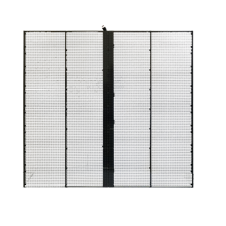
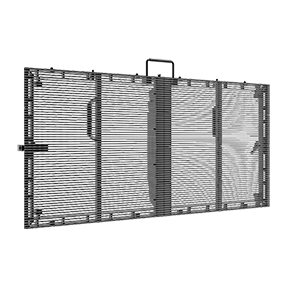
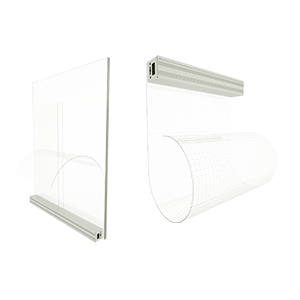
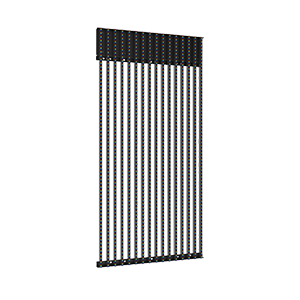
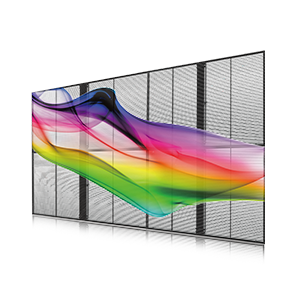

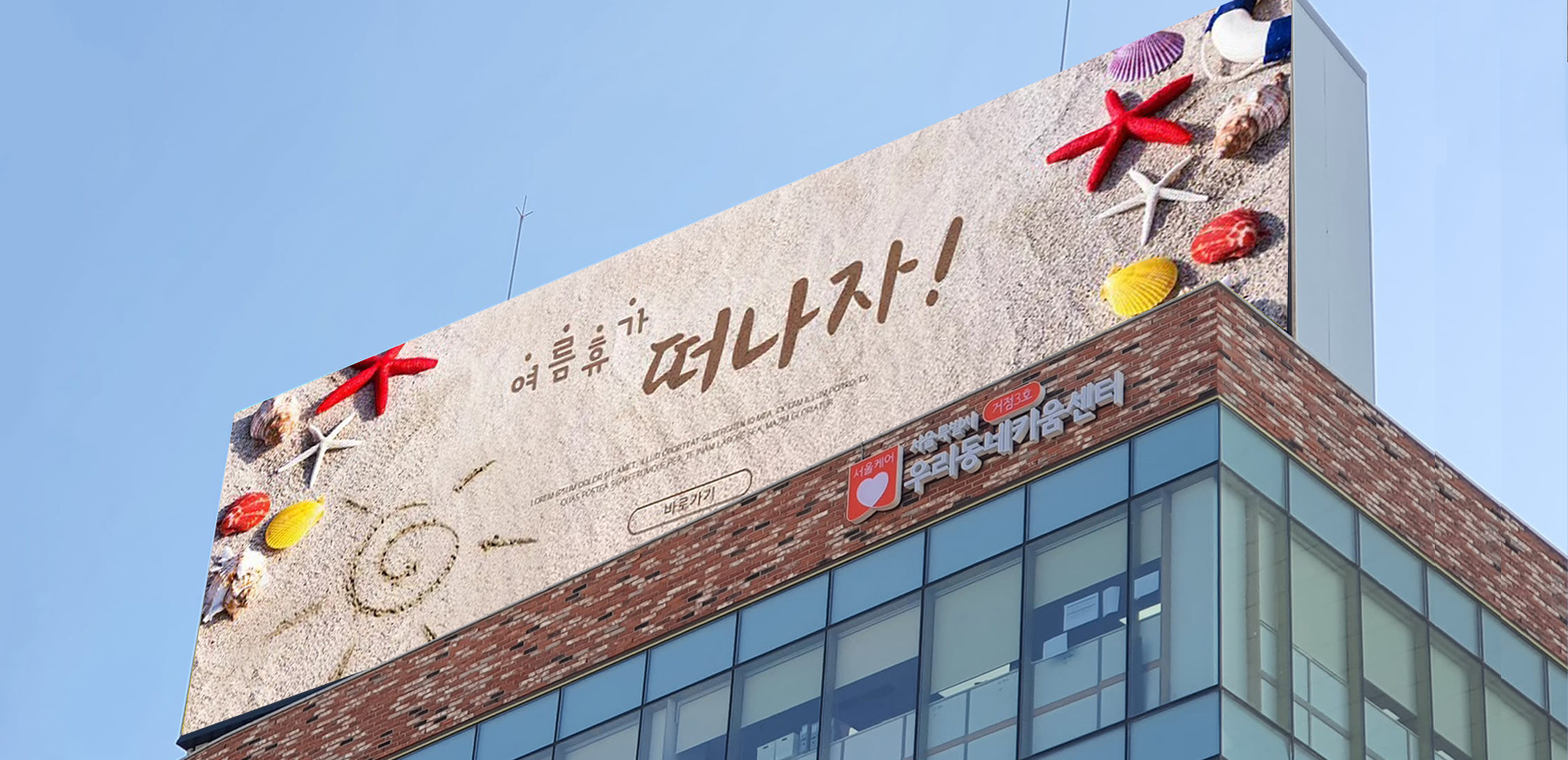







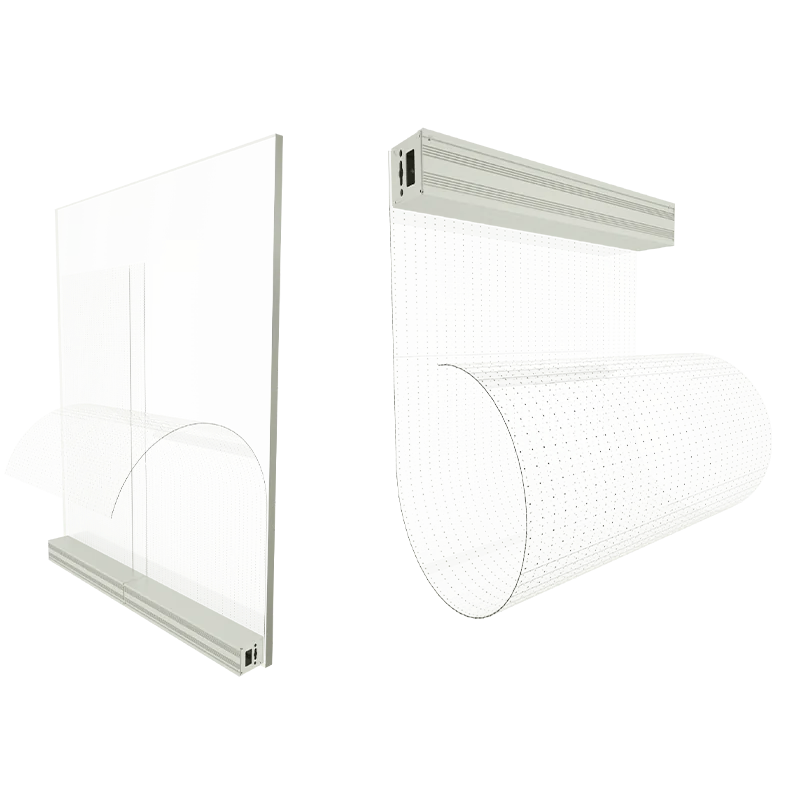
The evolution of digital signage has moved beyond the “black box” of traditional monitors and even the rigid frames of standard transparent LEDs. The current frontier of architectural media is defined by the LED transparent film screen, a technology that merges materials science with advanced optoelectronics. Unlike traditional displays that require heavy mounting structures, transparent film is a flexible, adhesive layer that can be applied directly to existing glass surfaces. At LEDFUL, our A-Series film represents the pinnacle of this “invisible” engineering. Understanding the science behind its manufacturing—from the micro-circuitry on polymer substrates to the high-permeability adhesives—is essential for stakeholders who wish to integrate digital media into the very fabric of their glass architecture.
1. Substrate Innovation: The Role of PET and PI Polymers
The foundation of a LED transparent film screen is not a rigid board, but a highly specialized polymer substrate. In the LEDFUL manufacturing process, we utilize optical-grade Polyethylene Terephthalate (PET) or Polyimide (PI) films. These materials are chosen for their extreme clarity and thermal stability.
The science lies in achieving a balance between flexibility and structural integrity. The substrate must be thin enough to remain nearly invisible when applied to glass, yet robust enough to support thousands of micro-LEDs and the conductive traces that power them. Our A-Series film utilizes a multi-layer lamination process that ensures the substrate remains dimensionally stable under the heat generated during operation, preventing the “bubbling” or warping that often affects lower-quality film products. For architects, this material science ensures that the digital layer does not compromise the optical quality of the building’s glass.
2. Micro-Circuitry: The Invisible Conductive Layer
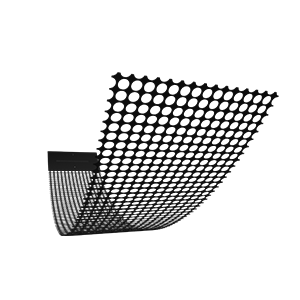
One of the greatest technical challenges in manufacturing a LED transparent film screen is the circuitry. In a standard display, copper traces are opaque and visible. To achieve transparency, we employ advanced “Micro-Mesh” or “ITO-Replacement” technologies.
We utilize laser-etching or high-precision printing to create conductive pathways that are so fine (often measured in microns) that they are invisible to the naked eye. This “Invisible Circuitry” is the engine of the A-Series film. At LEDFUL, our manufacturing precision allows for a high density of these pathways without sacrificing transparency. This enables us to achieve smaller pixel pitches—and thus higher resolution—than was previously thought possible for film-based displays. The result is a screen that maintains up to 97% transparency while delivering vibrant, high-definition content.
3. LED Driver IC Integration: The “Chip-on-Film” (COF) Science
The intelligence of the display resides in the Driver ICs (Integrated Circuits). In traditional manufacturing, these are bulky components. For the LED transparent film screen, we utilize Chip-on-Film (COF) technology. This involves bonding the driver chips directly onto the flexible polymer substrate.
This process requires a clean-room environment and high-precision robotic assembly. By integrating the chips directly into the film, we eliminate the need for external control boxes at the module level, allowing the entire display to remain ultra-thin (typically less than 2mm to 3mm). For installers, this COF science simplifies the “edge-to-edge” integration, allowing the film to be cut to fit custom glass shapes—a critical requirement for modern, irregular architectural designs.
4. Optical-Grade Adhesives and Permeability
The “Science of Attachment” is what makes our A-Series film a “plug-and-play” solution for existing glass. The rear of the film is coated with a specialized, optical-grade self-adhesive. This is not a standard glue; it is a high-permeability polymer designed to maintain a perfect refractive index match with the glass.
The manufacturing challenge is ensuring that this adhesive remains clear over years of exposure to UV radiation and temperature fluctuations. At LEDFUL, our adhesives are UV-stabilized to prevent yellowing. The science behind this adhesive ensures a “bubble-free” application and an airtight bond. This is a vital benefit for facility managers, as it ensures that the LED transparent film screen becomes a permanent, maintenance-free part of the glass facade rather than a temporary sticker that peels or clouds over time.
5. Thermal Management in a Flexible Form Factor
Heat is the enemy of LED longevity. In a rigid screen, aluminum heat sinks manage this. In a flexible film, the science of “Thermal Dissipation” must be integrated into the materials themselves. We utilize high-thermal-conductivity polymers in our lamination layers that pull heat away from the LEDs and spread it across the surface of the film.
This “Passive Surface Cooling” allows the A-Series film to operate without fans, ensuring total silence—a key requirement for luxury retail and high-end corporate lobbies. By optimizing the thermal path through the substrate layers, LEDFUL ensures that the LEDs operate at a consistent temperature, preserving color accuracy and extending the lifespan of the display to the industry-standard 100,000 hours, even in south-facing window installations.
6. Encapsulation and Environmental Protection
Finally, the micro-LEDs must be protected from oxygen and moisture, which can degrade the semiconductor material. Our manufacturing process involves an ultra-thin encapsulation layer—often a liquid-phase polymer that is cured using UV light.
This encapsulation acts as a “Bonsai” version of the heavy-duty coating found on outdoor screens. It provides IP-rated protection while remaining thin enough to preserve the film’s flexibility. This science ensures that the LED transparent film screen can be cleaned and handled during installation without risking the delicate electronics beneath. For our partners, this means a product that is as durable as it is innovative, capable of withstanding the rigors of a high-traffic commercial environment.
Conclusion: Transforming Glass into Digital Art
The manufacturing of an LED transparent film screen is a triumph of multi-disciplinary science. By combining polymer chemistry, micro-electronics, and optical engineering, we have created a medium that finally allows architecture to speak. The A-Series from LEDFUL is not just a display; it is a testament to what is possible when we push the boundaries of materials science.
At LEDFUL, we are proud to lead the led display market in the transition from rigid displays to flexible, transparent media. We provide the technical expertise and the precision-manufactured hardware needed to transform any window into a high-definition storyteller. By choosing our transparent film technology, you are investing in the most advanced visual tool available today—a tool that respects the clarity of your glass while empowering the brilliance of your brand. Let us help you film the future of your architecture.